State Department unveiling Cuba Web site.
Published:
9 November 1999 y., Tuesday
In a bid to help Americans understand the maze of rules and regulations governing travel to Cuba, the U.S. embargo against the island and related issues, the State Department is unveiling a new Web site focused exclusively on Cuba. The Web site, ready to go on line today after highly secretive preparations, is largely fact-based but also highlights, with the help of pictures, the shortcomings of the revolution in such areas as housing and transportation. The State Department has many other Web sites devoted to individual countries. But creating a Cuba site has been more of a challenge than most because of the complexity of the issues and because of the passions Cuba continues to generate even after 40 years of communist rule.Visitors to the Web site can obtain information about human rights in Cuba, the administration_s efforts to promote people-to-people contacts, U.S.-Cuban relations, migration, restrictions on the sale of medicine, labor practices on the island and details of 1996 legislation designed to assist Americans whose property was seized by the revolution without compensation. "This is not at all intended to be an affront," said a State Department official, asking not to be identified. "It is intended to clarify our policy." But coupled with policy clarifications are the unflattering pictures. One picture showing rundown housing was accompanied by a caption that reads: "Cuba_s state-controlled economy has failed to provide adequate housing to Cubans. Multi-family occupancy of often unsafe housing is common." Another section of the Web site is devoted to four dissident leaders who were convicted earlier this year for sedition and acts against the security of the state. The four are widely portrayed internationally as victims of repression.
Copying, publishing, announcing any information from the News.lt portal without written permission of News.lt editorial office is prohibited.
The most popular articles
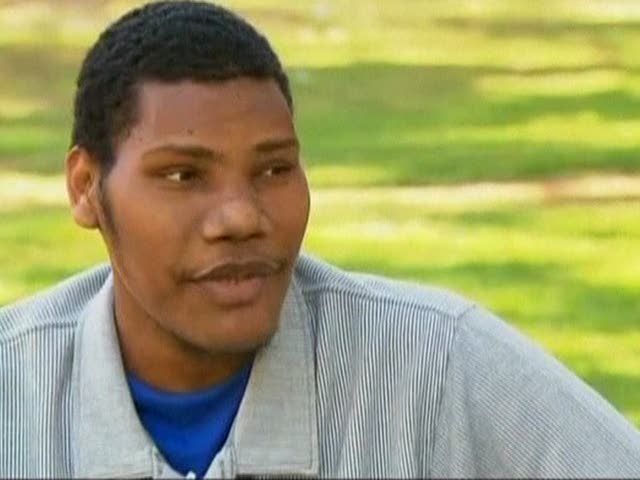 Guinness World Records officially declares that an Australian man has the world's largest feet.
more »
Guinness World Records officially declares that an Australian man has the world's largest feet.
more »
 It's a sniffer dog with a difference: a military Belgian Shepherd that has been trained to detect signs of prostate cancer in patients' urine. According to French scientists, the dog can do it far more accurately than any currently available scientific technique.
more »
It's a sniffer dog with a difference: a military Belgian Shepherd that has been trained to detect signs of prostate cancer in patients' urine. According to French scientists, the dog can do it far more accurately than any currently available scientific technique.
more »
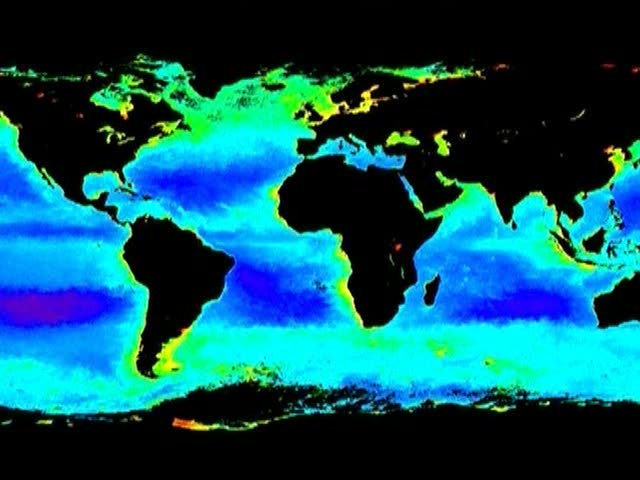 This week marks the beginning of hurricane season in the United States and scientists will be watching closely in the wake of extreme weather patterns that have devastated the Midwest. One of the questions they're trying to answer focuses on the impact of climate change and global warming.
more »
This week marks the beginning of hurricane season in the United States and scientists will be watching closely in the wake of extreme weather patterns that have devastated the Midwest. One of the questions they're trying to answer focuses on the impact of climate change and global warming.
more »
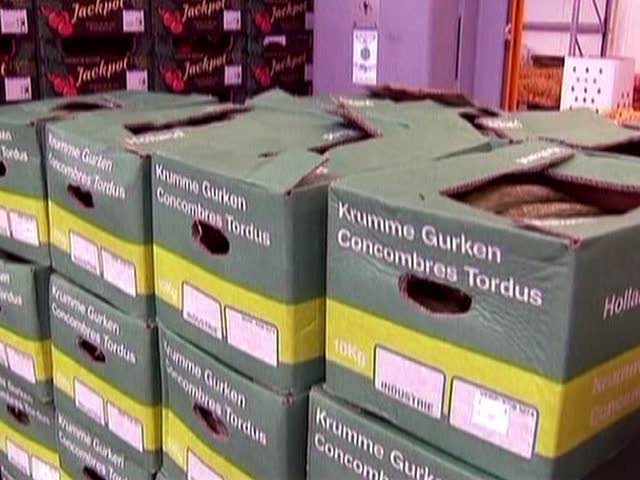 Spanish cucumbers are being blame for an E.coli outbreak that killed 10 people in Germany and sickened hundreds.
more »
Spanish cucumbers are being blame for an E.coli outbreak that killed 10 people in Germany and sickened hundreds.
more »
 Protesters clash with police as pro Mladic rallies continue in the Serbian capital.
more »
Protesters clash with police as pro Mladic rallies continue in the Serbian capital.
more »
 Japan, Geiger counters, radiation leak, Fuji Electric
more »
Japan, Geiger counters, radiation leak, Fuji Electric
more »
 Chinese artist Qi Baishi's ink-wash work is auctioned for 65.4 million U.S. Dollars (425 million yuan) in Beijing, setting a new record for contemporary Chinese painting.
more »
Chinese artist Qi Baishi's ink-wash work is auctioned for 65.4 million U.S. Dollars (425 million yuan) in Beijing, setting a new record for contemporary Chinese painting.
more »
 Georgian police wearing full riot gear used water cannons and rubber bullets to disperse protesters in Tiblisi.
more »
Georgian police wearing full riot gear used water cannons and rubber bullets to disperse protesters in Tiblisi.
more »
 CT scanning has allowed scientists to identify and recreate in stunning three-dimensional detail, an ancient spider trapped in amber for 50 million years...
more »
CT scanning has allowed scientists to identify and recreate in stunning three-dimensional detail, an ancient spider trapped in amber for 50 million years...
more »
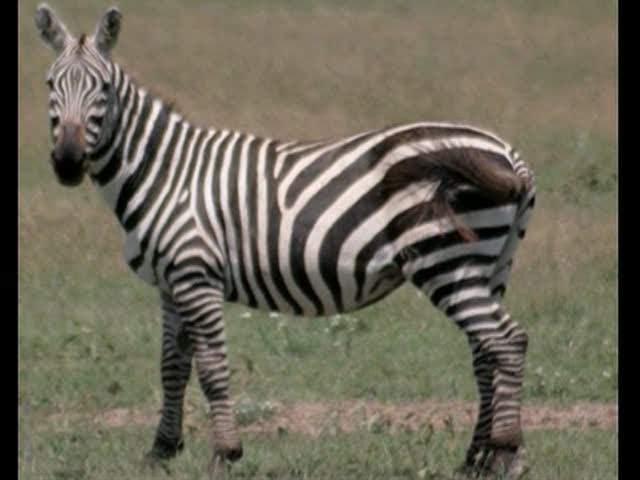 Researchers in Chicago have developed a new barcoding system that can identify and track zebras by their unique stripe patterns. The scientists say their computer program can also be modified to keep track of endangered species like tigers and some giraffe species.
more »
Researchers in Chicago have developed a new barcoding system that can identify and track zebras by their unique stripe patterns. The scientists say their computer program can also be modified to keep track of endangered species like tigers and some giraffe species.
more »