Russia has removed all Soviet-built anti-aircraft missiles from its vast arms depots in a Moldova province
Published:
30 December 2003 y., Tuesday
Russia has removed all Soviet-built anti-aircraft missiles from its vast arms depots in a Moldova province to prevent them from falling into the hands of terrorists, officials said Monday.
The missiles were flown from Trans-Dniester Province to the Moscow on Saturday, the Defense Ministry said in a statement released Monday.
A spokesman for the ministry, who asked not be named, wouldn't say how many weapons were evacuated, but he said that no anti-aircraft missiles are left in Trans-Dniester.
The Defense Ministry said in the statement that it had decided to remove the weapons to "minimize the potential danger of terrorists seizing the portable and other air defense missiles and using them for terror goals."
About 2,000 Russian troops remain in Trans-Dniester, guarding giant Soviet-era ammunition depots and acting as peacekeepers. The Russian military was deployed in the separatist province to end a 1992 war that killed some 1,500 people and left Trans-Dniester de-facto independent. Russia had earlier promised the Organization for Security and Cooperation (news - web sites) in Europe that it would withdraw the troops and ammunition by the end of this year, but later said it would be difficult to fulfill this obligation. It has since put forward a plan to extend its troops' presence in the region.
Claus Neukirch, the OSCE spokesman in the Moldovan capital Chisinau, said Monday that the Russian authorities hadn't given OSCE officials authorization to inspect the cargo planes. The OSCE and other international agencies have repeatedly expressed concern about allegations that Trans-Dniester has evolved into a center for major weapon smuggling rings.
Šaltinis:
news.yahoo.com
Copying, publishing, announcing any information from the News.lt portal without written permission of News.lt editorial office is prohibited.
The most popular articles
 The Government of Lithuania has reached a watershed agreement with the nation’s most important business, labour and social groups on policies and initiatives to overcome the current deep recession as swiftly as possible and put the economy back on track for euro adoption and stable growth.
more »
The Government of Lithuania has reached a watershed agreement with the nation’s most important business, labour and social groups on policies and initiatives to overcome the current deep recession as swiftly as possible and put the economy back on track for euro adoption and stable growth.
more »
 Yesterday, 26 October, the EU countries agreed to adopt a common strategy for the Baltic Sea region.
more »
Yesterday, 26 October, the EU countries agreed to adopt a common strategy for the Baltic Sea region.
more »
 President Dalia Grybauskaitė extended congratulations to President Gurbanguly Berdymuhamedov of Turkmenistan on the occasion of Independence Day.
more »
President Dalia Grybauskaitė extended congratulations to President Gurbanguly Berdymuhamedov of Turkmenistan on the occasion of Independence Day.
more »
 President Dalia Grybauskaitė received OSCE Secretary General Marc Perrin de Brichambaut.
more »
President Dalia Grybauskaitė received OSCE Secretary General Marc Perrin de Brichambaut.
more »
 President Dalia Grybauskaitė received representatives of the European Business Network and foreign investors in Lithuania.
more »
President Dalia Grybauskaitė received representatives of the European Business Network and foreign investors in Lithuania.
more »
 Prime Minister Andrius Kubilius has received a visit from the new Extraordinary and Plenipotentiary Ambassador of the United States to Lithuania Anne Elizabeth Derse.
more »
Prime Minister Andrius Kubilius has received a visit from the new Extraordinary and Plenipotentiary Ambassador of the United States to Lithuania Anne Elizabeth Derse.
more »
 Today, on 21 October during the visit to Austria, Lithuania’s Minister of Foreign Affairs Vygaudas Ušackas met with Michael Spindelegger, Minister for European and Foreign Affairs of Austria.
more »
Today, on 21 October during the visit to Austria, Lithuania’s Minister of Foreign Affairs Vygaudas Ušackas met with Michael Spindelegger, Minister for European and Foreign Affairs of Austria.
more »
 October 19-20, Minister of National Defence Rasa Juknevičienė will pay a formal visit the UK by invitation of Defence Secretary Bob Ainsworth.
more »
October 19-20, Minister of National Defence Rasa Juknevičienė will pay a formal visit the UK by invitation of Defence Secretary Bob Ainsworth.
more »
 On 17 October in Baku, Lithuania’s Minister of Foreign Affairs Vygaudas Ušackas and Minister of Foreign Affairs of Azerbaijan Elmar Mammadyarov discussed bilateral cooperation...
more »
On 17 October in Baku, Lithuania’s Minister of Foreign Affairs Vygaudas Ušackas and Minister of Foreign Affairs of Azerbaijan Elmar Mammadyarov discussed bilateral cooperation...
more »
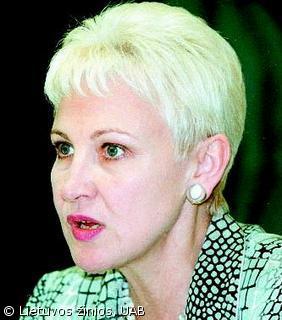 Ms Irena Degutienė, Speaker of the Seimas of the Republic of Lithuania, participated in the International Conference Europe 70 years after the Molotov–Ribbentrop Pact held by the European Parliament.
more »
Ms Irena Degutienė, Speaker of the Seimas of the Republic of Lithuania, participated in the International Conference Europe 70 years after the Molotov–Ribbentrop Pact held by the European Parliament.
more »