Negotiators made a breakthrough in Ukraine's election crisis on Wednesday, with all sides concerned agreeing to new elections under terms stipulated by the Supreme Court
Published:
3 December 2004 y., Friday
Negotiators made a breakthrough in Ukraine's election crisis on Wednesday, with all sides concerned agreeing to new elections under terms stipulated by the Supreme Court.
The announcement came after three hours of meetings between the main Ukrainian players in the week-old drama and a high-level team of international mediators.
Prime Minister Viktor Yanukovich and his rival for the presidency, opposition leader Viktor Yuschenko, met at the Mariinsky Palace with incumbent President Leonid Kuchma, Polish President Aleksander Kwasniewski and European Union foreign affairs envoy Javier Solana.
Organisation for Security and Cooperation in Europe Secretary- General Jan Kubis and Lithuanian President Valdas Adamkus also participated, with Russian representative Boris Gryzlov joining the talks late.
All parties had agreed to form a working group to establish terms and conditions for the country's next election, Kuchma said in a statement.
The announcement made official days of rumours in the Ukrainian capital that the tainted November 21 elections, which Yanukovich won by a small margin, ultimately would be anulled.
The joint declaration also set forth a mechanism for reform of the Ukrainian political system, and identified specific changes needed in election laws.
The working group would meet after Ukraine's Supreme Court finished reviewing the results of the November 21 vote, Kuchma said.
The declaration did not make clear whether the country would repeat only the run-off between Yanukovich and Yuschenko, or the first round vote as well. The Supreme Court's final decision would be decisive in determining what sort of elections actually were held, Kuchma said.
Signatories agreed to keep Ukraine's territory intact, apparently ending efforts begun by Yanukovich and his allies over the weekend for the secession of Ukraine's eastern regions, if Yanukovich was not named President.
Yanukovich earlier in the day shifted 180 degrees on two long-held positions in the confict, admitting the country's past election in fact was badly marred by vote-fixing, and by stating he was against the break-up of Ukraine.
Šaltinis:
Copying, publishing, announcing any information from the News.lt portal without written permission of News.lt editorial office is prohibited.
The most popular articles
 The Government of Lithuania has reached a watershed agreement with the nation’s most important business, labour and social groups on policies and initiatives to overcome the current deep recession as swiftly as possible and put the economy back on track for euro adoption and stable growth.
more »
The Government of Lithuania has reached a watershed agreement with the nation’s most important business, labour and social groups on policies and initiatives to overcome the current deep recession as swiftly as possible and put the economy back on track for euro adoption and stable growth.
more »
 Yesterday, 26 October, the EU countries agreed to adopt a common strategy for the Baltic Sea region.
more »
Yesterday, 26 October, the EU countries agreed to adopt a common strategy for the Baltic Sea region.
more »
 President Dalia Grybauskaitė extended congratulations to President Gurbanguly Berdymuhamedov of Turkmenistan on the occasion of Independence Day.
more »
President Dalia Grybauskaitė extended congratulations to President Gurbanguly Berdymuhamedov of Turkmenistan on the occasion of Independence Day.
more »
 President Dalia Grybauskaitė received OSCE Secretary General Marc Perrin de Brichambaut.
more »
President Dalia Grybauskaitė received OSCE Secretary General Marc Perrin de Brichambaut.
more »
 President Dalia Grybauskaitė received representatives of the European Business Network and foreign investors in Lithuania.
more »
President Dalia Grybauskaitė received representatives of the European Business Network and foreign investors in Lithuania.
more »
 Prime Minister Andrius Kubilius has received a visit from the new Extraordinary and Plenipotentiary Ambassador of the United States to Lithuania Anne Elizabeth Derse.
more »
Prime Minister Andrius Kubilius has received a visit from the new Extraordinary and Plenipotentiary Ambassador of the United States to Lithuania Anne Elizabeth Derse.
more »
 Today, on 21 October during the visit to Austria, Lithuania’s Minister of Foreign Affairs Vygaudas Ušackas met with Michael Spindelegger, Minister for European and Foreign Affairs of Austria.
more »
Today, on 21 October during the visit to Austria, Lithuania’s Minister of Foreign Affairs Vygaudas Ušackas met with Michael Spindelegger, Minister for European and Foreign Affairs of Austria.
more »
 October 19-20, Minister of National Defence Rasa Juknevičienė will pay a formal visit the UK by invitation of Defence Secretary Bob Ainsworth.
more »
October 19-20, Minister of National Defence Rasa Juknevičienė will pay a formal visit the UK by invitation of Defence Secretary Bob Ainsworth.
more »
 On 17 October in Baku, Lithuania’s Minister of Foreign Affairs Vygaudas Ušackas and Minister of Foreign Affairs of Azerbaijan Elmar Mammadyarov discussed bilateral cooperation...
more »
On 17 October in Baku, Lithuania’s Minister of Foreign Affairs Vygaudas Ušackas and Minister of Foreign Affairs of Azerbaijan Elmar Mammadyarov discussed bilateral cooperation...
more »
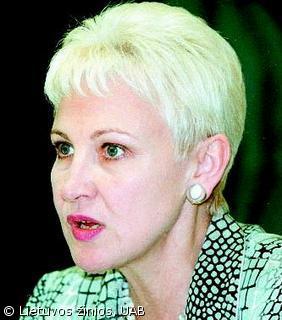 Ms Irena Degutienė, Speaker of the Seimas of the Republic of Lithuania, participated in the International Conference Europe 70 years after the Molotov–Ribbentrop Pact held by the European Parliament.
more »
Ms Irena Degutienė, Speaker of the Seimas of the Republic of Lithuania, participated in the International Conference Europe 70 years after the Molotov–Ribbentrop Pact held by the European Parliament.
more »