Dimitrij Rupel, current President of the Organisation for Security and Cooperation in Europe (OSCE), who arrived in Moscow for a working visit on Monday, is to discuss OSCE reform problems here on Tuesday
Published:
1 February 2005 y., Tuesday
Dimitrij Rupel, current President of the Organisation for Security and Cooperation in Europe (OSCE), who arrived in Moscow for a working visit on Monday, is to discuss OSCE reform problems here on Tuesday.
Prior to the visit, Rupel told Itar-Tass in Ljubljana, "The main point of the programme for the visit to the Russian Federation is to hold talks with Russian Minister of Foreign Affairs Sergei Lavrov. We shall discuss the OSCE reform problems". "Russia's voice is of highly important within the Organisation," he pointed out.
Rupel said he intended to reach a compromise on "such serous matters as the OSCE budget and the election of (the Organisation's) Secretary-General". Slovenia's Foreign Minister "would also like to meet with Lavrov to discuss specific expenditure items of the (OSCE) budget, such as, for example, the fight against terrorism, and the implementation of economic and ecological programmes." Rupel expects that the upcoming talks will also deal with the monitoring of the OSCE member-countries' military doctrines and energy security. He is prepared to speak on the holding of conferences and seminars on these subjects.
Lavrov said back in January, "Proposals made by Russia and other countries on the formulation of a common vision, specific criteria of the monitoring of elections and appraisals of their results have long been on the table at the OSCE".
Šaltinis:
/itar-tass.com
Copying, publishing, announcing any information from the News.lt portal without written permission of News.lt editorial office is prohibited.
The most popular articles
 The Government of Lithuania has reached a watershed agreement with the nation’s most important business, labour and social groups on policies and initiatives to overcome the current deep recession as swiftly as possible and put the economy back on track for euro adoption and stable growth.
more »
The Government of Lithuania has reached a watershed agreement with the nation’s most important business, labour and social groups on policies and initiatives to overcome the current deep recession as swiftly as possible and put the economy back on track for euro adoption and stable growth.
more »
 Yesterday, 26 October, the EU countries agreed to adopt a common strategy for the Baltic Sea region.
more »
Yesterday, 26 October, the EU countries agreed to adopt a common strategy for the Baltic Sea region.
more »
 President Dalia Grybauskaitė extended congratulations to President Gurbanguly Berdymuhamedov of Turkmenistan on the occasion of Independence Day.
more »
President Dalia Grybauskaitė extended congratulations to President Gurbanguly Berdymuhamedov of Turkmenistan on the occasion of Independence Day.
more »
 President Dalia Grybauskaitė received OSCE Secretary General Marc Perrin de Brichambaut.
more »
President Dalia Grybauskaitė received OSCE Secretary General Marc Perrin de Brichambaut.
more »
 President Dalia Grybauskaitė received representatives of the European Business Network and foreign investors in Lithuania.
more »
President Dalia Grybauskaitė received representatives of the European Business Network and foreign investors in Lithuania.
more »
 Prime Minister Andrius Kubilius has received a visit from the new Extraordinary and Plenipotentiary Ambassador of the United States to Lithuania Anne Elizabeth Derse.
more »
Prime Minister Andrius Kubilius has received a visit from the new Extraordinary and Plenipotentiary Ambassador of the United States to Lithuania Anne Elizabeth Derse.
more »
 Today, on 21 October during the visit to Austria, Lithuania’s Minister of Foreign Affairs Vygaudas Ušackas met with Michael Spindelegger, Minister for European and Foreign Affairs of Austria.
more »
Today, on 21 October during the visit to Austria, Lithuania’s Minister of Foreign Affairs Vygaudas Ušackas met with Michael Spindelegger, Minister for European and Foreign Affairs of Austria.
more »
 October 19-20, Minister of National Defence Rasa Juknevičienė will pay a formal visit the UK by invitation of Defence Secretary Bob Ainsworth.
more »
October 19-20, Minister of National Defence Rasa Juknevičienė will pay a formal visit the UK by invitation of Defence Secretary Bob Ainsworth.
more »
 On 17 October in Baku, Lithuania’s Minister of Foreign Affairs Vygaudas Ušackas and Minister of Foreign Affairs of Azerbaijan Elmar Mammadyarov discussed bilateral cooperation...
more »
On 17 October in Baku, Lithuania’s Minister of Foreign Affairs Vygaudas Ušackas and Minister of Foreign Affairs of Azerbaijan Elmar Mammadyarov discussed bilateral cooperation...
more »
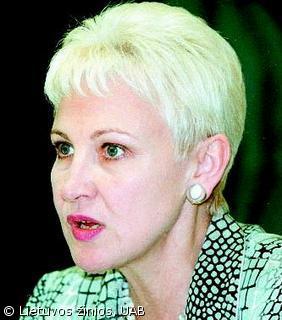 Ms Irena Degutienė, Speaker of the Seimas of the Republic of Lithuania, participated in the International Conference Europe 70 years after the Molotov–Ribbentrop Pact held by the European Parliament.
more »
Ms Irena Degutienė, Speaker of the Seimas of the Republic of Lithuania, participated in the International Conference Europe 70 years after the Molotov–Ribbentrop Pact held by the European Parliament.
more »