In Windows 2000 imported to Russia Microsoft has decided to drop some fragments disapproved by the Federal Agency on Government Communication and Information (FAPSI).
Published:
19 February 2000 y., Saturday
The main feature that makes the Windows 2000 operating system different from previous versions is the 128-bit encryption software, but it will not be included in versions imported into Russia. The irony is that just a few years ago the export of such software from the US was strictly forbidden, because the US National Security Agency feared that the FAPSI or the Chinese would crack it. The FAPSI and the Chinese, for their part, called for an import ban on the 128-bit keys because they doubted they could crack them. All this has had a negative effect on Microsoft sales.
At one point the debate on the encryption software included in Windows 2000 acquired the scale and intensity of the millennium bug debate. It was widely believed that the FAPSI would never agree to import software it is unable to crack, while the ambitious Microsoft would not alter its global strategy for the sake of Russia alone, especially since the country largely relies on pirated Microsoft products.
Certain psychological factors have influenced the outcome of the issue. Had the FAPSI banned the import of encryption software to Russia altogether, it would have amounted to an unconditional surrender to the NSA. FAPSI could not possibly admit that 128-bit keys are unbreakable. On the other hand, Microsoft is a commercial body, not a national secret service it makes no difference to them if Russians are happy to acquire substandard software, just as long as they pay for it.
On Thursday morning Microsoft issued an official statement saying that the company had consulted the FAPSI about the possible restrictions on the import of 128-bit encryption software. The FAPSI and Microsoft have agreed that pending the result of consultations, the FAPSI would not impose any restrictions on the import of Windows 2000. However, in accordance with Russian law, Microsoft has decided to exclude 128-bit software from its Russian exports. The encryption software in question will not be included in either the Russian or English versions of Windows 2000 available to Russian wholesalers and retailers.
Šaltinis:
Internet
Copying, publishing, announcing any information from the News.lt portal without written permission of News.lt editorial office is prohibited.
The most popular articles
 Lithuania took over the Chairmanship of the Organization for Security and Co-operation in Europe today, with a focus on internal and external threats in the OSCE area, fostering democracy, human rights and fundamental freedoms, notably freedom of the media, promoting energy security in Europe and building upon synergies between regional organizations.
more »
Lithuania took over the Chairmanship of the Organization for Security and Co-operation in Europe today, with a focus on internal and external threats in the OSCE area, fostering democracy, human rights and fundamental freedoms, notably freedom of the media, promoting energy security in Europe and building upon synergies between regional organizations.
more »
 President of the Republic of Lithuania Dalia Grybauskaitė says the decision taken by the European Council to amend the EU Treaty to provide for the establishment of a permanent support mechanism for crisis–stricken eurozone countries is very important for Lithuania.
more »
President of the Republic of Lithuania Dalia Grybauskaitė says the decision taken by the European Council to amend the EU Treaty to provide for the establishment of a permanent support mechanism for crisis–stricken eurozone countries is very important for Lithuania.
more »
 At the OSCE Summit, President of the Republic of Lithuania Dalia Grybauskaitė met with President of the Kyrgyz Republic Roza Otunbayeva for a bilateral discussion.
more »
At the OSCE Summit, President of the Republic of Lithuania Dalia Grybauskaitė met with President of the Kyrgyz Republic Roza Otunbayeva for a bilateral discussion.
more »
President of the Republic of Lithuania Dalia Grybauskaitė attending OSCE Summit in Astana had a conversation with US Secretary of State Hillary Clinton.
more »
 President Dalia Grybauskaitė positively assessed the European Commission's decision to include the integration of the Baltic Energy Market into the European market in the map of EU priorities.
more »
President Dalia Grybauskaitė positively assessed the European Commission's decision to include the integration of the Baltic Energy Market into the European market in the map of EU priorities.
more »
 President of the Republic of Lithuania Dalia Grybauskaitė left to Lisbon to attend NATO Summit that starts today.
more »
President of the Republic of Lithuania Dalia Grybauskaitė left to Lisbon to attend NATO Summit that starts today.
more »
 President of the Republic of Lithuania Dalia Grybauskaitė congratulated President Valdis Zatlers of the Republic of Latvia and all Latvian people on Latvia's national holiday, the Independence Day.
more »
President of the Republic of Lithuania Dalia Grybauskaitė congratulated President Valdis Zatlers of the Republic of Latvia and all Latvian people on Latvia's national holiday, the Independence Day.
more »
President of the Republic of Lithuania Dalia Grybauskaitė received letters of credence from the Ambassador of the Islamic Republic of Iran, Samad Ali Lakizadeh.
more »
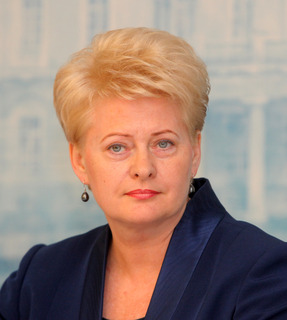 President of the Republic of Lithuania Dalia Grybauskaitė received letters of credence from the Ambassador of the United Arab Emirates, Mohammed Ahmed Al Mahmood.
more »
President of the Republic of Lithuania Dalia Grybauskaitė received letters of credence from the Ambassador of the United Arab Emirates, Mohammed Ahmed Al Mahmood.
more »
 As a response to the address made by representatives of Lithuania's culture community and civic society concerning the future of Kristijonas Donelaitis museum in Chistye Prudy in the Kaliningrad Oblast, President of the Republic of Lithuania D. Grybauskaitė sent a letter to President D. Medvedev of the Russian Federation.
more »
As a response to the address made by representatives of Lithuania's culture community and civic society concerning the future of Kristijonas Donelaitis museum in Chistye Prudy in the Kaliningrad Oblast, President of the Republic of Lithuania D. Grybauskaitė sent a letter to President D. Medvedev of the Russian Federation.
more »