In Windows 2000 imported to Russia Microsoft has decided to drop some fragments disapproved by the Federal Agency on Government Communication and Information (FAPSI).
Published:
19 February 2000 y., Saturday
The main feature that makes the Windows 2000 operating system different from previous versions is the 128-bit encryption software, but it will not be included in versions imported into Russia. The irony is that just a few years ago the export of such software from the US was strictly forbidden, because the US National Security Agency feared that the FAPSI or the Chinese would crack it. The FAPSI and the Chinese, for their part, called for an import ban on the 128-bit keys because they doubted they could crack them. All this has had a negative effect on Microsoft sales.
At one point the debate on the encryption software included in Windows 2000 acquired the scale and intensity of the millennium bug debate. It was widely believed that the FAPSI would never agree to import software it is unable to crack, while the ambitious Microsoft would not alter its global strategy for the sake of Russia alone, especially since the country largely relies on pirated Microsoft products.
Certain psychological factors have influenced the outcome of the issue. Had the FAPSI banned the import of encryption software to Russia altogether, it would have amounted to an unconditional surrender to the NSA. FAPSI could not possibly admit that 128-bit keys are unbreakable. On the other hand, Microsoft is a commercial body, not a national secret service it makes no difference to them if Russians are happy to acquire substandard software, just as long as they pay for it.
On Thursday morning Microsoft issued an official statement saying that the company had consulted the FAPSI about the possible restrictions on the import of 128-bit encryption software. The FAPSI and Microsoft have agreed that pending the result of consultations, the FAPSI would not impose any restrictions on the import of Windows 2000. However, in accordance with Russian law, Microsoft has decided to exclude 128-bit software from its Russian exports. The encryption software in question will not be included in either the Russian or English versions of Windows 2000 available to Russian wholesalers and retailers.
Šaltinis:
Internet
Copying, publishing, announcing any information from the News.lt portal without written permission of News.lt editorial office is prohibited.
The most popular articles
 BMW recently highlighted an electric scooter, currently still in the concept phase, targeted at green-leaning commuters.
more »
BMW recently highlighted an electric scooter, currently still in the concept phase, targeted at green-leaning commuters.
more »
 "I'm excited about where these findings could take us in terms of eventually developing a new type of analgesic for people who suffer from chronic pain."
more »
"I'm excited about where these findings could take us in terms of eventually developing a new type of analgesic for people who suffer from chronic pain."
more »
 The Anonymous hackers now have names, at least in Italy. A series of dawn searches this morning concluded investigations by IT police, led by Antonio Abruzzese, into coordinated computer attacks by the group over the past few months.
more »
The Anonymous hackers now have names, at least in Italy. A series of dawn searches this morning concluded investigations by IT police, led by Antonio Abruzzese, into coordinated computer attacks by the group over the past few months.
more »
 He world's first flying car has been authorized to use roads while flying in the air.
more »
He world's first flying car has been authorized to use roads while flying in the air.
more »
 This is the adjustable-height desk that pairs with a semi-recumbent elliptical trainer to let users exercise while on the job.
more »
This is the adjustable-height desk that pairs with a semi-recumbent elliptical trainer to let users exercise while on the job.
more »
 Scientists at the Chinese University of Hong Kong have developed an autonomous, caterpillar-inspired robot, designed to climb trees and spot danger to forests via a built-in camera.
more »
Scientists at the Chinese University of Hong Kong have developed an autonomous, caterpillar-inspired robot, designed to climb trees and spot danger to forests via a built-in camera.
more »
 Nuclear officials confident over safety levels of flooded nuclear power plant.
more »
Nuclear officials confident over safety levels of flooded nuclear power plant.
more »
 A 19 year old computer hacker in London has been released on bail after being charged with attacking government websites.
more »
A 19 year old computer hacker in London has been released on bail after being charged with attacking government websites.
more »
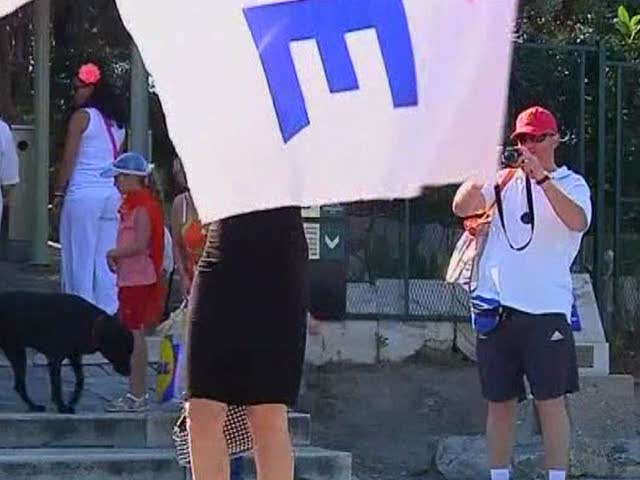 Greek Communists rally at historical monument in Athens to protest new round of austerity measures
more »
Greek Communists rally at historical monument in Athens to protest new round of austerity measures
more »
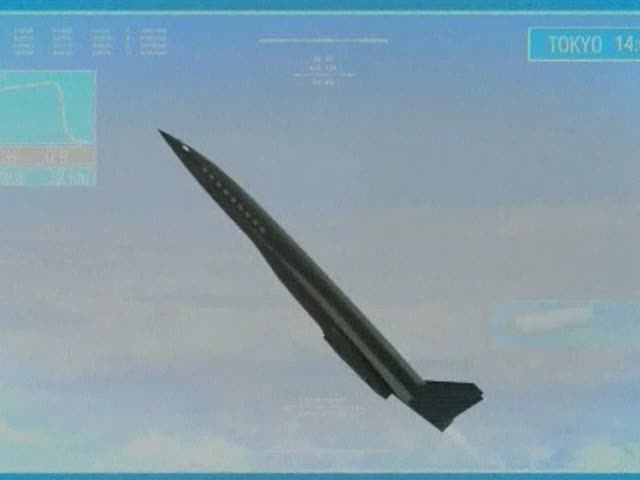 Imagine flying from Tokyo to Paris in less than two and a half hours, without having to burn tons of fossil fuel. One day it might be possible. The concept of zero-emissions, supersonic flight is being explored by European aircraft maker, EADS.
more »
Imagine flying from Tokyo to Paris in less than two and a half hours, without having to burn tons of fossil fuel. One day it might be possible. The concept of zero-emissions, supersonic flight is being explored by European aircraft maker, EADS.
more »