The Baltic states said on June 16 that they would continue their drive to join NATO.
Published:
20 June 2000 y., Tuesday
The Baltic states said on June 16 that they would continue their drive to join NATO despite warnings from Russian President Vladimir Putin that admitting them into the alliance could be highly destabilizing.
"Russian comments won't make any difference to us. Our goal to join NATO won't change," Estonian Prime Minister Mart Laar said in a telephone interview on June 16, a day after Putin repeated Russia's opposition during a keynote speech in Germany.
During a regularly scheduled meeting in Estonia Friday, the three Baltic premiers, including Latvia's Andris Berzins and Lithuania's Andrius Kubilius, also signed a joint communiquй where, among other things, they also reasserted their desire to join NATO. Since they regained independence, Estonia, Latvia and Lithuania have made NATO membership a top priority.
Moscow has been particularly outspoken about criticism any enlargement of NATO that would include the Baltic states, which sit on Russia's northwester border. The Kremlin says Baltic NATO membership would be seen as a threat to Russia.
Estonia's prime minister said he didn't believe Moscow sincerely saw NATO as a military threat, but simply wanted to dissuade the alliance from expanding because it feared losing influence in areas once ruled by the Soviet Union.
Speaking in Germany on January 16, the Russian president reiterated his country's opposition to an expanded NATO, saying that expanding to the Baltic states could end up destabilizing not only European but also world security.
NATO says the door to the Baltic states is open, but that they aren't yet ready militarily to join. The Baltics say they'll be ready to be invited into the alliance by 2002, though NATO hasn't said when they might be asked to join.
Copying, publishing, announcing any information from the News.lt portal without written permission of News.lt editorial office is prohibited.
The most popular articles
 The Government of Lithuania has reached a watershed agreement with the nation’s most important business, labour and social groups on policies and initiatives to overcome the current deep recession as swiftly as possible and put the economy back on track for euro adoption and stable growth.
more »
The Government of Lithuania has reached a watershed agreement with the nation’s most important business, labour and social groups on policies and initiatives to overcome the current deep recession as swiftly as possible and put the economy back on track for euro adoption and stable growth.
more »
 Yesterday, 26 October, the EU countries agreed to adopt a common strategy for the Baltic Sea region.
more »
Yesterday, 26 October, the EU countries agreed to adopt a common strategy for the Baltic Sea region.
more »
 President Dalia Grybauskaitė extended congratulations to President Gurbanguly Berdymuhamedov of Turkmenistan on the occasion of Independence Day.
more »
President Dalia Grybauskaitė extended congratulations to President Gurbanguly Berdymuhamedov of Turkmenistan on the occasion of Independence Day.
more »
 President Dalia Grybauskaitė received OSCE Secretary General Marc Perrin de Brichambaut.
more »
President Dalia Grybauskaitė received OSCE Secretary General Marc Perrin de Brichambaut.
more »
 President Dalia Grybauskaitė received representatives of the European Business Network and foreign investors in Lithuania.
more »
President Dalia Grybauskaitė received representatives of the European Business Network and foreign investors in Lithuania.
more »
 Prime Minister Andrius Kubilius has received a visit from the new Extraordinary and Plenipotentiary Ambassador of the United States to Lithuania Anne Elizabeth Derse.
more »
Prime Minister Andrius Kubilius has received a visit from the new Extraordinary and Plenipotentiary Ambassador of the United States to Lithuania Anne Elizabeth Derse.
more »
 Today, on 21 October during the visit to Austria, Lithuania’s Minister of Foreign Affairs Vygaudas Ušackas met with Michael Spindelegger, Minister for European and Foreign Affairs of Austria.
more »
Today, on 21 October during the visit to Austria, Lithuania’s Minister of Foreign Affairs Vygaudas Ušackas met with Michael Spindelegger, Minister for European and Foreign Affairs of Austria.
more »
 October 19-20, Minister of National Defence Rasa Juknevičienė will pay a formal visit the UK by invitation of Defence Secretary Bob Ainsworth.
more »
October 19-20, Minister of National Defence Rasa Juknevičienė will pay a formal visit the UK by invitation of Defence Secretary Bob Ainsworth.
more »
 On 17 October in Baku, Lithuania’s Minister of Foreign Affairs Vygaudas Ušackas and Minister of Foreign Affairs of Azerbaijan Elmar Mammadyarov discussed bilateral cooperation...
more »
On 17 October in Baku, Lithuania’s Minister of Foreign Affairs Vygaudas Ušackas and Minister of Foreign Affairs of Azerbaijan Elmar Mammadyarov discussed bilateral cooperation...
more »
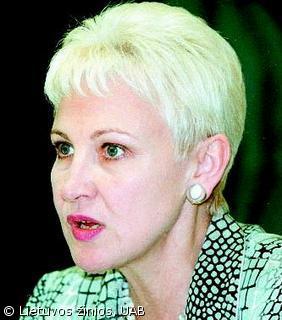 Ms Irena Degutienė, Speaker of the Seimas of the Republic of Lithuania, participated in the International Conference Europe 70 years after the Molotov–Ribbentrop Pact held by the European Parliament.
more »
Ms Irena Degutienė, Speaker of the Seimas of the Republic of Lithuania, participated in the International Conference Europe 70 years after the Molotov–Ribbentrop Pact held by the European Parliament.
more »