The Baltic states said on June 16 that they would continue their drive to join NATO.
Published:
20 June 2000 y., Tuesday
The Baltic states said on June 16 that they would continue their drive to join NATO despite warnings from Russian President Vladimir Putin that admitting them into the alliance could be highly destabilizing.
"Russian comments won't make any difference to us. Our goal to join NATO won't change," Estonian Prime Minister Mart Laar said in a telephone interview on June 16, a day after Putin repeated Russia's opposition during a keynote speech in Germany.
During a regularly scheduled meeting in Estonia Friday, the three Baltic premiers, including Latvia's Andris Berzins and Lithuania's Andrius Kubilius, also signed a joint communiquй where, among other things, they also reasserted their desire to join NATO. Since they regained independence, Estonia, Latvia and Lithuania have made NATO membership a top priority.
Moscow has been particularly outspoken about criticism any enlargement of NATO that would include the Baltic states, which sit on Russia's northwester border. The Kremlin says Baltic NATO membership would be seen as a threat to Russia.
Estonia's prime minister said he didn't believe Moscow sincerely saw NATO as a military threat, but simply wanted to dissuade the alliance from expanding because it feared losing influence in areas once ruled by the Soviet Union.
Speaking in Germany on January 16, the Russian president reiterated his country's opposition to an expanded NATO, saying that expanding to the Baltic states could end up destabilizing not only European but also world security.
NATO says the door to the Baltic states is open, but that they aren't yet ready militarily to join. The Baltics say they'll be ready to be invited into the alliance by 2002, though NATO hasn't said when they might be asked to join.
Copying, publishing, announcing any information from the News.lt portal without written permission of News.lt editorial office is prohibited.
The most popular articles
The whale shark is the largest living fish species and is usually found in tropical and warm oceans. This gentle giant is not dangerous to humans but demand for its internal organs is putting it in grave danger.
more »
 Land shortages in China and environmental concerns have inspired innovative alternatives at the Asia Funeral Expo in Hong Kong.
more »
Land shortages in China and environmental concerns have inspired innovative alternatives at the Asia Funeral Expo in Hong Kong.
more »
 Britain's Queen Elizabeth delivers landmark speech of reconciliation during visit to Ireland but stops short of apology.
more »
Britain's Queen Elizabeth delivers landmark speech of reconciliation during visit to Ireland but stops short of apology.
more »
 French climber Alain Robert, known as "Spiderman" scales Turkey's tallest building.
more »
French climber Alain Robert, known as "Spiderman" scales Turkey's tallest building.
more »
 The growth of a tree takes place so slowly that, in real time, it's impossible to observe. Six years ago plant-lover and British film-maker Neil Bromhall decided to speed up the process with time-lapse photography...
more »
The growth of a tree takes place so slowly that, in real time, it's impossible to observe. Six years ago plant-lover and British film-maker Neil Bromhall decided to speed up the process with time-lapse photography...
more »
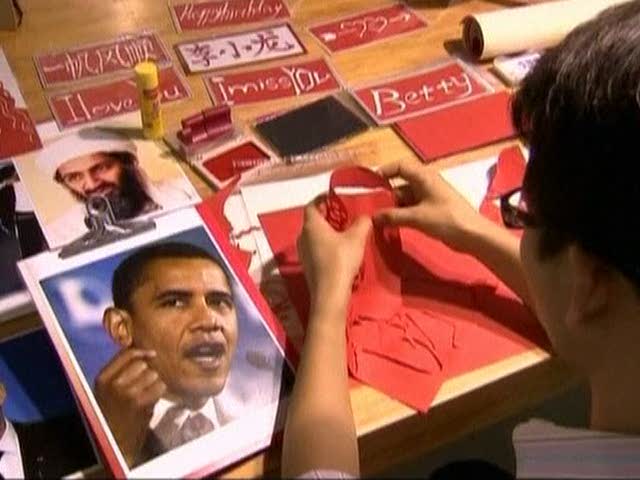 Chinese artist Wang Jiang makes portraits of famous faces including U.S. President Barack Obama and Osama bin Laden from nothing but paper torn by hand.
more »
Chinese artist Wang Jiang makes portraits of famous faces including U.S. President Barack Obama and Osama bin Laden from nothing but paper torn by hand.
more »
 Residents of the southern Spanish town of Lorca stay in makeshift camps and shelters after an earthquake hits the town, destroying buildings and killing at least eight.
more »
Residents of the southern Spanish town of Lorca stay in makeshift camps and shelters after an earthquake hits the town, destroying buildings and killing at least eight.
more »
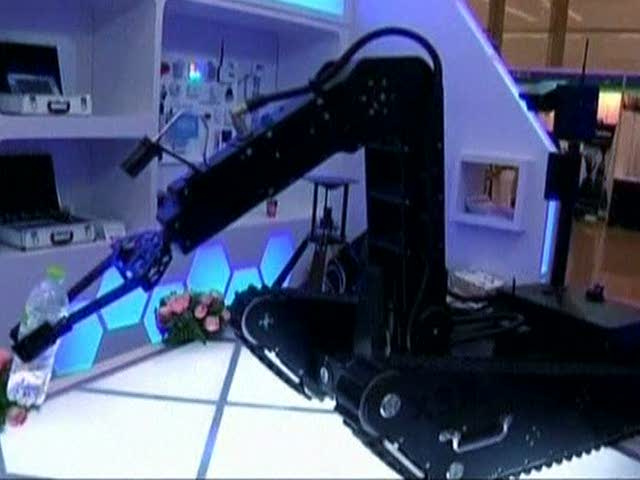 The latest technological development in robots is the main focus of the Shanghai International Conference on Robotics and Automation in China.
more »
The latest technological development in robots is the main focus of the Shanghai International Conference on Robotics and Automation in China.
more »
 A rare earthquake rocked Lorca, an ancient town in southeastern Spain, on Wednesday causing houses to collapse, damaging historic churches and public buildings and killing at least 10 people.
more »
A rare earthquake rocked Lorca, an ancient town in southeastern Spain, on Wednesday causing houses to collapse, damaging historic churches and public buildings and killing at least 10 people.
more »
 A small factory in New York's Brooklyn is doing its best to keep the dying art of making vinyl records.
more »
A small factory in New York's Brooklyn is doing its best to keep the dying art of making vinyl records.
more »