Three months expected for assessment of results of European Convention
Published:
5 April 2003 y., Saturday
The member states of the European Union are likely to be given three months to assess the results of the work of the Convention on the Future of Europe. The Finnish Government would have liked a full six months to review the results of the convention before the Inter-Governmental Conference, which makes a final decision on the issue.
The Convention is scheduled to complete its work by the end of June. Finland says that it needs six months after that before Parliament can take a stand on the proposed reforms.
The office of the Finnish Council of State issued an unofficial calculation on Thursday, predicting that the IGC would begin already in late September - immediately after the Swedish referendum on whether or not to join the common European currency, the euro, and after referendums on EU membership are held in the applicant countries.
The timetable and the possible extension to be granted to the work of the convention could come up at an extraordinary meeting of the EU heads of state and government to be held in Athens on April 16. It is at this meeting that the EU applicant countries are to sign their membership agreements.
The Finnish Parliament and its committees are more closely linked with EU decision-making than those of the other member states, which is why the process in Finland would require more time than elsewhere.
The Chairman of the Convention, former French President Valéry Giscard d'Estaing, feels that the final result of the Convention should not be changed in talks between the governments of the member states, or in the Inter-Governmental Conference.
Šaltinis:
helsinki-hs.net
Copying, publishing, announcing any information from the News.lt portal without written permission of News.lt editorial office is prohibited.
The most popular articles
 President of the Republic of Lithuania Dalia Grybauskaitė congratulated her Italian counterpart, President Giorgio Napolitano, on the Italian national holiday, the Republic Day.
more »
President of the Republic of Lithuania Dalia Grybauskaitė congratulated her Italian counterpart, President Giorgio Napolitano, on the Italian national holiday, the Republic Day.
more »
 The European Union supports and promotes the region through the Baltic Sea Strategy, specially designed to encourage regional cooperation.
more »
The European Union supports and promotes the region through the Baltic Sea Strategy, specially designed to encourage regional cooperation.
more »
 One of the most important topics for Lithuania - efforts to overcome energy isolation of Lithuania and other Baltic States and to strengthen energy security in the Baltic Sea region – is included into the agenda of the Baltic Development Forum (BDF) Summit, which started on 1 June in Vilnius.
more »
One of the most important topics for Lithuania - efforts to overcome energy isolation of Lithuania and other Baltic States and to strengthen energy security in the Baltic Sea region – is included into the agenda of the Baltic Development Forum (BDF) Summit, which started on 1 June in Vilnius.
more »
 President of the Republic of Lithuania Dalia Grybauskaitė will have a meeting with the President of the European Commission, Jose Manuel Barroso, in Vilnius.
more »
President of the Republic of Lithuania Dalia Grybauskaitė will have a meeting with the President of the European Commission, Jose Manuel Barroso, in Vilnius.
more »
 On 28 May in Vilnius, Lithuania’s Minister of Foreign Affairs Audronius Ažubalis met with ambassadors of NATO countries, who reside in Lithuania.
more »
On 28 May in Vilnius, Lithuania’s Minister of Foreign Affairs Audronius Ažubalis met with ambassadors of NATO countries, who reside in Lithuania.
more »
 New British Foreign Secretary William Hague sent a letter to Lithuania’s Minister of Foreign Affairs A. Ažubalis, highlighting the determination to continue and to broaden the close working relationship that the UK and Lithuania shares both bilaterally and within the framework of the EU and NATO.
more »
New British Foreign Secretary William Hague sent a letter to Lithuania’s Minister of Foreign Affairs A. Ažubalis, highlighting the determination to continue and to broaden the close working relationship that the UK and Lithuania shares both bilaterally and within the framework of the EU and NATO.
more »
 At the meeting of foreign ministers from the European Union and the Association of Southeast Asian Nations on 25-26 May in Madrid, Lithuania’s Vice-Minister of Foreign Affairs Šarūnas Adomavičius invited Southeast Asian countries to contribute to the implementation of projects in the province of Ghor, Afghanistan, where Lithuania leads a Provincial Reconstruction Team.
more »
At the meeting of foreign ministers from the European Union and the Association of Southeast Asian Nations on 25-26 May in Madrid, Lithuania’s Vice-Minister of Foreign Affairs Šarūnas Adomavičius invited Southeast Asian countries to contribute to the implementation of projects in the province of Ghor, Afghanistan, where Lithuania leads a Provincial Reconstruction Team.
more »
On 27 May in Vilnius, Lithuania’s Minister of Foreign Affairs Audronius Ažubalis met with prominent figure of the world’s Lithuanian community, scientist and conservationist Dr. Birutė Galdikas.
more »
 President Dalia Grybauskaitė extended congratulations to President Serzh Sargsyan of Armenia on national holiday - Republic Day.
more »
President Dalia Grybauskaitė extended congratulations to President Serzh Sargsyan of Armenia on national holiday - Republic Day.
more »
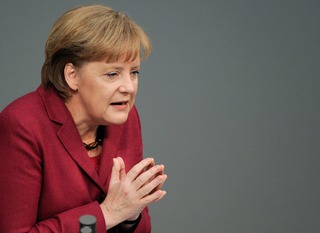 Next Tuesday, June 1 at 17.00 hours, President Dalia Grybauskaitė will meet with the Chancellor of the Federal Republic of Germany, Angela Merkel, who will be in Vilnius on a working visit.
more »
Next Tuesday, June 1 at 17.00 hours, President Dalia Grybauskaitė will meet with the Chancellor of the Federal Republic of Germany, Angela Merkel, who will be in Vilnius on a working visit.
more »