Diplomats Look to Cold War Tactics for Help in Arab World
Published:
22 June 2004 y., Tuesday
The War on Terror frequently has been described as a battle for hearts and minds, but critics of American diplomatic efforts toward the Arab world say that not enough is being done and warn that losing the struggle would be disastrous to the United States.
Aside from military might, the United States has started fighting the seeds of terror through public outreach that includes the establishment of Arabic-language media outlets, among other projects. But all polling data so far indicate the United States is far from victorious when it comes to earning the trust and friendship of Arab countries.
Polls show plunging American popularity throughout the world, with numbers registering the lowest in the Middle East. A Pew Global Attitudes survey released in March showed an overwhelmingly unfavorable view of the United States among respondents in all four Muslim countries surveyed — Turkey, Pakistan, Jordan and Morocco. In Morocco, Jordan and Pakistan, Usama bin Laden is far more popular than President Bush.
The numbers have only gotten worse since the Abu Ghraib prison abuse scandal.
"The public diplomacy we currently have is not working," Rep. Frank Wolf, R-Va., told an audience at the American Enterprise Institute earlier this month. "With what's taking place in the prisons in Iraq, I think it is much more difficult."
But directors and managers of American-funded Arabic-language TV and radio stations say they will continue to soldier on and get the U.S. message across.
Šaltinis:
.foxnews.com
Copying, publishing, announcing any information from the News.lt portal without written permission of News.lt editorial office is prohibited.
The most popular articles
 Lithuania took over the Chairmanship of the Organization for Security and Co-operation in Europe today, with a focus on internal and external threats in the OSCE area, fostering democracy, human rights and fundamental freedoms, notably freedom of the media, promoting energy security in Europe and building upon synergies between regional organizations.
more »
Lithuania took over the Chairmanship of the Organization for Security and Co-operation in Europe today, with a focus on internal and external threats in the OSCE area, fostering democracy, human rights and fundamental freedoms, notably freedom of the media, promoting energy security in Europe and building upon synergies between regional organizations.
more »
 President of the Republic of Lithuania Dalia Grybauskaitė says the decision taken by the European Council to amend the EU Treaty to provide for the establishment of a permanent support mechanism for crisis–stricken eurozone countries is very important for Lithuania.
more »
President of the Republic of Lithuania Dalia Grybauskaitė says the decision taken by the European Council to amend the EU Treaty to provide for the establishment of a permanent support mechanism for crisis–stricken eurozone countries is very important for Lithuania.
more »
 At the OSCE Summit, President of the Republic of Lithuania Dalia Grybauskaitė met with President of the Kyrgyz Republic Roza Otunbayeva for a bilateral discussion.
more »
At the OSCE Summit, President of the Republic of Lithuania Dalia Grybauskaitė met with President of the Kyrgyz Republic Roza Otunbayeva for a bilateral discussion.
more »
President of the Republic of Lithuania Dalia Grybauskaitė attending OSCE Summit in Astana had a conversation with US Secretary of State Hillary Clinton.
more »
 President Dalia Grybauskaitė positively assessed the European Commission's decision to include the integration of the Baltic Energy Market into the European market in the map of EU priorities.
more »
President Dalia Grybauskaitė positively assessed the European Commission's decision to include the integration of the Baltic Energy Market into the European market in the map of EU priorities.
more »
 President of the Republic of Lithuania Dalia Grybauskaitė left to Lisbon to attend NATO Summit that starts today.
more »
President of the Republic of Lithuania Dalia Grybauskaitė left to Lisbon to attend NATO Summit that starts today.
more »
 President of the Republic of Lithuania Dalia Grybauskaitė congratulated President Valdis Zatlers of the Republic of Latvia and all Latvian people on Latvia's national holiday, the Independence Day.
more »
President of the Republic of Lithuania Dalia Grybauskaitė congratulated President Valdis Zatlers of the Republic of Latvia and all Latvian people on Latvia's national holiday, the Independence Day.
more »
President of the Republic of Lithuania Dalia Grybauskaitė received letters of credence from the Ambassador of the Islamic Republic of Iran, Samad Ali Lakizadeh.
more »
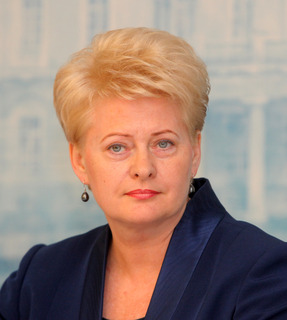 President of the Republic of Lithuania Dalia Grybauskaitė received letters of credence from the Ambassador of the United Arab Emirates, Mohammed Ahmed Al Mahmood.
more »
President of the Republic of Lithuania Dalia Grybauskaitė received letters of credence from the Ambassador of the United Arab Emirates, Mohammed Ahmed Al Mahmood.
more »
 As a response to the address made by representatives of Lithuania's culture community and civic society concerning the future of Kristijonas Donelaitis museum in Chistye Prudy in the Kaliningrad Oblast, President of the Republic of Lithuania D. Grybauskaitė sent a letter to President D. Medvedev of the Russian Federation.
more »
As a response to the address made by representatives of Lithuania's culture community and civic society concerning the future of Kristijonas Donelaitis museum in Chistye Prudy in the Kaliningrad Oblast, President of the Republic of Lithuania D. Grybauskaitė sent a letter to President D. Medvedev of the Russian Federation.
more »