Diplomats Look to Cold War Tactics for Help in Arab World
Published:
22 June 2004 y., Tuesday
The War on Terror frequently has been described as a battle for hearts and minds, but critics of American diplomatic efforts toward the Arab world say that not enough is being done and warn that losing the struggle would be disastrous to the United States.
Aside from military might, the United States has started fighting the seeds of terror through public outreach that includes the establishment of Arabic-language media outlets, among other projects. But all polling data so far indicate the United States is far from victorious when it comes to earning the trust and friendship of Arab countries.
Polls show plunging American popularity throughout the world, with numbers registering the lowest in the Middle East. A Pew Global Attitudes survey released in March showed an overwhelmingly unfavorable view of the United States among respondents in all four Muslim countries surveyed — Turkey, Pakistan, Jordan and Morocco. In Morocco, Jordan and Pakistan, Usama bin Laden is far more popular than President Bush.
The numbers have only gotten worse since the Abu Ghraib prison abuse scandal.
"The public diplomacy we currently have is not working," Rep. Frank Wolf, R-Va., told an audience at the American Enterprise Institute earlier this month. "With what's taking place in the prisons in Iraq, I think it is much more difficult."
But directors and managers of American-funded Arabic-language TV and radio stations say they will continue to soldier on and get the U.S. message across.
Šaltinis:
.foxnews.com
Copying, publishing, announcing any information from the News.lt portal without written permission of News.lt editorial office is prohibited.
The most popular articles
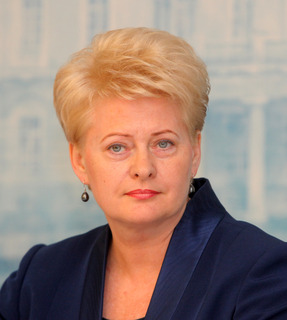 President Dalia Grybauskaitė sent a letter to the participants of the ceremony of unveiling a commemorative plaque in Washington Square in Vilnius to mark the seventieth anniversary of the US Department of State Declaration on the Non-Recognition of the Annexation of the Baltic States.
more »
President Dalia Grybauskaitė sent a letter to the participants of the ceremony of unveiling a commemorative plaque in Washington Square in Vilnius to mark the seventieth anniversary of the US Department of State Declaration on the Non-Recognition of the Annexation of the Baltic States.
more »
 President Dalia Grybauskaitė on behalf of herself and the people of Lithuania extended congratulations to His Majesty Albert II, King of the Belgians, on the occasion of Independence Day.
more »
President Dalia Grybauskaitė on behalf of herself and the people of Lithuania extended congratulations to His Majesty Albert II, King of the Belgians, on the occasion of Independence Day.
more »
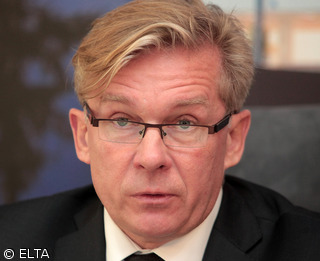 On 20 July at the international conference on Afghanistan in Kabul, Lithuania’s Minister of Foreign Affairs Audronius Ažubalis affirmed that Lithuania would continue fulfilling commitments and contributing to the stabilization and development of Ghor Province.
more »
On 20 July at the international conference on Afghanistan in Kabul, Lithuania’s Minister of Foreign Affairs Audronius Ažubalis affirmed that Lithuania would continue fulfilling commitments and contributing to the stabilization and development of Ghor Province.
more »
 President Dalia Grybauskaitė presented letters of credence to Žygimantas Pavilionis, Ambassador Extraordinary and Plenipotentiary of Lithuania to the United States of America.
more »
President Dalia Grybauskaitė presented letters of credence to Žygimantas Pavilionis, Ambassador Extraordinary and Plenipotentiary of Lithuania to the United States of America.
more »
 Lithuania’s Minister of Foreign Affairs Audronius Ažubalis welcomed the official launch of European Union-Georgia talks on Association Agreement.
more »
Lithuania’s Minister of Foreign Affairs Audronius Ažubalis welcomed the official launch of European Union-Georgia talks on Association Agreement.
more »
 Lithuania’s honorary consuls are expected to contribute consolidated efforts to achieving today’s key tasks of Lithuania’s economic diplomacy – the promotion of Lithuanian exports and attraction of foreign direct investments.
more »
Lithuania’s honorary consuls are expected to contribute consolidated efforts to achieving today’s key tasks of Lithuania’s economic diplomacy – the promotion of Lithuanian exports and attraction of foreign direct investments.
more »
 Victory in the Battle of Grunwald (Žalgiris) stands as a symbol signifying the hope of the Lithuanian people to seek freedom and independence, President Dalia Grybauskaitė underlined at the celebration of the 600th Anniversary of the Grunwald Battle.
more »
Victory in the Battle of Grunwald (Žalgiris) stands as a symbol signifying the hope of the Lithuanian people to seek freedom and independence, President Dalia Grybauskaitė underlined at the celebration of the 600th Anniversary of the Grunwald Battle.
more »
 President Dalia Grybauskaitė, together with Polish President-elect Bronisław Komorowski and prominent Polish state and public figures, took part in the festive celebration of the 600th Anniversary of the Battle of Grunwald (Žalgiris).
more »
President Dalia Grybauskaitė, together with Polish President-elect Bronisław Komorowski and prominent Polish state and public figures, took part in the festive celebration of the 600th Anniversary of the Battle of Grunwald (Žalgiris).
more »
 Yesterday evening, after the wreath-laying ceremony at the Grunwald Monument and the opening of a special exhibition at the Wawel Royal Castle in Kraków, President D. Grybauskaitė of Lithuania and President-elect B. Komorowski of Poland had a working dinner together.
more »
Yesterday evening, after the wreath-laying ceremony at the Grunwald Monument and the opening of a special exhibition at the Wawel Royal Castle in Kraków, President D. Grybauskaitė of Lithuania and President-elect B. Komorowski of Poland had a working dinner together.
more »
Wednesday, 14 July, the President of the Republic of Lithuania, Dalia Grybauskaitė, is to meet with her Romanian counterpart, Traian Băsescu, who is to pay an official visit to Lithuania.
more »