Shock swing towards euroscepticism in European Parliament elections
Published:
14 June 2004 y., Monday
With most of the results counted, it is clear that smaller, eurosceptic or populist parties have triumphed at the expense of more well-established parties.
The biggest shock for the establishment undoubtedly comes from the UK, where the United Kingdom Independence Party (UKIP), which wants complete withdrawal from the EU, looks to have secured 20 percent of the vote and 17 seats.
This result would place the UKIP third behind the Conservatives (polling 22 percent at the time of writing) and Labour (also on 22 percent).
And it would leave the more established Liberal Democrats trailing in their wake on 14 percent. Liberal leader Graham Watson said he regretted the fact that "parliament will have a greater number of anti-Europeans" adding that they will be rather "unproductive members".
Pat Cox, outgoing head of the European Parliament, put a brave face on the result by saying that "though significant and a new dimension in its scale, it must be put in context". He said it only represented 10-15% of MEPs.
Eurosceptics also achieved a major victory in Sweden, where the recently-formed EU-critical Junilistan came third in the election, securing 14.4 percent of the vote and three seats in the new European Parliament.
It was also a memorable night for the populist Vlaams Blok in Belgium. The far-right party scored 14.3 percent (at the time of writing), making it the second biggest party in Belgium.
Šaltinis:
EUOBSERVER
Copying, publishing, announcing any information from the News.lt portal without written permission of News.lt editorial office is prohibited.
The most popular articles
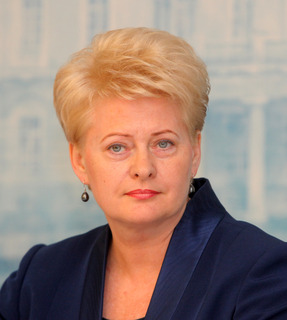 President Dalia Grybauskaitė sent a letter to the participants of the ceremony of unveiling a commemorative plaque in Washington Square in Vilnius to mark the seventieth anniversary of the US Department of State Declaration on the Non-Recognition of the Annexation of the Baltic States.
more »
President Dalia Grybauskaitė sent a letter to the participants of the ceremony of unveiling a commemorative plaque in Washington Square in Vilnius to mark the seventieth anniversary of the US Department of State Declaration on the Non-Recognition of the Annexation of the Baltic States.
more »
 President Dalia Grybauskaitė on behalf of herself and the people of Lithuania extended congratulations to His Majesty Albert II, King of the Belgians, on the occasion of Independence Day.
more »
President Dalia Grybauskaitė on behalf of herself and the people of Lithuania extended congratulations to His Majesty Albert II, King of the Belgians, on the occasion of Independence Day.
more »
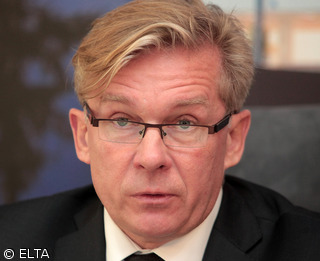 On 20 July at the international conference on Afghanistan in Kabul, Lithuania’s Minister of Foreign Affairs Audronius Ažubalis affirmed that Lithuania would continue fulfilling commitments and contributing to the stabilization and development of Ghor Province.
more »
On 20 July at the international conference on Afghanistan in Kabul, Lithuania’s Minister of Foreign Affairs Audronius Ažubalis affirmed that Lithuania would continue fulfilling commitments and contributing to the stabilization and development of Ghor Province.
more »
 President Dalia Grybauskaitė presented letters of credence to Žygimantas Pavilionis, Ambassador Extraordinary and Plenipotentiary of Lithuania to the United States of America.
more »
President Dalia Grybauskaitė presented letters of credence to Žygimantas Pavilionis, Ambassador Extraordinary and Plenipotentiary of Lithuania to the United States of America.
more »
 Lithuania’s Minister of Foreign Affairs Audronius Ažubalis welcomed the official launch of European Union-Georgia talks on Association Agreement.
more »
Lithuania’s Minister of Foreign Affairs Audronius Ažubalis welcomed the official launch of European Union-Georgia talks on Association Agreement.
more »
 Lithuania’s honorary consuls are expected to contribute consolidated efforts to achieving today’s key tasks of Lithuania’s economic diplomacy – the promotion of Lithuanian exports and attraction of foreign direct investments.
more »
Lithuania’s honorary consuls are expected to contribute consolidated efforts to achieving today’s key tasks of Lithuania’s economic diplomacy – the promotion of Lithuanian exports and attraction of foreign direct investments.
more »
 Victory in the Battle of Grunwald (Žalgiris) stands as a symbol signifying the hope of the Lithuanian people to seek freedom and independence, President Dalia Grybauskaitė underlined at the celebration of the 600th Anniversary of the Grunwald Battle.
more »
Victory in the Battle of Grunwald (Žalgiris) stands as a symbol signifying the hope of the Lithuanian people to seek freedom and independence, President Dalia Grybauskaitė underlined at the celebration of the 600th Anniversary of the Grunwald Battle.
more »
 President Dalia Grybauskaitė, together with Polish President-elect Bronisław Komorowski and prominent Polish state and public figures, took part in the festive celebration of the 600th Anniversary of the Battle of Grunwald (Žalgiris).
more »
President Dalia Grybauskaitė, together with Polish President-elect Bronisław Komorowski and prominent Polish state and public figures, took part in the festive celebration of the 600th Anniversary of the Battle of Grunwald (Žalgiris).
more »
 Yesterday evening, after the wreath-laying ceremony at the Grunwald Monument and the opening of a special exhibition at the Wawel Royal Castle in Kraków, President D. Grybauskaitė of Lithuania and President-elect B. Komorowski of Poland had a working dinner together.
more »
Yesterday evening, after the wreath-laying ceremony at the Grunwald Monument and the opening of a special exhibition at the Wawel Royal Castle in Kraków, President D. Grybauskaitė of Lithuania and President-elect B. Komorowski of Poland had a working dinner together.
more »
Wednesday, 14 July, the President of the Republic of Lithuania, Dalia Grybauskaitė, is to meet with her Romanian counterpart, Traian Băsescu, who is to pay an official visit to Lithuania.
more »