Shock swing towards euroscepticism in European Parliament elections
Published:
14 June 2004 y., Monday
With most of the results counted, it is clear that smaller, eurosceptic or populist parties have triumphed at the expense of more well-established parties.
The biggest shock for the establishment undoubtedly comes from the UK, where the United Kingdom Independence Party (UKIP), which wants complete withdrawal from the EU, looks to have secured 20 percent of the vote and 17 seats.
This result would place the UKIP third behind the Conservatives (polling 22 percent at the time of writing) and Labour (also on 22 percent).
And it would leave the more established Liberal Democrats trailing in their wake on 14 percent. Liberal leader Graham Watson said he regretted the fact that "parliament will have a greater number of anti-Europeans" adding that they will be rather "unproductive members".
Pat Cox, outgoing head of the European Parliament, put a brave face on the result by saying that "though significant and a new dimension in its scale, it must be put in context". He said it only represented 10-15% of MEPs.
Eurosceptics also achieved a major victory in Sweden, where the recently-formed EU-critical Junilistan came third in the election, securing 14.4 percent of the vote and three seats in the new European Parliament.
It was also a memorable night for the populist Vlaams Blok in Belgium. The far-right party scored 14.3 percent (at the time of writing), making it the second biggest party in Belgium.
Šaltinis:
EUOBSERVER
Copying, publishing, announcing any information from the News.lt portal without written permission of News.lt editorial office is prohibited.
The most popular articles
 President Dalia Grybauskaitė sent congratulations on behalf of herself and the people of Lithuania to President Dmitry Medvedev of the Russian Federation on the Day of Russia.
more »
President Dalia Grybauskaitė sent congratulations on behalf of herself and the people of Lithuania to President Dmitry Medvedev of the Russian Federation on the Day of Russia.
more »
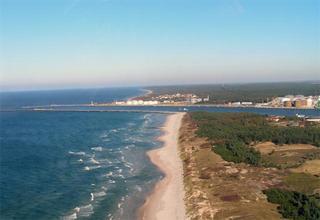 Political support, commitment at all levels of governance and ensured financing are crucial elements for the successful implementation of the European Union Strategy for the Baltic Sea Region, Lithuania’s Vice-Minister of Foreign Affairs A. Skaisgirytė Liauškienė said at the seminar, dedicated to discuss financial and management aspects of the Strategy’s implementation.
more »
Political support, commitment at all levels of governance and ensured financing are crucial elements for the successful implementation of the European Union Strategy for the Baltic Sea Region, Lithuania’s Vice-Minister of Foreign Affairs A. Skaisgirytė Liauškienė said at the seminar, dedicated to discuss financial and management aspects of the Strategy’s implementation.
more »
 On 10 June, Political Director of Lithuania’s Ministry of Foreign Affairs Eitvydas Bajarūnas took part in the political consultations with officials from the Ukrainian Foreign Ministry in Kyiv.
more »
On 10 June, Political Director of Lithuania’s Ministry of Foreign Affairs Eitvydas Bajarūnas took part in the political consultations with officials from the Ukrainian Foreign Ministry in Kyiv.
more »
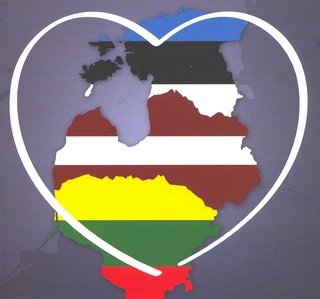 On 10 June, a seminar to discuss financial and management aspects of the implementation of the EU Strategy for the Baltic Sea Region will be held in Vilnius.
more »
On 10 June, a seminar to discuss financial and management aspects of the implementation of the EU Strategy for the Baltic Sea Region will be held in Vilnius.
more »
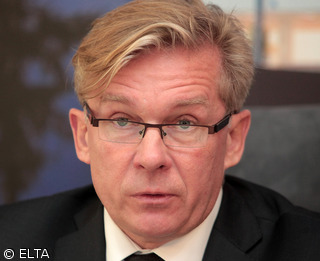 Two entities with common objectives, Conference on Interaction and Confidence Building Measures in Asia and the Organization for Security and Co-operation in Europe, could act alongside each other, Lithuania’s Minister of Foreign Affairs A. Ažubalis says.
more »
Two entities with common objectives, Conference on Interaction and Confidence Building Measures in Asia and the Organization for Security and Co-operation in Europe, could act alongside each other, Lithuania’s Minister of Foreign Affairs A. Ažubalis says.
more »
 President of the Republic of Lithuania Dalia Grybauskaitė has just made her first State of the Nation Address in the Seimas, to give an overview of the situation of the country and the status of internal and foreign policies of the state, as required under the Constitution of the Republic of Lithuania.
more »
President of the Republic of Lithuania Dalia Grybauskaitė has just made her first State of the Nation Address in the Seimas, to give an overview of the situation of the country and the status of internal and foreign policies of the state, as required under the Constitution of the Republic of Lithuania.
more »
 A round table discussion "Europe 2030: Do We Have a New Approach?" was held on 4 June in Vilnius.
more »
A round table discussion "Europe 2030: Do We Have a New Approach?" was held on 4 June in Vilnius.
more »
 On 7 June in Vilnius, Lithuania’s Vice-Minister of Foreign Affairs Šarūnas Adomavičius met with Chairman of the Knesset Lithuanian-Israeli Parliamentary Friendship Group Zeev Bielski and discussed the cooperation between the countries, as well as in international organizations.
more »
On 7 June in Vilnius, Lithuania’s Vice-Minister of Foreign Affairs Šarūnas Adomavičius met with Chairman of the Knesset Lithuanian-Israeli Parliamentary Friendship Group Zeev Bielski and discussed the cooperation between the countries, as well as in international organizations.
more »
 Today Chancellor Angela Merkel of the Federal Republic of Germany called President of the Republic of Lithuania Dalia Grybauskaitė to express regrets at not having been able to come to Lithuania earlier in the week due to the complicated political situation in Germany.
more »
Today Chancellor Angela Merkel of the Federal Republic of Germany called President of the Republic of Lithuania Dalia Grybauskaitė to express regrets at not having been able to come to Lithuania earlier in the week due to the complicated political situation in Germany.
more »
 President of the Republic of Lithuania Dalia Grybauskaitė met with the President of the European Commission, Jose Manuel Barroso, who is currently visiting Lithuania.
more »
President of the Republic of Lithuania Dalia Grybauskaitė met with the President of the European Commission, Jose Manuel Barroso, who is currently visiting Lithuania.
more »