Shock swing towards euroscepticism in European Parliament elections
Published:
14 June 2004 y., Monday
With most of the results counted, it is clear that smaller, eurosceptic or populist parties have triumphed at the expense of more well-established parties.
The biggest shock for the establishment undoubtedly comes from the UK, where the United Kingdom Independence Party (UKIP), which wants complete withdrawal from the EU, looks to have secured 20 percent of the vote and 17 seats.
This result would place the UKIP third behind the Conservatives (polling 22 percent at the time of writing) and Labour (also on 22 percent).
And it would leave the more established Liberal Democrats trailing in their wake on 14 percent. Liberal leader Graham Watson said he regretted the fact that "parliament will have a greater number of anti-Europeans" adding that they will be rather "unproductive members".
Pat Cox, outgoing head of the European Parliament, put a brave face on the result by saying that "though significant and a new dimension in its scale, it must be put in context". He said it only represented 10-15% of MEPs.
Eurosceptics also achieved a major victory in Sweden, where the recently-formed EU-critical Junilistan came third in the election, securing 14.4 percent of the vote and three seats in the new European Parliament.
It was also a memorable night for the populist Vlaams Blok in Belgium. The far-right party scored 14.3 percent (at the time of writing), making it the second biggest party in Belgium.
Šaltinis:
EUOBSERVER
Copying, publishing, announcing any information from the News.lt portal without written permission of News.lt editorial office is prohibited.
The most popular articles
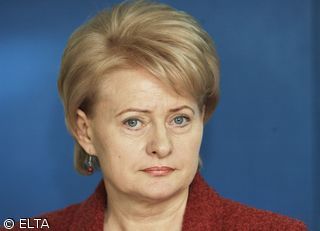 President of the Republic of Lithuania Dalia Grybauskaitė goes for a working visit to Brussels to attend an informal meeting of the European Council.
more »
President of the Republic of Lithuania Dalia Grybauskaitė goes for a working visit to Brussels to attend an informal meeting of the European Council.
more »
 President Dalia Grybauskaitė extended congratulations to President Valdis Zatlers and the people of Latvia on their national holiday - Independence Day.
more »
President Dalia Grybauskaitė extended congratulations to President Valdis Zatlers and the people of Latvia on their national holiday - Independence Day.
more »
 On 16 November in Brussels, Lithuania’s Minister of Foreign Affairs Vygaudas Ušackas took part in the joint meeting of European Union’s foreign and defence ministers with NATO Secretary General Anders Fogh Rasmussen.
more »
On 16 November in Brussels, Lithuania’s Minister of Foreign Affairs Vygaudas Ušackas took part in the joint meeting of European Union’s foreign and defence ministers with NATO Secretary General Anders Fogh Rasmussen.
more »
 Wednesday, November 11, President of the Republic of Lithuania Dalia Grybauskaitė met with President of the Republic of Poland Lech Kaczyński.
more »
Wednesday, November 11, President of the Republic of Lithuania Dalia Grybauskaitė met with President of the Republic of Poland Lech Kaczyński.
more »
 On November 5-6 meeting of the Baltic Chiefs of Defence Staffs of the Baltic States will be held in Nemenčinė, Gen. Ramanauskas Warfare Training Centre (Vilnius Region).
more »
On November 5-6 meeting of the Baltic Chiefs of Defence Staffs of the Baltic States will be held in Nemenčinė, Gen. Ramanauskas Warfare Training Centre (Vilnius Region).
more »
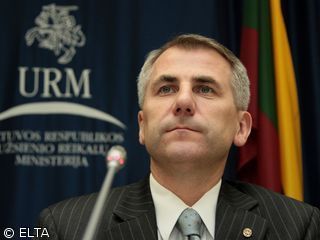 The interview of Lithuania’s Minister of Foreign Affairs Vygaudas Ušackas to the daily Die Presse about his country’s sensitive relations with Russia, about perspectives for Kiev and bad American PR in the antiballistic missile defence debate.
more »
The interview of Lithuania’s Minister of Foreign Affairs Vygaudas Ušackas to the daily Die Presse about his country’s sensitive relations with Russia, about perspectives for Kiev and bad American PR in the antiballistic missile defence debate.
more »
 Professor Vytautas Landsbergis, outstanding Lithuanian politician and cultural figure, is invited as a keynote speaker and will deliver a report on the Lithuanian contribution to European freedom and unification in 1988-1989.
more »
Professor Vytautas Landsbergis, outstanding Lithuanian politician and cultural figure, is invited as a keynote speaker and will deliver a report on the Lithuanian contribution to European freedom and unification in 1988-1989.
more »
 President of the Republic of Lithuania participating in her first session of the European Council strongly defends interests of the Baltic countries and other new Member States of the EU at the commencing discussion among the European leaders concerning the common position to be upheld in the upcoming world-wide meeting in Copenhagen on the issue of mitigation of consequences of climate change.
more »
President of the Republic of Lithuania participating in her first session of the European Council strongly defends interests of the Baltic countries and other new Member States of the EU at the commencing discussion among the European leaders concerning the common position to be upheld in the upcoming world-wide meeting in Copenhagen on the issue of mitigation of consequences of climate change.
more »
 Lithuania’s Minister of Foreign Affairs Vygaudas Ušackas offers his most sincere condolences to the families of those who have lost their loved ones during the terrorist act in Kabul, the capital of Afghanistan, on 28 October.
more »
Lithuania’s Minister of Foreign Affairs Vygaudas Ušackas offers his most sincere condolences to the families of those who have lost their loved ones during the terrorist act in Kabul, the capital of Afghanistan, on 28 October.
more »
 President Dalia Grybauskaitė extended congratulations to President Abdullah Gül on the 86th anniversary of the founding of the Republic of Turkey.
more »
President Dalia Grybauskaitė extended congratulations to President Abdullah Gül on the 86th anniversary of the founding of the Republic of Turkey.
more »