Pentagon wants to avoid misunderstandings over nuclear weapons related to millennium bug.
Published:
23 July 1999 y., Friday
The United States has again asked Russia to join in minimizing the risk of a missile-launch misunderstanding at the height of Year 2000 computer uncertainties, the U.S. Defense Department said Tuesday. Moscow has not yet replied to the latest U.S. overture, said a Pentagon spokesman. At issue is a proposed temporary "early warning" center that would keep missile-launching commanders constantly aware of what the other side was seeing and doing during the potentially troublesome date rollover. Simulations have shown that older computers and microchips could crash or malfunction by misreading the year 2000 as 1900, the result of an old programming shortcut based on a two-digit date field. A facility designed to be shared with Russia to head off any false alerts has already been set up by the United States at Peterson Air Force Base, near Colorado Springs, Colo. President Clinton and Russian President Boris Yeltsin set the project in motion when they met in Moscow last September as part of a post-Cold War plan to share early warning data about long-range missile launches. Before the bombing of Serbia drove U.S.-Russian ties to their lowest ebb of the post-Cold War period, the United States and Russia had been talking regularly about 2000-related computer issues. Pentagon officials say they are fully confident, based on extensive testing, that critical systems in the U.S. nuclear chain of command will work flawlessly during the date change. They also say they see virtually no possibility of accidental launches because humans must make final decisions in both countries.
Šaltinis:
Internet
Copying, publishing, announcing any information from the News.lt portal without written permission of News.lt editorial office is prohibited.
The most popular articles
 President of the Republic of Lithuania Dalia Grybauskaitė congratulated her Italian counterpart, President Giorgio Napolitano, on the Italian national holiday, the Republic Day.
more »
President of the Republic of Lithuania Dalia Grybauskaitė congratulated her Italian counterpart, President Giorgio Napolitano, on the Italian national holiday, the Republic Day.
more »
 The European Union supports and promotes the region through the Baltic Sea Strategy, specially designed to encourage regional cooperation.
more »
The European Union supports and promotes the region through the Baltic Sea Strategy, specially designed to encourage regional cooperation.
more »
 One of the most important topics for Lithuania - efforts to overcome energy isolation of Lithuania and other Baltic States and to strengthen energy security in the Baltic Sea region – is included into the agenda of the Baltic Development Forum (BDF) Summit, which started on 1 June in Vilnius.
more »
One of the most important topics for Lithuania - efforts to overcome energy isolation of Lithuania and other Baltic States and to strengthen energy security in the Baltic Sea region – is included into the agenda of the Baltic Development Forum (BDF) Summit, which started on 1 June in Vilnius.
more »
 President of the Republic of Lithuania Dalia Grybauskaitė will have a meeting with the President of the European Commission, Jose Manuel Barroso, in Vilnius.
more »
President of the Republic of Lithuania Dalia Grybauskaitė will have a meeting with the President of the European Commission, Jose Manuel Barroso, in Vilnius.
more »
 On 28 May in Vilnius, Lithuania’s Minister of Foreign Affairs Audronius Ažubalis met with ambassadors of NATO countries, who reside in Lithuania.
more »
On 28 May in Vilnius, Lithuania’s Minister of Foreign Affairs Audronius Ažubalis met with ambassadors of NATO countries, who reside in Lithuania.
more »
 New British Foreign Secretary William Hague sent a letter to Lithuania’s Minister of Foreign Affairs A. Ažubalis, highlighting the determination to continue and to broaden the close working relationship that the UK and Lithuania shares both bilaterally and within the framework of the EU and NATO.
more »
New British Foreign Secretary William Hague sent a letter to Lithuania’s Minister of Foreign Affairs A. Ažubalis, highlighting the determination to continue and to broaden the close working relationship that the UK and Lithuania shares both bilaterally and within the framework of the EU and NATO.
more »
 At the meeting of foreign ministers from the European Union and the Association of Southeast Asian Nations on 25-26 May in Madrid, Lithuania’s Vice-Minister of Foreign Affairs Šarūnas Adomavičius invited Southeast Asian countries to contribute to the implementation of projects in the province of Ghor, Afghanistan, where Lithuania leads a Provincial Reconstruction Team.
more »
At the meeting of foreign ministers from the European Union and the Association of Southeast Asian Nations on 25-26 May in Madrid, Lithuania’s Vice-Minister of Foreign Affairs Šarūnas Adomavičius invited Southeast Asian countries to contribute to the implementation of projects in the province of Ghor, Afghanistan, where Lithuania leads a Provincial Reconstruction Team.
more »
On 27 May in Vilnius, Lithuania’s Minister of Foreign Affairs Audronius Ažubalis met with prominent figure of the world’s Lithuanian community, scientist and conservationist Dr. Birutė Galdikas.
more »
 President Dalia Grybauskaitė extended congratulations to President Serzh Sargsyan of Armenia on national holiday - Republic Day.
more »
President Dalia Grybauskaitė extended congratulations to President Serzh Sargsyan of Armenia on national holiday - Republic Day.
more »
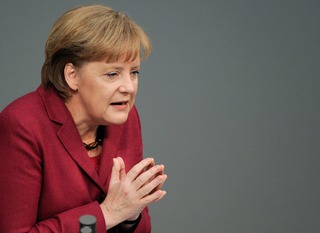 Next Tuesday, June 1 at 17.00 hours, President Dalia Grybauskaitė will meet with the Chancellor of the Federal Republic of Germany, Angela Merkel, who will be in Vilnius on a working visit.
more »
Next Tuesday, June 1 at 17.00 hours, President Dalia Grybauskaitė will meet with the Chancellor of the Federal Republic of Germany, Angela Merkel, who will be in Vilnius on a working visit.
more »