The showdown between the United States and other members of the United Nations Security Council was the latest and strongest confirmation that the international solidarity forged after the terror attacks on Sept. 11 was probably superficial and temporary
Published:
8 July 2002 y., Monday
The immediate issue at the United Nations was Washington's demand that American troops and all other United Nations peacekeeping forces be exempted from the jurisdiction of the International Criminal Court, which came into existence today under the shadow of intense hostility from the Bush administration.
Unless either the United States or other Council members back down before midnight Wednesday, the United Nations police-training mission in Bosnia will be abruptly terminated. If the standoff continues, all other United Nations peacekeeping operations will be jeopardized as they come up for renewal, starting with the mission in Lebanon later this month.
The immediate impact in Bosnia was likely to be largely organizational. Only 46 Americans serve in the police-training mission, and the entire operation was to be turned over to the European Union in six months.
But the very notion of Americans threatening to pull forces out of Europe in a dispute, even if symbolic, carried troubling connotations on a Continent where the American presence had represented a shared commitment for decades. At the heart of the divergence was a fundamentally different vision of global organizations. The Europeans, accustomed by their history and geography to think in terms of multilateral arrangements, have always placed a greater premium on international organizations. In the United States, international organizations like the United Nations have always been viewed with suspicion, much of it affirmed by the anti-American and anti-Israeli votes of the cold war.
Šaltinis:
nytimes.com
Copying, publishing, announcing any information from the News.lt portal without written permission of News.lt editorial office is prohibited.
The most popular articles
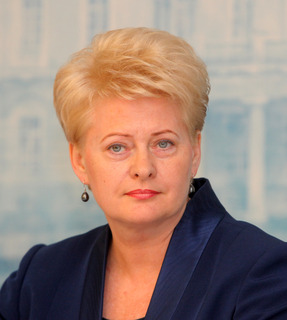 President Dalia Grybauskaitė sent a letter to the participants of the ceremony of unveiling a commemorative plaque in Washington Square in Vilnius to mark the seventieth anniversary of the US Department of State Declaration on the Non-Recognition of the Annexation of the Baltic States.
more »
President Dalia Grybauskaitė sent a letter to the participants of the ceremony of unveiling a commemorative plaque in Washington Square in Vilnius to mark the seventieth anniversary of the US Department of State Declaration on the Non-Recognition of the Annexation of the Baltic States.
more »
 President Dalia Grybauskaitė on behalf of herself and the people of Lithuania extended congratulations to His Majesty Albert II, King of the Belgians, on the occasion of Independence Day.
more »
President Dalia Grybauskaitė on behalf of herself and the people of Lithuania extended congratulations to His Majesty Albert II, King of the Belgians, on the occasion of Independence Day.
more »
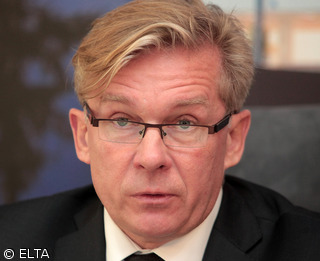 On 20 July at the international conference on Afghanistan in Kabul, Lithuania’s Minister of Foreign Affairs Audronius Ažubalis affirmed that Lithuania would continue fulfilling commitments and contributing to the stabilization and development of Ghor Province.
more »
On 20 July at the international conference on Afghanistan in Kabul, Lithuania’s Minister of Foreign Affairs Audronius Ažubalis affirmed that Lithuania would continue fulfilling commitments and contributing to the stabilization and development of Ghor Province.
more »
 President Dalia Grybauskaitė presented letters of credence to Žygimantas Pavilionis, Ambassador Extraordinary and Plenipotentiary of Lithuania to the United States of America.
more »
President Dalia Grybauskaitė presented letters of credence to Žygimantas Pavilionis, Ambassador Extraordinary and Plenipotentiary of Lithuania to the United States of America.
more »
 Lithuania’s Minister of Foreign Affairs Audronius Ažubalis welcomed the official launch of European Union-Georgia talks on Association Agreement.
more »
Lithuania’s Minister of Foreign Affairs Audronius Ažubalis welcomed the official launch of European Union-Georgia talks on Association Agreement.
more »
 Lithuania’s honorary consuls are expected to contribute consolidated efforts to achieving today’s key tasks of Lithuania’s economic diplomacy – the promotion of Lithuanian exports and attraction of foreign direct investments.
more »
Lithuania’s honorary consuls are expected to contribute consolidated efforts to achieving today’s key tasks of Lithuania’s economic diplomacy – the promotion of Lithuanian exports and attraction of foreign direct investments.
more »
 Victory in the Battle of Grunwald (Žalgiris) stands as a symbol signifying the hope of the Lithuanian people to seek freedom and independence, President Dalia Grybauskaitė underlined at the celebration of the 600th Anniversary of the Grunwald Battle.
more »
Victory in the Battle of Grunwald (Žalgiris) stands as a symbol signifying the hope of the Lithuanian people to seek freedom and independence, President Dalia Grybauskaitė underlined at the celebration of the 600th Anniversary of the Grunwald Battle.
more »
 President Dalia Grybauskaitė, together with Polish President-elect Bronisław Komorowski and prominent Polish state and public figures, took part in the festive celebration of the 600th Anniversary of the Battle of Grunwald (Žalgiris).
more »
President Dalia Grybauskaitė, together with Polish President-elect Bronisław Komorowski and prominent Polish state and public figures, took part in the festive celebration of the 600th Anniversary of the Battle of Grunwald (Žalgiris).
more »
 Yesterday evening, after the wreath-laying ceremony at the Grunwald Monument and the opening of a special exhibition at the Wawel Royal Castle in Kraków, President D. Grybauskaitė of Lithuania and President-elect B. Komorowski of Poland had a working dinner together.
more »
Yesterday evening, after the wreath-laying ceremony at the Grunwald Monument and the opening of a special exhibition at the Wawel Royal Castle in Kraków, President D. Grybauskaitė of Lithuania and President-elect B. Komorowski of Poland had a working dinner together.
more »
Wednesday, 14 July, the President of the Republic of Lithuania, Dalia Grybauskaitė, is to meet with her Romanian counterpart, Traian Băsescu, who is to pay an official visit to Lithuania.
more »