The showdown between the United States and other members of the United Nations Security Council was the latest and strongest confirmation that the international solidarity forged after the terror attacks on Sept. 11 was probably superficial and temporary
Published:
8 July 2002 y., Monday
The immediate issue at the United Nations was Washington's demand that American troops and all other United Nations peacekeeping forces be exempted from the jurisdiction of the International Criminal Court, which came into existence today under the shadow of intense hostility from the Bush administration.
Unless either the United States or other Council members back down before midnight Wednesday, the United Nations police-training mission in Bosnia will be abruptly terminated. If the standoff continues, all other United Nations peacekeeping operations will be jeopardized as they come up for renewal, starting with the mission in Lebanon later this month.
The immediate impact in Bosnia was likely to be largely organizational. Only 46 Americans serve in the police-training mission, and the entire operation was to be turned over to the European Union in six months.
But the very notion of Americans threatening to pull forces out of Europe in a dispute, even if symbolic, carried troubling connotations on a Continent where the American presence had represented a shared commitment for decades. At the heart of the divergence was a fundamentally different vision of global organizations. The Europeans, accustomed by their history and geography to think in terms of multilateral arrangements, have always placed a greater premium on international organizations. In the United States, international organizations like the United Nations have always been viewed with suspicion, much of it affirmed by the anti-American and anti-Israeli votes of the cold war.
Šaltinis:
nytimes.com
Copying, publishing, announcing any information from the News.lt portal without written permission of News.lt editorial office is prohibited.
The most popular articles
 President Dalia Grybauskaitė sent congratulations on behalf of herself and the people of Lithuania to President Dmitry Medvedev of the Russian Federation on the Day of Russia.
more »
President Dalia Grybauskaitė sent congratulations on behalf of herself and the people of Lithuania to President Dmitry Medvedev of the Russian Federation on the Day of Russia.
more »
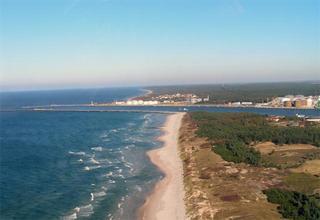 Political support, commitment at all levels of governance and ensured financing are crucial elements for the successful implementation of the European Union Strategy for the Baltic Sea Region, Lithuania’s Vice-Minister of Foreign Affairs A. Skaisgirytė Liauškienė said at the seminar, dedicated to discuss financial and management aspects of the Strategy’s implementation.
more »
Political support, commitment at all levels of governance and ensured financing are crucial elements for the successful implementation of the European Union Strategy for the Baltic Sea Region, Lithuania’s Vice-Minister of Foreign Affairs A. Skaisgirytė Liauškienė said at the seminar, dedicated to discuss financial and management aspects of the Strategy’s implementation.
more »
 On 10 June, Political Director of Lithuania’s Ministry of Foreign Affairs Eitvydas Bajarūnas took part in the political consultations with officials from the Ukrainian Foreign Ministry in Kyiv.
more »
On 10 June, Political Director of Lithuania’s Ministry of Foreign Affairs Eitvydas Bajarūnas took part in the political consultations with officials from the Ukrainian Foreign Ministry in Kyiv.
more »
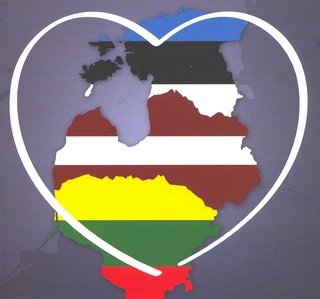 On 10 June, a seminar to discuss financial and management aspects of the implementation of the EU Strategy for the Baltic Sea Region will be held in Vilnius.
more »
On 10 June, a seminar to discuss financial and management aspects of the implementation of the EU Strategy for the Baltic Sea Region will be held in Vilnius.
more »
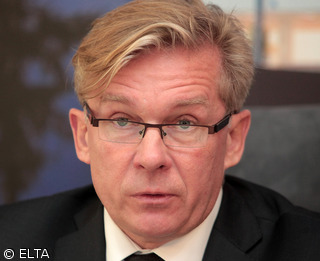 Two entities with common objectives, Conference on Interaction and Confidence Building Measures in Asia and the Organization for Security and Co-operation in Europe, could act alongside each other, Lithuania’s Minister of Foreign Affairs A. Ažubalis says.
more »
Two entities with common objectives, Conference on Interaction and Confidence Building Measures in Asia and the Organization for Security and Co-operation in Europe, could act alongside each other, Lithuania’s Minister of Foreign Affairs A. Ažubalis says.
more »
 President of the Republic of Lithuania Dalia Grybauskaitė has just made her first State of the Nation Address in the Seimas, to give an overview of the situation of the country and the status of internal and foreign policies of the state, as required under the Constitution of the Republic of Lithuania.
more »
President of the Republic of Lithuania Dalia Grybauskaitė has just made her first State of the Nation Address in the Seimas, to give an overview of the situation of the country and the status of internal and foreign policies of the state, as required under the Constitution of the Republic of Lithuania.
more »
 A round table discussion "Europe 2030: Do We Have a New Approach?" was held on 4 June in Vilnius.
more »
A round table discussion "Europe 2030: Do We Have a New Approach?" was held on 4 June in Vilnius.
more »
 On 7 June in Vilnius, Lithuania’s Vice-Minister of Foreign Affairs Šarūnas Adomavičius met with Chairman of the Knesset Lithuanian-Israeli Parliamentary Friendship Group Zeev Bielski and discussed the cooperation between the countries, as well as in international organizations.
more »
On 7 June in Vilnius, Lithuania’s Vice-Minister of Foreign Affairs Šarūnas Adomavičius met with Chairman of the Knesset Lithuanian-Israeli Parliamentary Friendship Group Zeev Bielski and discussed the cooperation between the countries, as well as in international organizations.
more »
 Today Chancellor Angela Merkel of the Federal Republic of Germany called President of the Republic of Lithuania Dalia Grybauskaitė to express regrets at not having been able to come to Lithuania earlier in the week due to the complicated political situation in Germany.
more »
Today Chancellor Angela Merkel of the Federal Republic of Germany called President of the Republic of Lithuania Dalia Grybauskaitė to express regrets at not having been able to come to Lithuania earlier in the week due to the complicated political situation in Germany.
more »
 President of the Republic of Lithuania Dalia Grybauskaitė met with the President of the European Commission, Jose Manuel Barroso, who is currently visiting Lithuania.
more »
President of the Republic of Lithuania Dalia Grybauskaitė met with the President of the European Commission, Jose Manuel Barroso, who is currently visiting Lithuania.
more »