The showdown between the United States and other members of the United Nations Security Council was the latest and strongest confirmation that the international solidarity forged after the terror attacks on Sept. 11 was probably superficial and temporary
Published:
8 July 2002 y., Monday
The immediate issue at the United Nations was Washington's demand that American troops and all other United Nations peacekeeping forces be exempted from the jurisdiction of the International Criminal Court, which came into existence today under the shadow of intense hostility from the Bush administration.
Unless either the United States or other Council members back down before midnight Wednesday, the United Nations police-training mission in Bosnia will be abruptly terminated. If the standoff continues, all other United Nations peacekeeping operations will be jeopardized as they come up for renewal, starting with the mission in Lebanon later this month.
The immediate impact in Bosnia was likely to be largely organizational. Only 46 Americans serve in the police-training mission, and the entire operation was to be turned over to the European Union in six months.
But the very notion of Americans threatening to pull forces out of Europe in a dispute, even if symbolic, carried troubling connotations on a Continent where the American presence had represented a shared commitment for decades. At the heart of the divergence was a fundamentally different vision of global organizations. The Europeans, accustomed by their history and geography to think in terms of multilateral arrangements, have always placed a greater premium on international organizations. In the United States, international organizations like the United Nations have always been viewed with suspicion, much of it affirmed by the anti-American and anti-Israeli votes of the cold war.
Šaltinis:
nytimes.com
Copying, publishing, announcing any information from the News.lt portal without written permission of News.lt editorial office is prohibited.
The most popular articles
 The Government of Lithuania has reached a watershed agreement with the nation’s most important business, labour and social groups on policies and initiatives to overcome the current deep recession as swiftly as possible and put the economy back on track for euro adoption and stable growth.
more »
The Government of Lithuania has reached a watershed agreement with the nation’s most important business, labour and social groups on policies and initiatives to overcome the current deep recession as swiftly as possible and put the economy back on track for euro adoption and stable growth.
more »
 Yesterday, 26 October, the EU countries agreed to adopt a common strategy for the Baltic Sea region.
more »
Yesterday, 26 October, the EU countries agreed to adopt a common strategy for the Baltic Sea region.
more »
 President Dalia Grybauskaitė extended congratulations to President Gurbanguly Berdymuhamedov of Turkmenistan on the occasion of Independence Day.
more »
President Dalia Grybauskaitė extended congratulations to President Gurbanguly Berdymuhamedov of Turkmenistan on the occasion of Independence Day.
more »
 President Dalia Grybauskaitė received OSCE Secretary General Marc Perrin de Brichambaut.
more »
President Dalia Grybauskaitė received OSCE Secretary General Marc Perrin de Brichambaut.
more »
 President Dalia Grybauskaitė received representatives of the European Business Network and foreign investors in Lithuania.
more »
President Dalia Grybauskaitė received representatives of the European Business Network and foreign investors in Lithuania.
more »
 Prime Minister Andrius Kubilius has received a visit from the new Extraordinary and Plenipotentiary Ambassador of the United States to Lithuania Anne Elizabeth Derse.
more »
Prime Minister Andrius Kubilius has received a visit from the new Extraordinary and Plenipotentiary Ambassador of the United States to Lithuania Anne Elizabeth Derse.
more »
 Today, on 21 October during the visit to Austria, Lithuania’s Minister of Foreign Affairs Vygaudas Ušackas met with Michael Spindelegger, Minister for European and Foreign Affairs of Austria.
more »
Today, on 21 October during the visit to Austria, Lithuania’s Minister of Foreign Affairs Vygaudas Ušackas met with Michael Spindelegger, Minister for European and Foreign Affairs of Austria.
more »
 October 19-20, Minister of National Defence Rasa Juknevičienė will pay a formal visit the UK by invitation of Defence Secretary Bob Ainsworth.
more »
October 19-20, Minister of National Defence Rasa Juknevičienė will pay a formal visit the UK by invitation of Defence Secretary Bob Ainsworth.
more »
 On 17 October in Baku, Lithuania’s Minister of Foreign Affairs Vygaudas Ušackas and Minister of Foreign Affairs of Azerbaijan Elmar Mammadyarov discussed bilateral cooperation...
more »
On 17 October in Baku, Lithuania’s Minister of Foreign Affairs Vygaudas Ušackas and Minister of Foreign Affairs of Azerbaijan Elmar Mammadyarov discussed bilateral cooperation...
more »
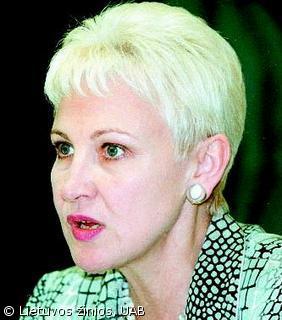 Ms Irena Degutienė, Speaker of the Seimas of the Republic of Lithuania, participated in the International Conference Europe 70 years after the Molotov–Ribbentrop Pact held by the European Parliament.
more »
Ms Irena Degutienė, Speaker of the Seimas of the Republic of Lithuania, participated in the International Conference Europe 70 years after the Molotov–Ribbentrop Pact held by the European Parliament.
more »