The Organization for Security and Cooperation in Europe said on November 23 that it has fulfilled its mission in Estonia and now wants to close its doors after an eight-year presence here.
Published:
30 November 2001 y., Friday
The move was seen by many Estonians as final confirmation of its pro-West, democratic credentials.
Concerns raised in Russia about Estonia's Russian minority led to an OCSE office being set up two years after the Soviet occupation ended in 1991--though some Estonians grumbled the OSCE presence was politically motivated, unnecessary and an affront.
But Tallinn-based officials of the leading human rights oversight group said a language requirement for candidates running for elected office had been its last major bone of contention. Estonia's parliament canceled that provision a day before, on November 21.
Harri Tiido, deputy undersecretary at Estonia's Foreign Ministry, welcomed the OSCE moves to close its office, adding that "we've done all we've been asked to do and there is nothing else the OSCE has asked—so their mandate's fulfilled"
Russia expressed particular anger at Estonian language laws—which it argued disenfranchise Russian-speakers, mostly ethnic Russians who moved here during the Soviet occupation and now make up 40 percent of the 1.4 million population. The issue soured bilateral relations.
Estonia said its language laws met international norms and were meant to counteract five decades of repressive Soviet policies which often favored Russian over native Estonian, a vowel-laden language closely related to Finnish and spoken by barely one million people.
But over the years Estonia soften the laws, culminating in the cancellation of the rule that those running for office be able to speak Estonian. Critics said it discriminated against Russian speakers—most of whom speak little or no Estonian.
Šaltinis:
balticsww.com
Copying, publishing, announcing any information from the News.lt portal without written permission of News.lt editorial office is prohibited.
The most popular articles
The whale shark is the largest living fish species and is usually found in tropical and warm oceans. This gentle giant is not dangerous to humans but demand for its internal organs is putting it in grave danger.
more »
 Land shortages in China and environmental concerns have inspired innovative alternatives at the Asia Funeral Expo in Hong Kong.
more »
Land shortages in China and environmental concerns have inspired innovative alternatives at the Asia Funeral Expo in Hong Kong.
more »
 Britain's Queen Elizabeth delivers landmark speech of reconciliation during visit to Ireland but stops short of apology.
more »
Britain's Queen Elizabeth delivers landmark speech of reconciliation during visit to Ireland but stops short of apology.
more »
 French climber Alain Robert, known as "Spiderman" scales Turkey's tallest building.
more »
French climber Alain Robert, known as "Spiderman" scales Turkey's tallest building.
more »
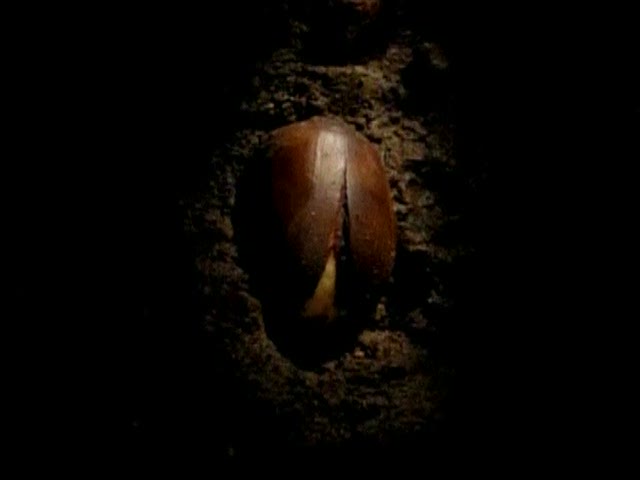 The growth of a tree takes place so slowly that, in real time, it's impossible to observe. Six years ago plant-lover and British film-maker Neil Bromhall decided to speed up the process with time-lapse photography...
more »
The growth of a tree takes place so slowly that, in real time, it's impossible to observe. Six years ago plant-lover and British film-maker Neil Bromhall decided to speed up the process with time-lapse photography...
more »
 Chinese artist Wang Jiang makes portraits of famous faces including U.S. President Barack Obama and Osama bin Laden from nothing but paper torn by hand.
more »
Chinese artist Wang Jiang makes portraits of famous faces including U.S. President Barack Obama and Osama bin Laden from nothing but paper torn by hand.
more »
 Residents of the southern Spanish town of Lorca stay in makeshift camps and shelters after an earthquake hits the town, destroying buildings and killing at least eight.
more »
Residents of the southern Spanish town of Lorca stay in makeshift camps and shelters after an earthquake hits the town, destroying buildings and killing at least eight.
more »
 The latest technological development in robots is the main focus of the Shanghai International Conference on Robotics and Automation in China.
more »
The latest technological development in robots is the main focus of the Shanghai International Conference on Robotics and Automation in China.
more »
 A rare earthquake rocked Lorca, an ancient town in southeastern Spain, on Wednesday causing houses to collapse, damaging historic churches and public buildings and killing at least 10 people.
more »
A rare earthquake rocked Lorca, an ancient town in southeastern Spain, on Wednesday causing houses to collapse, damaging historic churches and public buildings and killing at least 10 people.
more »
 A small factory in New York's Brooklyn is doing its best to keep the dying art of making vinyl records.
more »
A small factory in New York's Brooklyn is doing its best to keep the dying art of making vinyl records.
more »