The explosions and gunfire that have rocked the former Soviet republic of Uzbekistan this week dramatically raised fears of an onslaught of regional terrorism that could send tremors as far as Washington and Moscow
Published:
3 April 2004 y., Saturday
Both the United States and Russia regard the countries of Central Asia as vital security interests and watched with alarm as Uzbekistan was gripped by suicide bombings and police shootouts with apparent Islamic extremists, in which more than 40 people have died since Sunday.
The United States places high importance on stability in the oil-rich region, which borders Russia, Afghanistan and Iran, especially since the Sept. 11, 2001, terror attacks.
U.S.-led coalition forces are using bases in Uzbekistan, Kyrgyzstan and Tajikistan to help fight against Taliban and al-Qaida insurgents in Afghanistan. Russia opened its own air base in Kyrgyzstan in what was seen as a response to the American presence.
Washington also hopes that Kazakhstan and Turkmenistan will become reliable suppliers of oil from the rich Caspian Sea fields, potentially reducing Western dependence on oil from the turbulent Middle East.
But the United States also considers Central Asia a potential breeding ground for Islamic extremism and a possible marketplace for nuclear or dirty bomb components.
Central Asia has a more immediate impact on Russia's security. It provides gas and oil that heat many Russians' homes and flow through its lucrative pipelines. The region also is a virtual pipeline for illegal immigrants and drug traffickers toting Afghan heroin, heading to Russia or Western Europe. Growing instability would undermine efforts to stem these flows.
Šaltinis:
seattlepi.nwsource.com
Copying, publishing, announcing any information from the News.lt portal without written permission of News.lt editorial office is prohibited.
The most popular articles
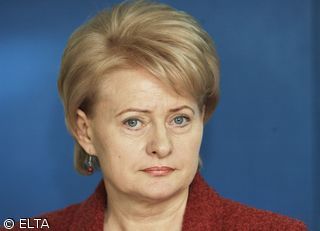 President of the Republic of Lithuania Dalia Grybauskaitė goes for a working visit to Brussels to attend an informal meeting of the European Council.
more »
President of the Republic of Lithuania Dalia Grybauskaitė goes for a working visit to Brussels to attend an informal meeting of the European Council.
more »
 President Dalia Grybauskaitė extended congratulations to President Valdis Zatlers and the people of Latvia on their national holiday - Independence Day.
more »
President Dalia Grybauskaitė extended congratulations to President Valdis Zatlers and the people of Latvia on their national holiday - Independence Day.
more »
 On 16 November in Brussels, Lithuania’s Minister of Foreign Affairs Vygaudas Ušackas took part in the joint meeting of European Union’s foreign and defence ministers with NATO Secretary General Anders Fogh Rasmussen.
more »
On 16 November in Brussels, Lithuania’s Minister of Foreign Affairs Vygaudas Ušackas took part in the joint meeting of European Union’s foreign and defence ministers with NATO Secretary General Anders Fogh Rasmussen.
more »
 Wednesday, November 11, President of the Republic of Lithuania Dalia Grybauskaitė met with President of the Republic of Poland Lech Kaczyński.
more »
Wednesday, November 11, President of the Republic of Lithuania Dalia Grybauskaitė met with President of the Republic of Poland Lech Kaczyński.
more »
 On November 5-6 meeting of the Baltic Chiefs of Defence Staffs of the Baltic States will be held in Nemenčinė, Gen. Ramanauskas Warfare Training Centre (Vilnius Region).
more »
On November 5-6 meeting of the Baltic Chiefs of Defence Staffs of the Baltic States will be held in Nemenčinė, Gen. Ramanauskas Warfare Training Centre (Vilnius Region).
more »
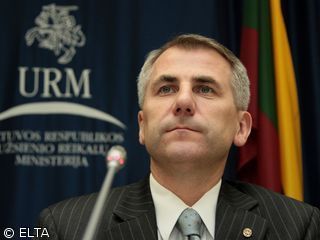 The interview of Lithuania’s Minister of Foreign Affairs Vygaudas Ušackas to the daily Die Presse about his country’s sensitive relations with Russia, about perspectives for Kiev and bad American PR in the antiballistic missile defence debate.
more »
The interview of Lithuania’s Minister of Foreign Affairs Vygaudas Ušackas to the daily Die Presse about his country’s sensitive relations with Russia, about perspectives for Kiev and bad American PR in the antiballistic missile defence debate.
more »
 Professor Vytautas Landsbergis, outstanding Lithuanian politician and cultural figure, is invited as a keynote speaker and will deliver a report on the Lithuanian contribution to European freedom and unification in 1988-1989.
more »
Professor Vytautas Landsbergis, outstanding Lithuanian politician and cultural figure, is invited as a keynote speaker and will deliver a report on the Lithuanian contribution to European freedom and unification in 1988-1989.
more »
 President of the Republic of Lithuania participating in her first session of the European Council strongly defends interests of the Baltic countries and other new Member States of the EU at the commencing discussion among the European leaders concerning the common position to be upheld in the upcoming world-wide meeting in Copenhagen on the issue of mitigation of consequences of climate change.
more »
President of the Republic of Lithuania participating in her first session of the European Council strongly defends interests of the Baltic countries and other new Member States of the EU at the commencing discussion among the European leaders concerning the common position to be upheld in the upcoming world-wide meeting in Copenhagen on the issue of mitigation of consequences of climate change.
more »
 Lithuania’s Minister of Foreign Affairs Vygaudas Ušackas offers his most sincere condolences to the families of those who have lost their loved ones during the terrorist act in Kabul, the capital of Afghanistan, on 28 October.
more »
Lithuania’s Minister of Foreign Affairs Vygaudas Ušackas offers his most sincere condolences to the families of those who have lost their loved ones during the terrorist act in Kabul, the capital of Afghanistan, on 28 October.
more »
 President Dalia Grybauskaitė extended congratulations to President Abdullah Gül on the 86th anniversary of the founding of the Republic of Turkey.
more »
President Dalia Grybauskaitė extended congratulations to President Abdullah Gül on the 86th anniversary of the founding of the Republic of Turkey.
more »