The explosions and gunfire that have rocked the former Soviet republic of Uzbekistan this week dramatically raised fears of an onslaught of regional terrorism that could send tremors as far as Washington and Moscow
Published:
3 April 2004 y., Saturday
Both the United States and Russia regard the countries of Central Asia as vital security interests and watched with alarm as Uzbekistan was gripped by suicide bombings and police shootouts with apparent Islamic extremists, in which more than 40 people have died since Sunday.
The United States places high importance on stability in the oil-rich region, which borders Russia, Afghanistan and Iran, especially since the Sept. 11, 2001, terror attacks.
U.S.-led coalition forces are using bases in Uzbekistan, Kyrgyzstan and Tajikistan to help fight against Taliban and al-Qaida insurgents in Afghanistan. Russia opened its own air base in Kyrgyzstan in what was seen as a response to the American presence.
Washington also hopes that Kazakhstan and Turkmenistan will become reliable suppliers of oil from the rich Caspian Sea fields, potentially reducing Western dependence on oil from the turbulent Middle East.
But the United States also considers Central Asia a potential breeding ground for Islamic extremism and a possible marketplace for nuclear or dirty bomb components.
Central Asia has a more immediate impact on Russia's security. It provides gas and oil that heat many Russians' homes and flow through its lucrative pipelines. The region also is a virtual pipeline for illegal immigrants and drug traffickers toting Afghan heroin, heading to Russia or Western Europe. Growing instability would undermine efforts to stem these flows.
Šaltinis:
seattlepi.nwsource.com
Copying, publishing, announcing any information from the News.lt portal without written permission of News.lt editorial office is prohibited.
The most popular articles
 On February 2, Kęstutis Jankauskas started his tenure as the state secretary of Lithuania’s Ministry of Foreign Affairs, after he was selected by the Ministry for this office.
more »
On February 2, Kęstutis Jankauskas started his tenure as the state secretary of Lithuania’s Ministry of Foreign Affairs, after he was selected by the Ministry for this office.
more »
 On the last day of his working visit to the Worl Economic Forum gathering in Davos, President Valdas Adamkus met with Thomas Mirow, President of the European Bank for Reconstruction and Development.
more »
On the last day of his working visit to the Worl Economic Forum gathering in Davos, President Valdas Adamkus met with Thomas Mirow, President of the European Bank for Reconstruction and Development.
more »
 President asked Azeri and Pakistani leaders to support the Baltic candidature to the position of UNESCO Director General.
more »
President asked Azeri and Pakistani leaders to support the Baltic candidature to the position of UNESCO Director General.
more »
 During the World Economic Forum, the President of the Republic of Lithuania Valdas Adamkus met with Paul Mountford, one of the managers of “Cisco Systems”, Christian Clausen, President and CEO of Nordea Bank, and philanthropist George Soros.
more »
During the World Economic Forum, the President of the Republic of Lithuania Valdas Adamkus met with Paul Mountford, one of the managers of “Cisco Systems”, Christian Clausen, President and CEO of Nordea Bank, and philanthropist George Soros.
more »
 While in Davos (Switzerland) where he participates in the World Economic Forum, the President of the Republic of Lithuania Valdas Adamkus met with Jean-Michel Halfon, “Pfizer” President and General Manager for Emerging Markets, and with Lars Josefsson, “Vattenfall” President and CEO.
more »
While in Davos (Switzerland) where he participates in the World Economic Forum, the President of the Republic of Lithuania Valdas Adamkus met with Jean-Michel Halfon, “Pfizer” President and General Manager for Emerging Markets, and with Lars Josefsson, “Vattenfall” President and CEO.
more »
 The Association has made a decision not to organise a demonstration that had been planned for 3 February.
more »
The Association has made a decision not to organise a demonstration that had been planned for 3 February.
more »
 On 28 January, Lithuania’s Minister of Foreign Affairs Vygaudas Ušackas received a group of twelfth-grade pupils from a secondary school of Saulkrasti, the city of Latvia.
more »
On 28 January, Lithuania’s Minister of Foreign Affairs Vygaudas Ušackas received a group of twelfth-grade pupils from a secondary school of Saulkrasti, the city of Latvia.
more »
 President of the Republic of Lithuania Valdas Adamkus said goodbye to the outgoing Ambassador of the Italian Republic Mr. Giulio Prigioni.
more »
President of the Republic of Lithuania Valdas Adamkus said goodbye to the outgoing Ambassador of the Italian Republic Mr. Giulio Prigioni.
more »
 Prime Minister Andrius Kubilius has met with Estonian President Toomas Hendrik Ilves and Speaker of the Estonian Parliament Ene Ergma today.
more »
Prime Minister Andrius Kubilius has met with Estonian President Toomas Hendrik Ilves and Speaker of the Estonian Parliament Ene Ergma today.
more »
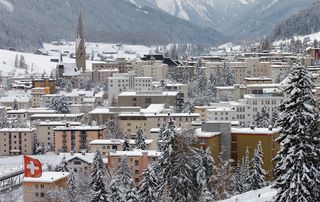 Tomorrow President of the Republic of Lithuania Valdas Adamkus goes for a working visit to Switzerland to take part in the World Economic Forum in Davos to be held under the title “Shaping the Post-Crisis World” on 28-31 January.
more »
Tomorrow President of the Republic of Lithuania Valdas Adamkus goes for a working visit to Switzerland to take part in the World Economic Forum in Davos to be held under the title “Shaping the Post-Crisis World” on 28-31 January.
more »