Remote Cash Capture is one of the main trends of recent years for retail cash management.
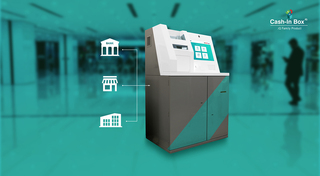
Remote Cash Capture is one of the main trends of recent years for retail cash management. Small, medium and especially large retail chains increasingly use it as an alternative to traditional CIT service. This is a convenient and safe procedure, which greatly simplifies depositing, reduces the cost of cash collection, optimizes workflows, makes cash management more transparent and improves quality of cash handling processes at the merchant‘s side.
Not many projects have been implemented so far, but those which have, have already shown an impressive result. Banks and their clients are satisfied with the progress of pilot projects, and some of them even strive to get away from the classic Cash-In Transit services. At the same time, the cost of Automated Deposit Machines (ADM) is still too high for small and medium enterprizes. So, banks could help them by purchasing and installing the ADM in convenient public areas chosen by business representatives.
Let's take a look at the three main types of locations, where Automated Deposit Machines could provide effective remote cash capture.
1. Big Retail Chains Stores
There was a time when cash management was exclusively bank service, but now the retail sector is actively involved in this process. Big retail chains want to increase the effectivness of cash flow management.
On average, the cashier spends about a third of his working time processing cash. This process includes cash counting and validation, preparing money for exchange and the required documents associated with cash storing and transportation. Each of these processes has some operational risks.
ADM deployment in stores could solve this problem.
At the end of the working day the cashier takes the money out of the cash desk and deposits it using the ADM. The Automated Deposit Machine verifies and counts the deposited notes, and instantly credits money to the bank account. Than the bank and the CIT service bears all responsibility for money storage and delivery.
For big retail chains there is one more advantage – the cash gap is reduced. Retailer is interested to get the money to the current account as soon as possible. The classic cash collection method entails it‘s own problems like having to wait several days for the CIT service and later seeing the money hit the account. This significantly limits the flexibility of cash management.
2. Open Trade Spaces (Shopping Malls And Markets)
Small merchants in marketplaces are mostly customers of different banks. To use the ADM, they have to sign an agreement with the provider of cash capture service. It gives additional profit and opportunity of attracting new customers for banks to offer them various banking products.
In some countries, the use of Automated Deposit Machines will be relevant even in street-markets. Of course, it is necessary to pay special attention to the place of deployment: it should be a well secured zone indoors.

Scheme of cash capture in marketplaces
3. Bank Branches
Installing the ADM in the bank branch allows to unload the operators. A significant part of the services (depositing cash, credit payments, etc.) could be redirected to the in-branch self-service zones.
The ADM occupies a comparatively little space. The built-in bill acceptor with note validation speeds up deposits and prevents operational errors.
According to experts, clients spend about 20% less time for the same operations when using the ADM. They can do it at any time without any help. It makes the customer service more convenient and strengthens clients loyalty. The bank can also use ADMs to offer automated payments. It allows the bank to get the transactional fee.
The Bank's Profit Is Obvious
Automated Deposit Machines can be installed in large wholesale and retail stores, shopping malls, insurance companies, casinos, showrooms and other places.
They are reliable and cost-effective to maintain. As a rule, the cash safe and service components of the deposit machine are separated. It means funds are safe in all cases even during maintenance. ADM helps significantly reduce CIT expenses and the number of visits.
Cash-in Box.iQ is the product developed by BS/2. It is a complex Remote Cash Capture solution. Reliable deposit machines come with special software that can be integrated with the Core Banking System. Cash-in Box.iQ use modern ways of authorization like face recognition.
For more information about the product, please contact BS/2 at sales@bs2.lt.