The first cash-dispenser was created in 1939 by American scientist Luther George Simjian. That moment was the birth of the banking self-service field, but as it says: “The first step is always the hardest” – that idiom exactly fits the description of that machine, called “City Bank of New York”. After all, it has been used only for six months, before the device has returned to the creator due to complexity of maintenance.
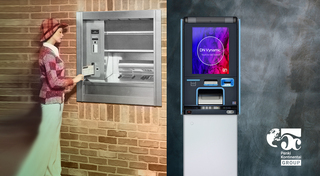
American scientist Luther George Simjian created first cash-dispenser in 1939. It was the birth of the banking self-service field. “The first step is always the hardest” – that idiom exactly fits the description of that machine. City Bank of New York used it only for six months, and then returned it to the creator due to the complexity of maintenance.
The second life has been gifted to ATMs after 30 years. Scotsman John Shepard-Barron created first ATM in the late 60s, being inspired by chocolate vending machines. There were no cards at those times. Instead, customers used special sum checks. Each check has protected against counterfeiting by a special radioactive labels.
The first online Cash-Point ATMs have been in Lloyd Banks’s branches in 1972. Those models were accepting plastic cards instead of paper checks.
The first ATMs in Lithuania appeared in 1995. Machines have been installed by the Vilniaus bankas. Two years earlier, in 1993, the same Vilniaus bankas introduced VISA credit cards in Lithuania. At the same time, Penki Kontinentai signed a partnership agreement with one of the largest ATM manufacturers Wincor Nixdorf (now Diebold Nixdorf).
ATMs have long ceased to be just a tool for withdrawing cash. The new DN Series by Diebold Nixdorf has a wide range of functions. A bank client has the opportunity to withdraw or deposit money into the account, but also the possibility to pay for utilities, pay taxes, as well as make a bank transfer and exchange currency! It is possible to expand the functionality of self-service banking devices and make their use even more convenient due to special software products developed by BS/2. For example, the Cash.Management.iQ platform allows you to distribute cash at points of receipt and withdrawal of funds and even calculate the cost of cash-in-transit service.
The pandemic showed, that the future of the banking sector together with online services and contactless ATMs. Kirill Ovsyannikov, a marketing expert, shared with us his views on the future of self-service banking:
«The future of the traditional banking business in the development of self-service devices. On the one hand, ATMs should partially or completely take over most of the functionality of service in bank branches. On the other hand, the use of self-service devices fits perfectly into the concept of digitalization, paving a kind of bridge into the world of banking services for those customers who now cannot be classified as active users of digital banking», says Kirill Ovsyannikov, Head of Marketing at BS/2, Penki Kontinentai Group.
Today ATM is a part of everyday life, the self-service banking sector is actively developing, new technologies and solutions are introducing to expand the capabilities of ATMs and improve the quality of banking around the world.