Have you ever wondered what are the benefits of smart house systems and how could they be employed in public places? Well, think no more! In Lithuania, smart housing systems are already widely used to improve the functionality of public buildings.
 Have you ever wondered what are the benefits of smart house systems and how could they be employed in public places? Well, think no more! In Lithuania, smart housing systems are already widely used to improve the functionality of public buildings.
Penkių Kontinentų Komunikacijų Centras, UAB, a company developing and introducing smart systems, has many years of experience in the Lithuanian and foreign markets. According to Vaidas Janulis, Head of the Smart House Department, the demand for these systems is rapidly growing among individuals and in the public sector. “It has been a while since we stopped questioning the benefits of smart systems, i.e. the opportunity to save time, create comfortable and safe environment. However, one of the main reasons why smart systems are successfully making their way in the market is resource saving: smart house systems can help to save up to 60 percent of electricity consumption and as much as 50 percent of heating costs. Today, it is highly important to ensure cost-efficiency, environmental friendliness and, of course, durability of buildings”, says V. Janulis.
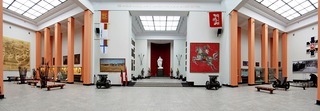
Specialists of the Smart House Department of Penkių Kontinentų Komunikacijų Centras contribute to the maintenance of lighting systems as well as carry out programming tasks and give advice on the matters related to the operation of the lighting systems in the Vytautas the Great War Museum in Kaunas. Kęstutis Kuršelis, Director of the Vytautas the Great War Museum, believes that smart systems are necessary in the museums for various reasons; however, one of the most important of them is preservation of exhibits stored in the museums. “Museum is a place, where the state property is kept. It is important to keep it in the appropriate environment. Most Western European museums already operate smart systems that meet their needs and help them preserve exhibits, i.e. systems that control heating, ventilation, lighting and temperature in exposition areas and premises. Smart lighting installed in the Vytautas the Great War Museum is one of the first steps towards modernization of the museum’s premises”, explains K. Kuršelis.
Penkių Kontinentų Komunikacijų Centras is currently implementing smart solutions in a Visitor Centre that is being constructed in the Salantai Regional Park. Specialists working with Smart House systems are installing heating, lighting, ventilation systems and carrying out automation tasks here. According to Modestas Šečkus, Director of the Visitor Centre, economy and convenience were the main factors that determined the decision to install smart systems in the Salantai Regional Park. “With the smart house systems gaining more and more popularity emerges the need to modernize public buildings as well. Even though the project for the Visitor Centre has not been completed yet, when deciding on the introduction of smart systems, we have taken into account the opportunities to save resources and easily manage the buildings that are offered by these systems. Moreover, we hope that they will give more comfort to the visitors of our park”, says M. Šečkus.
In Europe, as in many advanced countries of the world, the use of smart systems in public spaces is no longer a novelty. As to the perspectives of smart systems in Lithuania, there is an emerging trend where smart systems are increasingly being introduced not only in private homes, but also in museums, libraries, visitor centres, sports arenas and other public spaces.