Hindsight: From Ritty's Incorruptible Cashier to Self-Checkout

Published: 4 November 2020 y., Wednesday

November 4, 1879, is the birthday of the cash register. Today it is impossible to imagine modern trade without the use of cash registers. They are everywhere: in shops, cafes, and post offices. Who came up with the idea to keep track of cash using the cash register?

Ritty's Incorruptible Cashier

James Jacob Ritty, a saloon owner in Ohio, invented the first cash register in 1879. He became an inventor by chance. During one of the voyages, James wandered into the engine room. There he noticed a device that counted the rotations of the engine shaft. As soon as he got home, Ritty and his brother John, a skilled mechanic, began working on a design for such a device.
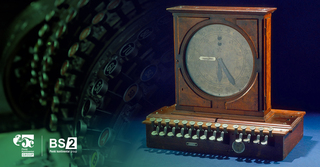
It was completely different from our cash registers. The device could be mistaken for a watch in a wooden case. It had two rows of buttons and a dial with two hands: the long one showed cents, and the short one — dollars.

Over time, the inventor refined his creation and hung a bell on the device. It rang after each checkout. This model was named “Ritty's Incorruptible Cashier”.

Spread around the world

The advantages of the cash registers were appreciated not only in America but also in other countries. Soon the device became the most necessary equipment for trade organizations. However, expensive American-made cash registers have long been a luxury for most store owners. Bulky silver cash registers with mahogany trim were replaced with cheap steel cash registers.

The middle of the 20th century is the period of the spread of cash registers around the world. Mechanical cash registers were replaced by electric ones. They were much lighter and cheaper than their predecessors.

Self-checkouts

Barcode scanners simplified the work of the cashier by automatizing data enter.

The self-service checkout is the next step in the development of technology. Modern systems provide a mechanism to process the purchases from a retailer, without the participation of the cashier.

“Self-checkout is a concept of the store's operation. The use of self-service systems increases the quality and speed of customer service,” says Emil Musayev, Head of Retail Equipment Sales at BS/2, a member of the Penki Kontinentai Group. According to him, the self-checkouts increase store throughput by almost 30% and reduce queues by half.

The COVID-19 pandemic is accelerating the transition to self-checkout systems that cut customer contact with staff. According to forecasts of the British agency RBR, by 2025 the number of self-service checkouts will exceed 1.1 million units. Self-service checkout systems can be installed not only in malls but in any place where there are a client/buyer and a product/service:

  • gas station;
  • bookstores;
  • pharmacies;
  • fast-food restaurants;
  • cinemas, etc.

Self-service checkouts continue to improve. Today there are devices equipped with a 3D camera for payment using Face ID technology, but the beginning is the simplest Ritty's Incorruptible Cashier.

Šaltinis: Penki kontinentai
Copying, publishing, announcing any information from the News.lt portal without written permission of News.lt editorial office is prohibited.

Facebook Comments

New comment


Captcha

BS/2 expands cooperation with the Halyk Group

Financial institutions in Central Asia actively invest in banking equipment. The strategy of the Halyk Group is focused on the introduction of high-tech products and services. One of the priorities of Group's banks is the development of a self-service banking channel, which led to the increased interest in cash recycling ATM and specialized software that expands the functionality of devices. more »

5 ATM Fleet Management Tools to Improve Your Bank's Operational Efficiency

The number of ATMs continues to increase in most countries of Eastern Europe and Central Asia. In 2020 this number increased by almost 10% in Georgia and Azerbaijan and more than 20% in Uzbekistan. It means that along with the rapid development of online banking and mobile services, financial institutions continue to rely on self-service devices. more »

BS/2 will take part in Self-Service Banking Asia 2020

The international conference Self-Service Banking Asia 2020 will be held on September 23-24. The event is organized by RBR, one of the world's leading providers of strategic research and consulting services for organizations working in the field of retail banking, banking automation, retail technology, cards and payments. more »

How Does Technology Help Retail During Pandemic

The coronavirus continues to change the habits and needs of shoppers around the world. more »

Penki Kontinentai Invites Residents of Vilnius to Evaluate the Temperature Detection Terminal

Residents of Vilnius, when visiting the Unified Customer Service Center of the municipality, can evaluate the benefits of a new device offered by the Penki Kontinentai Group. The stationary temperature detection terminal is installed in the reception room of the municipality. more »

Penki Kontinentai Invites to Share Your Smile

The Penki Kontinentai Group invites you to take part in the "Smile Gives Hope" campaign. more »

TransLink.iQ Integrates POS Terminals with a Hotel Management System

ASHBURN International integrated the POS network management and transaction routing solution TransLink.iQ with Oracle Hospitality OPERA and Oracle Hospitality Suite8 hotel management systems. The project was implemented in cooperation with HRS Hospitality & Retail Systems. more »

ASHBURN International Expands Partnership with SEB Bank

ASHBURN International, a company specializing in the development, implementation, and support of software for POS terminal network management and transaction routing, has signed a cooperation agreement with SEB Bank. The subject of the contract is the supply, ongoing maintenance and the implementation of software for managing the POS terminals network of this credit institution in all Baltic countries. more »

A new surge of logical attacks on ATMs: what the Belgian experience teaches

In June and July 2020, ATMs of the Belgian bank Argenta were attacked by hackers. Using special software, the criminals seized control of the ATMs and withdrew all the cash that was there. The bank not only suffered financial and reputational losses, but was also forced to take out of service 143 ATMs with a similar software stack to avoid a recurrence of incidents. more »

ATM history: yesterday, today, tomorrow

The first cash-dispenser was created in 1939 by American scientist Luther George Simjian. That moment was the birth of the banking self-service field, but as it says: “The first step is always the hardest” – that idiom exactly fits the description of that machine, called “City Bank of New York”. After all, it has been used only for six months, before the device has returned to the creator due to complexity of maintenance. more »