November 4, 1879, is the birthday of the cash register. Today it is impossible to imagine modern trade without the use of cash registers. They are everywhere: in shops, cafes, and post offices. Who came up with the idea to keep track of cash using the cash register?
November 4, 1879, is the birthday of the cash register. Today it is impossible to imagine modern trade without the use of cash registers. They are everywhere: in shops, cafes, and post offices. Who came up with the idea to keep track of cash using the cash register?
Ritty's Incorruptible Cashier
James Jacob Ritty, a saloon owner in Ohio, invented the first cash register in 1879. He became an inventor by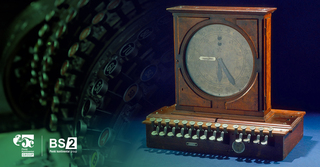 chance. During one of the voyages, James wandered into the engine room. There he noticed a device that counted the rotations of the engine shaft. As soon as he got home, Ritty and his brother John, a skilled mechanic, began working on a design for such a device.
It was completely different from our cash registers. The device could be mistaken for a watch in a wooden case. It had two rows of buttons and a dial with two hands: the long one showed cents, and the short one — dollars.
Over time, the inventor refined his creation and hung a bell on the device. It rang after each checkout. This model was named “Ritty's Incorruptible Cashier”.
Spread around the world
The advantages of the cash registers were appreciated not only in America but also in other countries. Soon the device became the most necessary equipment for trade organizations. However, expensive American-made cash registers have long been a luxury for most store owners. Bulky silver cash registers with mahogany trim were replaced with cheap steel cash registers.
The middle of the 20th century is the period of the spread of cash registers around the world. Mechanical cash registers were replaced by electric ones. They were much lighter and cheaper than their predecessors.
Self-checkouts
Barcode scanners simplified the work of the cashier by automatizing data enter.
The self-service checkout is the next step in the development of technology. Modern systems provide a mechanism to process the purchases from a retailer, without the participation of the cashier.
“Self-checkout is a concept of the store's operation. The use of self-service systems increases the quality and speed of customer service,” says Emil Musayev, Head of Retail Equipment Sales at BS/2, a member of the Penki Kontinentai Group. According to him, the self-checkouts increase store throughput by almost 30% and reduce queues by half.
The COVID-19 pandemic is accelerating the transition to self-checkout systems that cut customer contact with staff. According to forecasts of the British agency RBR, by 2025 the number of self-service checkouts will exceed 1.1 million units. Self-service checkout systems can be installed not only in malls but in any place where there are a client/buyer and a product/service:
- gas station;
- bookstores;
- pharmacies;
- fast-food restaurants;
- cinemas, etc.
Self-service checkouts continue to improve. Today there are devices equipped with a 3D camera for payment using Face ID technology, but the beginning is the simplest Ritty's Incorruptible Cashier.