ATMs were designed as simple cash withdrawal terminals. However, with the creation of first multifunctional self-service devices with the deposit function, the role of the banking self-service channel had to be reconsidered.
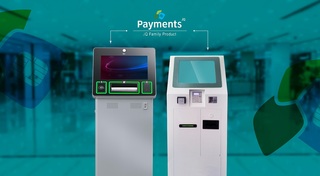
ATMs were designed as simple cash withdrawal terminals. However, with the creation of first multifunctional self-service devices with the deposit function, the role of the banking self-service channel had to be reconsidered. Financial institutions quickly realized that cash-in/cash-out ATMs could be a valid touchpoint for end-customers. The user is granted with the ability to top-up a bank account or an e-wallet, pay fines, fees, utility bills, and various taxes via an ATM.
Meanwhile, the more reliable, and thus, more expensive, automated teller devices had to compete with payment kiosks that seems more as cost-saving solution. Unfortunately, financial institutions and payment service providers count only the device and spare part price. Whereas in reality the expected savings are far less significant due to the factors of:
- the need of card reader installment;
- low quality of hardware components;
- high demand in technical maintenance;
- low level of protection against attacks and vandalism;
- higher demand in CIT services.
Banks and other companies take a comprehensive approach when evaluating the overall effectiveness of their self-service device fleet. The device type (ATM or payment kiosk) may be chosen based on the needs in cash and payment services at separate cash points.
Such a flexible strategy involves a number of complex goals, while solution requires insight and competences.
Goal 1: Efficient self-service fleet management
The main problem of managing a fleet of various self-service devices is a low level of operational efficiency. Firstly, due to the connection specifics between the ATM and ATM server (ATM host), ensuring payment functionality is a big challenge. It requires an appropriate software solution and sufficiently qualified contractor (IT integrator). The number of banks that are able to deploy payment functionality at ATMs with an in-house team is very limited, while the solution itself is almost guaranteed to be an expensive one.
Secondly, the payment infrastructure, that lives and works in a constant development, requires comprehensive and centralized monitoring.
A separated approach to kiosk and ATM monitoring overcomplicates processes of payment service deployment for the end-user and implies a number of significant risks.
Efficient SST fleet management requires ensuring unified payment service management, technical monitoring and comprehensive security, as well as CIT servicing.
Goal 2: Self-service channel data collection
The development of payment services at SST fleet has two main business goals: generating profit from transaction fee and attracting new clients. In order to effectively achieve these goals, details on every transaction at each automated point of service must be collected and analyzed.
Comprehensive payment statistics allows banks or other fleet owners to build commercial relations with service providers more flexibly and efficiently by recognition of widely used services and unpopular ones. Ranking of service points with higher profitability is also valuable for further analysis and development of the terminal network. It helps determine the most promising locations for the deployment of new self-service devices, and estimate the return on investment (ROI) time more accurately.
Goal 3: User experience unification
One of the key stones of modern banking is the principle of creating a seamless user experience (UX) trough all service channels. It positively affect new client conversion, as well as current customer loyalty. Significant differences in the UX may confuse clients and make them bounce from the service.
In the context of self-service devices, it is crucial to unify the scenarios, design, and other elements related to user experience. The task of implementing all the options offered by modern payment kiosks applications on ATMs is very difficult. However, without solving this problem, ATM payments will remain far from convenient for the end-user. In conditions of high competition, this inevitably leads to the loss of customers, mainly, from the potentially most loyal segment of individuals who use various types of terminals belong to one FI or PSP.
Comprehensive strategy = comprehensive task performance
Banks that build a long-term strategy of the self-service channel development are trying to choose the most functional solution that could optimize the management of payment kiosk fleet and implement its functionality at existing ATMs.
The solution Payments.iQ developed by BS/2 covers all business needs for payment service deployment. The system includes a comprehensive analytical tools to estimate self-service device profitability, while the time-to-market of new payment services is reduced to a minimum.
The main features of Payments.iQ include:
- option to deploy Automated Payment Service Points at existing ATM and kiosk fleet;
- easy-to-use payment service management including transaction fee settings;
- various options for payer identification;
- various accepted payment methods (cash, payment cards, direct transfer);
- flexible user rights management;
- proactive monitoring of terminal equipment.
Payments.iQ solution scheme

To learn more about the Automated Payment Service Point and Payments.iQ, please contact BS/2 representatives today.