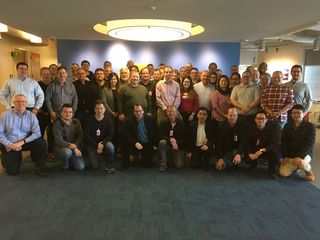
6-8 March 2018, the Amazon Web Services North American office hosted another CA/Browser Forum, the main event for the major Web browsers, OS and software developers’ consortium.

„CA/Browser Forum“ pirmininkas Kirk Hall ir Skaitmeninio sertifikavimo centro direktorius Mudrikas Dadašovas
CA/Browser Forum Chairperson Kirk Hall with SSC CEO Mudrikas Dadašovas
6-8 March 2018, the Amazon Web Services North American office hosted another CA/Browser Forum, the main event for the major Web browsers, OS and software developers’ consortium. Such relevant U.S. government agencies as the National Institute of Standards and Technology (NIST), the National Security Agency (NSA) and the General Services Administration (GSA) took part in this conference.
One of the main topics of the forum was combatting cybercrimes, due to World Web users’ imprudence when visiting suspicious web pages. U.S. Congressman Jim Langevin also attended the conference.
The head of Lithuania-based Skaitmeninio Sertifikavimo Centras (SSC) and CA/Browser Forum member, Mudrikas Dadašovas noted that decisions, which will have great impact on increasing Web services and electronic transactions processing reliability in the near future, were made in the forum.
“The forum structure is growing. There is an opportunity to not only certify websites, but also expand activities in other areas in which we have got immense practical experience. It's about implementing standards for software and e-mail services (S/MIME) developers", Dadašovas says.
 According to SSC manager, they actively negotiate with Mozilla Foundation, Opera, Google and Apple with regard to putting them on the trusted software certification centers’ list. This means that SSC will be able to offer web site authentication (SSL) certificates to its customers worldwide.
"In 2017, we successfully completed the assessment of our new services compliance, and immediately launched the procedure for their recognition at the national and international levels. After Microsoft considered our application, SSC was put on their trusted certification centers’ list. We are only proud of it, as they strictly regulate the procedure in America", Dadašovas continues.
SSL (or Secure Sockets Layer) certificates are a key security tool in cyberspace. They ensure that a given website belongs to a particular company, and the client can be safe while working with it. Besides, SSL certificate ensures that the data transferred from the user's computer to the provider server is properly encrypted. This provides reliable relationships between various companies and their clients; ensure the personal data safety and minimize the risk of providing various sensitive information to criminals.
SSL certification has long been used in the finance, telecommunications and e-commerce sectors. Public and government institutions in different countries, offering their services through Internet, also use it.
These standards and certification requirements for service providers are developed by the international CA/Browser Forum – in which SSC participates along with the leading world corporations, such as Cisco Systems, Go Daddy, Comodo, GlobalSign, Entrust, Amazon, Trustwave, Google, Microsoft, Mozilla, ASA Opera Software, Apple and others.
The forum was established in 2005; in 2012 the SSL certification basic requirements, certification centers standards and user data identification criteria were adopted.