A large blast near the southern port city of Dailam in Iran was the result of "geophysical exploration" in the oil-rich area, a local official in the Bushehr province said
Published:
17 February 2005 y., Thursday
A large blast near the southern port city of Dailam in Iran was the result of "geophysical exploration" in the oil-rich area, a local official in the Bushehr province said.
No casualties were reported in connection with Wednesday's explosion, which some witnesses attributed to a missile dropped from a plane, according to early reports on Iranian state television.
State television later said the blast could have come from a fuel tank that fell off an airplane.
The official in Bushehr province said the explosion was connected to "geophysical exploration" in the region, which sees frequent oil exploration.
Other Iranian officials said there is also heavy air traffic in the region. A reconnaissance team is on its way to the site to investigate, officials said.
Ali Agha Mohammadi, the head of the security commission in Iran's National Security Council, said the explosion was not the result of a missile attack, as some witnesses had claimed.
Iran has a Russian-built nuclear plant in the Bushehr province, in which Dailam is located.
Šaltinis:
cnn.com
Copying, publishing, announcing any information from the News.lt portal without written permission of News.lt editorial office is prohibited.
The most popular articles

The European Commission announced today the award of three of the six contracts for the procurement of Galileo’s initial operational capability.
more »
 Plans to step up EU funding to develop innovative low-carbon technologies to help cut greenhouse gas emissions by 20% by 2020 were welcomed in a resolution approved by Parliament on Thursday.
more »
Plans to step up EU funding to develop innovative low-carbon technologies to help cut greenhouse gas emissions by 20% by 2020 were welcomed in a resolution approved by Parliament on Thursday.
more »
 A report presented today by the European Commission shows that countries still face challenges in modernising higher education, a decade after the launch of a blueprint for reform known as the 'Bologna Process'.
more »
A report presented today by the European Commission shows that countries still face challenges in modernising higher education, a decade after the launch of a blueprint for reform known as the 'Bologna Process'.
more »
 The nominees for the European Inventor Award 2010 include inventors of pioneering innovations in a wide range of fields, from the conservation of drinking water to the synthesis of football-shaped carbon molecules or "fullerenes", and from cancer treatments to digital data encryption.
more »
The nominees for the European Inventor Award 2010 include inventors of pioneering innovations in a wide range of fields, from the conservation of drinking water to the synthesis of football-shaped carbon molecules or "fullerenes", and from cancer treatments to digital data encryption.
more »
 Every year over 180,000 students across Europe study in the Erasmus University exchange programme.
more »
Every year over 180,000 students across Europe study in the Erasmus University exchange programme.
more »
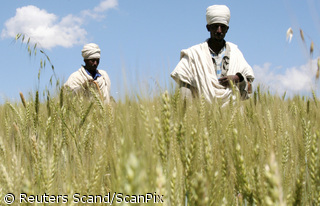 On the margins of the annual Africa Carbon Forum, a new initiative to bring environmental and financial benefits to local communities in the impoverished highlands of Ethiopia was announced here today.
more »
On the margins of the annual Africa Carbon Forum, a new initiative to bring environmental and financial benefits to local communities in the impoverished highlands of Ethiopia was announced here today.
more »
 Graduate unemployment is reaching unprecedented levels, partly due to the economic crisis, but there are other issues at play.
more »
Graduate unemployment is reaching unprecedented levels, partly due to the economic crisis, but there are other issues at play.
more »
 A new agency has been launched with a mandate to boost the level of innovation in Lithuania and bring it in line with the European Union average.
more »
A new agency has been launched with a mandate to boost the level of innovation in Lithuania and bring it in line with the European Union average.
more »
 After lots were drawn, ten winners of Danske Bankas scholarships and one winner of an iPod shuffle player were established.
more »
After lots were drawn, ten winners of Danske Bankas scholarships and one winner of an iPod shuffle player were established.
more »
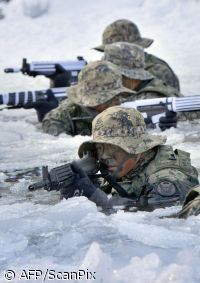 The Spanish Ministry of Defence will offer the military cadets and midshipmen of European Union countries the chance to study an EU course on the Common Security and Defence Policy (CSDP) at the Spanish military academies of the three branches of the armed forces as part of the educational exchange programme known as the military ERASMUS.
more »
The Spanish Ministry of Defence will offer the military cadets and midshipmen of European Union countries the chance to study an EU course on the Common Security and Defence Policy (CSDP) at the Spanish military academies of the three branches of the armed forces as part of the educational exchange programme known as the military ERASMUS.
more »
 The first solar cell production line was opened in Vilnius on 26 January.
more »
The first solar cell production line was opened in Vilnius on 26 January.
more »