About 6,000 Russian teenagers and schoolchildren staged a noisy protest outside Latvia's parliament
Published:
7 February 2004 y., Saturday
About 6,000 Russian teenagers and schoolchildren staged a noisy protest outside Latvia's parliament just before lawmakers passed a law Thursday requiring that all public schools -- including those with all-Russian student bodies -- teach mainly in Latvian.
In what was one of the largest demonstrations in recent Latvian history, hundreds of children waved mostly Russian-language placards, one reading, "Don't twist our arms. Let us speak Latvian voluntarily!"
The crowd also chanted "hands off our school" and "no to the reforms" in Russian. The new law mandates that at least 60 percent of classes in public schools, even those catering to the large Russian-speaking minority, must be taught in Latvian starting in September.
After several hours of heated debate, with many ethnic-Russian deputies speaking in opposition, the 100-seat Saeima overwhelmingly approved the legislation by a 71-25 vote. Other deputies either weren't present or didn't vote.
Russians call the requirements discriminatory and say they are an attack on their way of life, charges echoed by Moscow.
Latvians counter that they are meant to help integrate minorities, adding that those who don't learn Latvian will find it hard to secure good jobs.
Šaltinis:
themoscowtimes.com
Copying, publishing, announcing any information from the News.lt portal without written permission of News.lt editorial office is prohibited.
The most popular articles

The European Commission announced today the award of three of the six contracts for the procurement of Galileo’s initial operational capability.
more »
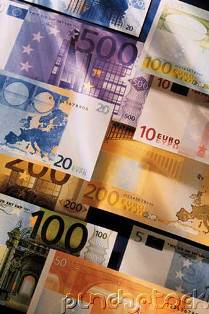 Plans to step up EU funding to develop innovative low-carbon technologies to help cut greenhouse gas emissions by 20% by 2020 were welcomed in a resolution approved by Parliament on Thursday.
more »
Plans to step up EU funding to develop innovative low-carbon technologies to help cut greenhouse gas emissions by 20% by 2020 were welcomed in a resolution approved by Parliament on Thursday.
more »
 A report presented today by the European Commission shows that countries still face challenges in modernising higher education, a decade after the launch of a blueprint for reform known as the 'Bologna Process'.
more »
A report presented today by the European Commission shows that countries still face challenges in modernising higher education, a decade after the launch of a blueprint for reform known as the 'Bologna Process'.
more »
 The nominees for the European Inventor Award 2010 include inventors of pioneering innovations in a wide range of fields, from the conservation of drinking water to the synthesis of football-shaped carbon molecules or "fullerenes", and from cancer treatments to digital data encryption.
more »
The nominees for the European Inventor Award 2010 include inventors of pioneering innovations in a wide range of fields, from the conservation of drinking water to the synthesis of football-shaped carbon molecules or "fullerenes", and from cancer treatments to digital data encryption.
more »
 Every year over 180,000 students across Europe study in the Erasmus University exchange programme.
more »
Every year over 180,000 students across Europe study in the Erasmus University exchange programme.
more »
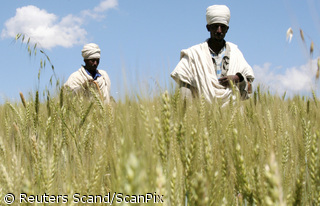 On the margins of the annual Africa Carbon Forum, a new initiative to bring environmental and financial benefits to local communities in the impoverished highlands of Ethiopia was announced here today.
more »
On the margins of the annual Africa Carbon Forum, a new initiative to bring environmental and financial benefits to local communities in the impoverished highlands of Ethiopia was announced here today.
more »
 Graduate unemployment is reaching unprecedented levels, partly due to the economic crisis, but there are other issues at play.
more »
Graduate unemployment is reaching unprecedented levels, partly due to the economic crisis, but there are other issues at play.
more »
 A new agency has been launched with a mandate to boost the level of innovation in Lithuania and bring it in line with the European Union average.
more »
A new agency has been launched with a mandate to boost the level of innovation in Lithuania and bring it in line with the European Union average.
more »
 After lots were drawn, ten winners of Danske Bankas scholarships and one winner of an iPod shuffle player were established.
more »
After lots were drawn, ten winners of Danske Bankas scholarships and one winner of an iPod shuffle player were established.
more »
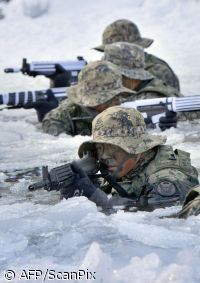 The Spanish Ministry of Defence will offer the military cadets and midshipmen of European Union countries the chance to study an EU course on the Common Security and Defence Policy (CSDP) at the Spanish military academies of the three branches of the armed forces as part of the educational exchange programme known as the military ERASMUS.
more »
The Spanish Ministry of Defence will offer the military cadets and midshipmen of European Union countries the chance to study an EU course on the Common Security and Defence Policy (CSDP) at the Spanish military academies of the three branches of the armed forces as part of the educational exchange programme known as the military ERASMUS.
more »
 The first solar cell production line was opened in Vilnius on 26 January.
more »
The first solar cell production line was opened in Vilnius on 26 January.
more »