A new Uzbek media watchdog has urged international organisations promoting journalist's rights to pay more attention to the situation in this Central Asian republic where there is no independent press
Published:
19 January 2005 y., Wednesday
A new Uzbek media watchdog has urged international organisations promoting journalist's rights to pay more attention to the situation in this Central Asian republic where there is no independent press and freedom of speech is severely curtailed.
"Uzbekistan is becoming a dangerous place for journalists who dare to challenge the government," Yusuf Rasulov, head of the Association for the Protection of Journalist's Rights and Freedoms (APJRF), told IRIN in the capital, Tashkent.
Rasulov, a former Voice of America (VOA) correspondent, said the aim of the NGO was to protect the handful of independent journalists working in Uzbekistan who are often victims of harassment, attack and threats from security forces.
He was attacked and brutally beaten by a group of women, while police looked on, while covering a protest in Tashkent's huge Chorsu market in 2003. "Since then, as we have been trying to create this new NGO, I have been threatened and often watched by security people," he said.
Uzbekistan, Central Asia's most populous state, is known for imprisoning opponents of President Islam Karimov's regime or forcing them into exile and widely criticised for slow economic reforms and growing poverty, particularly in rural areas.
Western radio stations broadcasting to Uzbekistan and the region in the Uzbek language are virtually the only critical media in this Central Asian country due to strict state control of national and local broadcast and print media.
Šaltinis:
irinnews.org
Copying, publishing, announcing any information from the News.lt portal without written permission of News.lt editorial office is prohibited.
The most popular articles
 Ensuring that women are protected from physical, sexual or psychological abuse if they flee abroad is what lies behind the proposed European Protection Order.
more »
Ensuring that women are protected from physical, sexual or psychological abuse if they flee abroad is what lies behind the proposed European Protection Order.
more »
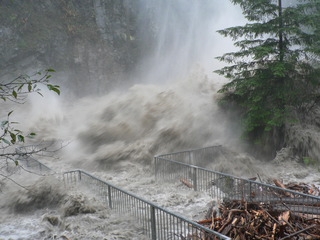 Remnants of Tropical Storm Agatha dumped more rain across Central America, killing at least 73 people in the region, and forcing scores of others to flee their homes.
more »
Remnants of Tropical Storm Agatha dumped more rain across Central America, killing at least 73 people in the region, and forcing scores of others to flee their homes.
more »
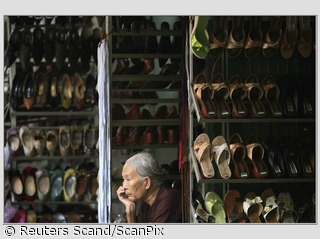 Ninety-three-year old Lim Guan Siew looks back, with regret, on her experience of the long-dispelled Chinese custom of foot-binding.
more »
Ninety-three-year old Lim Guan Siew looks back, with regret, on her experience of the long-dispelled Chinese custom of foot-binding.
more »
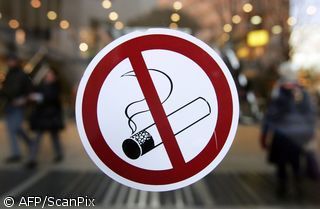 Ahead of the 2010 No Tobacco Day (Monday 31st May), the European Commission unveils the results of a Eurobarometer survey which shows that a strong majority of EU citizens support stronger tobacco control measures.
more »
Ahead of the 2010 No Tobacco Day (Monday 31st May), the European Commission unveils the results of a Eurobarometer survey which shows that a strong majority of EU citizens support stronger tobacco control measures.
more »
 Enviromentalist and endurance swimmer Lewis Pugh puts his body to the test in thin air and cold water to highlight shrinking glaciers in high mountain ranges.
more »
Enviromentalist and endurance swimmer Lewis Pugh puts his body to the test in thin air and cold water to highlight shrinking glaciers in high mountain ranges.
more »
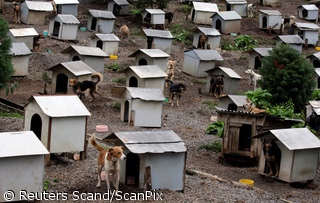 It’s a dog’s life for the 1,500 unwanted strays who spend their days in a slum-like shelters in Brazil’s southern city of Caxias do Sul.
more »
It’s a dog’s life for the 1,500 unwanted strays who spend their days in a slum-like shelters in Brazil’s southern city of Caxias do Sul.
more »
 Three resolutions on the situation in Thailand, the pre-election climate in Burma and religious freedom in Pakistan were adopted by the European Parliament in Strasbourg on Thursday.
more »
Three resolutions on the situation in Thailand, the pre-election climate in Burma and religious freedom in Pakistan were adopted by the European Parliament in Strasbourg on Thursday.
more »
 Growing numbers of children enroll in kung-fu schools to learn self-defense techniques after a series of school attacks in recent weeks spark wide-spread concern in China.
more »
Growing numbers of children enroll in kung-fu schools to learn self-defense techniques after a series of school attacks in recent weeks spark wide-spread concern in China.
more »
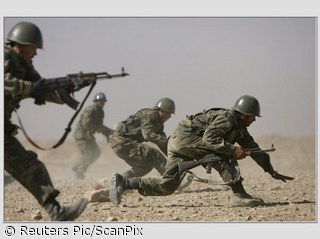 Homosexuality in the military can be a thorny issue around the world, with gay and lesbian soldiers often hiding their sexual preference out of fear.
more »
Homosexuality in the military can be a thorny issue around the world, with gay and lesbian soldiers often hiding their sexual preference out of fear.
more »
 European Commission Vice-President Viviane Reding will urge EU Member States to swiftly ratify the UN Convention on the Rights of Persons with Disabilities during a May 19 Ministers’ meeting in Zaragoza, Spain.
more »
European Commission Vice-President Viviane Reding will urge EU Member States to swiftly ratify the UN Convention on the Rights of Persons with Disabilities during a May 19 Ministers’ meeting in Zaragoza, Spain.
more »