A new Uzbek media watchdog has urged international organisations promoting journalist's rights to pay more attention to the situation in this Central Asian republic where there is no independent press
Published:
19 January 2005 y., Wednesday
A new Uzbek media watchdog has urged international organisations promoting journalist's rights to pay more attention to the situation in this Central Asian republic where there is no independent press and freedom of speech is severely curtailed.
"Uzbekistan is becoming a dangerous place for journalists who dare to challenge the government," Yusuf Rasulov, head of the Association for the Protection of Journalist's Rights and Freedoms (APJRF), told IRIN in the capital, Tashkent.
Rasulov, a former Voice of America (VOA) correspondent, said the aim of the NGO was to protect the handful of independent journalists working in Uzbekistan who are often victims of harassment, attack and threats from security forces.
He was attacked and brutally beaten by a group of women, while police looked on, while covering a protest in Tashkent's huge Chorsu market in 2003. "Since then, as we have been trying to create this new NGO, I have been threatened and often watched by security people," he said.
Uzbekistan, Central Asia's most populous state, is known for imprisoning opponents of President Islam Karimov's regime or forcing them into exile and widely criticised for slow economic reforms and growing poverty, particularly in rural areas.
Western radio stations broadcasting to Uzbekistan and the region in the Uzbek language are virtually the only critical media in this Central Asian country due to strict state control of national and local broadcast and print media.
Šaltinis:
irinnews.org
Copying, publishing, announcing any information from the News.lt portal without written permission of News.lt editorial office is prohibited.
The most popular articles
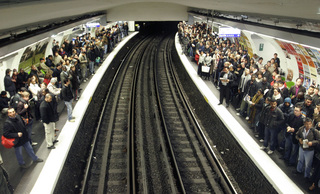 75 years after Moscow first opened its underground train system, Muscovites can ride a restored vintage train.
more »
75 years after Moscow first opened its underground train system, Muscovites can ride a restored vintage train.
more »
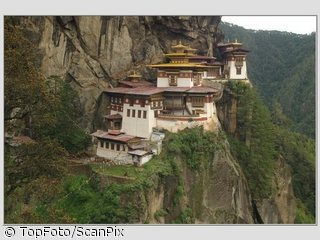 A glacier melt threatens to cause massive flooding and destroy a centuries old monastic fortress in the remote country of Bhutan.
more »
A glacier melt threatens to cause massive flooding and destroy a centuries old monastic fortress in the remote country of Bhutan.
more »
 What do countries as geographically diverse as Saudi Arabia, Uganda and Jamaica have in common? All of them criminalised homosexuality.
more »
What do countries as geographically diverse as Saudi Arabia, Uganda and Jamaica have in common? All of them criminalised homosexuality.
more »
 Human rights is a key issue for the European Parliament and MEPs Monday took a first look at what the European Union did last year, when they discussed the EU annual report on human rights in the world.
more »
Human rights is a key issue for the European Parliament and MEPs Monday took a first look at what the European Union did last year, when they discussed the EU annual report on human rights in the world.
more »
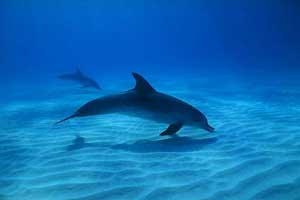 Researchers found high levels of mecury in a Japenese dolphin-hunting town, but say the mecury has no ill effects.
more »
Researchers found high levels of mecury in a Japenese dolphin-hunting town, but say the mecury has no ill effects.
more »
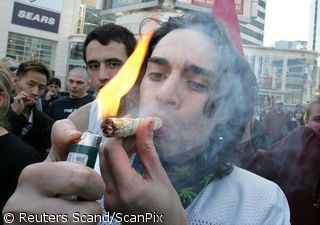 Crowds of Mexicans marched peacefully through the capital city on Saturday demanding the legalisation of marijuana.
more »
Crowds of Mexicans marched peacefully through the capital city on Saturday demanding the legalisation of marijuana.
more »
 Prisoners are reported to have dramatic improvements in behaviour after pets are introduced in a new scheme.
more »
Prisoners are reported to have dramatic improvements in behaviour after pets are introduced in a new scheme.
more »
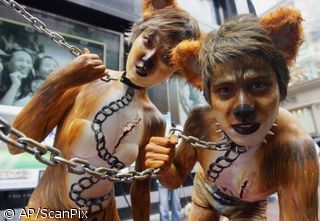 Israeli Ultra-Orthodox MPs are lining up against activists proposing a total ban on furs, saying traditional fur hats are an important part of their religious tradition.
more »
Israeli Ultra-Orthodox MPs are lining up against activists proposing a total ban on furs, saying traditional fur hats are an important part of their religious tradition.
more »
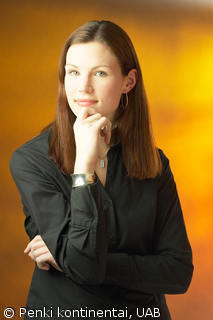 EU Member States should organise social protection, including at least 14 weeks' maternity allowance, for self-employed women and self-employed men's wives or life partners, in accordance with national laws, said the Women's Rights Committee on Tuesday.
more »
EU Member States should organise social protection, including at least 14 weeks' maternity allowance, for self-employed women and self-employed men's wives or life partners, in accordance with national laws, said the Women's Rights Committee on Tuesday.
more »
 How are the European Parliament, the European Commission and other parts of the European Union supposed to interest people and explain their work?
more »
How are the European Parliament, the European Commission and other parts of the European Union supposed to interest people and explain their work?
more »