A new Uzbek media watchdog has urged international organisations promoting journalist's rights to pay more attention to the situation in this Central Asian republic where there is no independent press
Published:
19 January 2005 y., Wednesday
A new Uzbek media watchdog has urged international organisations promoting journalist's rights to pay more attention to the situation in this Central Asian republic where there is no independent press and freedom of speech is severely curtailed.
"Uzbekistan is becoming a dangerous place for journalists who dare to challenge the government," Yusuf Rasulov, head of the Association for the Protection of Journalist's Rights and Freedoms (APJRF), told IRIN in the capital, Tashkent.
Rasulov, a former Voice of America (VOA) correspondent, said the aim of the NGO was to protect the handful of independent journalists working in Uzbekistan who are often victims of harassment, attack and threats from security forces.
He was attacked and brutally beaten by a group of women, while police looked on, while covering a protest in Tashkent's huge Chorsu market in 2003. "Since then, as we have been trying to create this new NGO, I have been threatened and often watched by security people," he said.
Uzbekistan, Central Asia's most populous state, is known for imprisoning opponents of President Islam Karimov's regime or forcing them into exile and widely criticised for slow economic reforms and growing poverty, particularly in rural areas.
Western radio stations broadcasting to Uzbekistan and the region in the Uzbek language are virtually the only critical media in this Central Asian country due to strict state control of national and local broadcast and print media.
Šaltinis:
irinnews.org
Copying, publishing, announcing any information from the News.lt portal without written permission of News.lt editorial office is prohibited.
The most popular articles
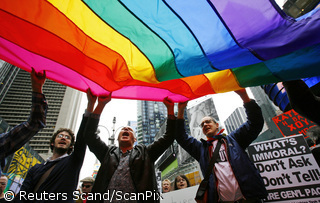 Tiwonge Chimbalanga and Steven Monjeza are married, but in Malawi homosexuality is banned.
more »
Tiwonge Chimbalanga and Steven Monjeza are married, but in Malawi homosexuality is banned.
more »
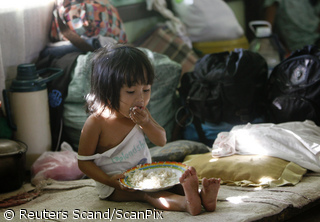 The World Bank today launched the fourth book in the critically acclaimed Moving Out of Poverty series, which provides bottom up perspectives on poverty and local realities by over 60,000 people living in 500 communities in 15 countries.
more »
The World Bank today launched the fourth book in the critically acclaimed Moving Out of Poverty series, which provides bottom up perspectives on poverty and local realities by over 60,000 people living in 500 communities in 15 countries.
more »
 Ten years ago, European leaders pledged to end poverty in the EU by 2010. As this deadline approaches, the goal is still some way off.
more »
Ten years ago, European leaders pledged to end poverty in the EU by 2010. As this deadline approaches, the goal is still some way off.
more »
 For many 2009 will be a historic year with the coming into force of the Lisbon Treaty, the outcome of the Copenhagen summit and the inauguration of the first black US president.
more »
For many 2009 will be a historic year with the coming into force of the Lisbon Treaty, the outcome of the Copenhagen summit and the inauguration of the first black US president.
more »
 Not answering the phone, celebrating Hogmanay and reading Dickens' Christmas Carol are just three seasonal traditions that MEPs shared with us.
more »
Not answering the phone, celebrating Hogmanay and reading Dickens' Christmas Carol are just three seasonal traditions that MEPs shared with us.
more »
 More and more people make their homes and own property in EU countries other than the one in which they hold citizenship.
more »
More and more people make their homes and own property in EU countries other than the one in which they hold citizenship.
more »
 European Parliament President Jerzy Buzek has made an televised Christmas and New Year address to European citizens, looking ahead to the challenges of the coming year.
more »
European Parliament President Jerzy Buzek has made an televised Christmas and New Year address to European citizens, looking ahead to the challenges of the coming year.
more »
 Lithuania takes the 1st position in the EU by the number of students in the country.
more »
Lithuania takes the 1st position in the EU by the number of students in the country.
more »
 Sergei Kovalev, former political prisoner turned activist for Russian human rights group Memorial gave an emotional and heartfelt address to the European Parliament on Wednesday 16 December.
more »
Sergei Kovalev, former political prisoner turned activist for Russian human rights group Memorial gave an emotional and heartfelt address to the European Parliament on Wednesday 16 December.
more »
 Strengthened passenger rights for travel by bus are an important item on the agenda when the Transport, Telecommunications and Energy Council (TTE) meets on 17–18 December.
more »
Strengthened passenger rights for travel by bus are an important item on the agenda when the Transport, Telecommunications and Energy Council (TTE) meets on 17–18 December.
more »