A new Uzbek media watchdog has urged international organisations promoting journalist's rights to pay more attention to the situation in this Central Asian republic where there is no independent press
Published:
19 January 2005 y., Wednesday
A new Uzbek media watchdog has urged international organisations promoting journalist's rights to pay more attention to the situation in this Central Asian republic where there is no independent press and freedom of speech is severely curtailed.
"Uzbekistan is becoming a dangerous place for journalists who dare to challenge the government," Yusuf Rasulov, head of the Association for the Protection of Journalist's Rights and Freedoms (APJRF), told IRIN in the capital, Tashkent.
Rasulov, a former Voice of America (VOA) correspondent, said the aim of the NGO was to protect the handful of independent journalists working in Uzbekistan who are often victims of harassment, attack and threats from security forces.
He was attacked and brutally beaten by a group of women, while police looked on, while covering a protest in Tashkent's huge Chorsu market in 2003. "Since then, as we have been trying to create this new NGO, I have been threatened and often watched by security people," he said.
Uzbekistan, Central Asia's most populous state, is known for imprisoning opponents of President Islam Karimov's regime or forcing them into exile and widely criticised for slow economic reforms and growing poverty, particularly in rural areas.
Western radio stations broadcasting to Uzbekistan and the region in the Uzbek language are virtually the only critical media in this Central Asian country due to strict state control of national and local broadcast and print media.
Šaltinis:
irinnews.org
Copying, publishing, announcing any information from the News.lt portal without written permission of News.lt editorial office is prohibited.
The most popular articles
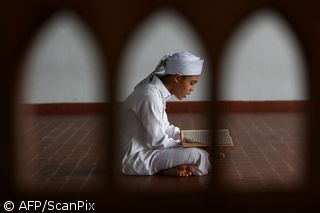 Muslims world wide celebrate Eid to mark the end of Ramadan, the Islamic holy month of fasting.
more »
Muslims world wide celebrate Eid to mark the end of Ramadan, the Islamic holy month of fasting.
more »
 This publication focuses on selective aspects of the travel behaviour of residents from the EU Member States in 2006. In so doing it mainly deals with differences, if any, in the travel behaviour of four different age groups, that is tourists aged 15 to 24 years, 25 to 44 years, 45 to 64 years and older than 64 years.
more »
This publication focuses on selective aspects of the travel behaviour of residents from the EU Member States in 2006. In so doing it mainly deals with differences, if any, in the travel behaviour of four different age groups, that is tourists aged 15 to 24 years, 25 to 44 years, 45 to 64 years and older than 64 years.
more »
 As of 1 August this year, the basic pension will be increased by LTL 44, and the insured income – by LTL 74.
more »
As of 1 August this year, the basic pension will be increased by LTL 44, and the insured income – by LTL 74.
more »
 Sergei Malchik, head of the Belarusian Popular Front (BPF)'s Grodno charter, has called for the boycott of the Second Congress of Pro-democratic Forces.
more »
Sergei Malchik, head of the Belarusian Popular Front (BPF)'s Grodno charter, has called for the boycott of the Second Congress of Pro-democratic Forces.
more »
 Vintsuk Vyachorka, leader of the Belarusian Popular Front, has announced plans to contest the results of elections for the Minsk City Soviet in the Miroshnichenkovsky district.
more »
Vintsuk Vyachorka, leader of the Belarusian Popular Front, has announced plans to contest the results of elections for the Minsk City Soviet in the Miroshnichenkovsky district.
more »
 Youth opposition activists has filed an application for the Minsk city government for permission to stage a show called a “Big Jeans Fest”.
more »
Youth opposition activists has filed an application for the Minsk city government for permission to stage a show called a “Big Jeans Fest”.
more »