White House Urged To Use Internet As Human-Rights Soapbox
Published:
11 February 2001 y., Sunday
The Bush administration should consider reaching out to other nations to encourage use of the Internet as a tool for promoting US interests and improving human rights conditions abroad, a report issued publicly today asserts.
"To advance American security, political and economic interests, the United States should focus greater attention upon fostering the expansion of foreign Internet access and use, particularly in nations that are economically marginalized or struggling to solidify democracy," the Lawyers Committee for Human Rights said.
The report, presented to top-ranking officials in the Bush administration on Thursday, advocates a policy of techno-activism abroad to fight foreign oppressive regimes and to pave the way for American high-tech companies.
"Because the US private sector remains a leader in all aspects of information technology, American firms are well positioned to provide the infrastructure, hardware, software and training needed as Internet use expands," the report notes.
The 200-page study likens the Internet – as a tool for democratization – to the influence of Radio Free Europe and Voice of America during the Cold War, noting that the Web has enormous potential in exporting American values and democratization in many repressive nations that restrict media and the press.
The study also references a recent estimate by the international press advocacy group Reporters Sans Frontieres (Reporters Without Borders), which says more than 45 countries "severely restrict" the Internet by forcing users to filter content, subscribe to a state-run ISP or register with authorities.
The group said some 20 nations, including Iran, Iraq, Libya, China, Cuba and North Korea and several other countries that the US keeps at a safe distance virtually ban the Internet from their borders. Such nations are just as likely to use the Internet against their own citizens, the Lawyers Committee said.
The report urges the Bush administration to call for end to all government restrictions on Web use, and to use its embassies and military bases abroad as a jumping off point for expanding public Internet access for non-commercial users.
Šaltinis:
Newsbytes
Copying, publishing, announcing any information from the News.lt portal without written permission of News.lt editorial office is prohibited.
The most popular articles
 This Saturday, 24 April, the Carlos de Amberes Foundation is hosting two conferences of European experts on the environment and sustainability and immigration policies in the EU, organised by the Allianz Cultural Foundation in the context of the Allianz Alumni Academy.
more »
This Saturday, 24 April, the Carlos de Amberes Foundation is hosting two conferences of European experts on the environment and sustainability and immigration policies in the EU, organised by the Allianz Cultural Foundation in the context of the Allianz Alumni Academy.
more »
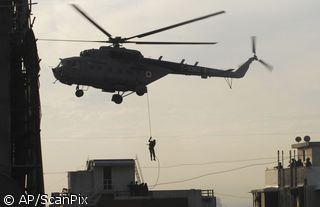 The Trident-Oberoi Hotel in Mumbai to reopen, following renovations after militant attacks in 2008
more »
The Trident-Oberoi Hotel in Mumbai to reopen, following renovations after militant attacks in 2008
more »
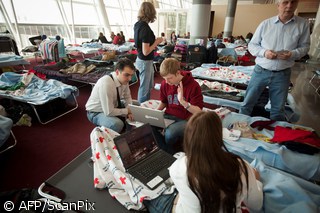 Fresh from their wedding in Jamaica, British tourists Siobhan and David Monteith never thought for a minute that a volcano would interrupt their honeymoon.
more »
Fresh from their wedding in Jamaica, British tourists Siobhan and David Monteith never thought for a minute that a volcano would interrupt their honeymoon.
more »
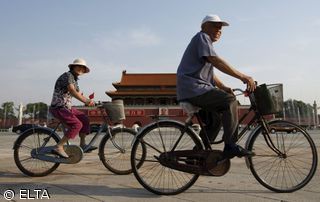 The streets of Manila filled with a colourful display on wheels, just days before the world celebrates Earth Day’s 40th anniversary.
more »
The streets of Manila filled with a colourful display on wheels, just days before the world celebrates Earth Day’s 40th anniversary.
more »
 Tens of thousands of Ugandans flocked to the hilltop palace of Africa’s youngest tribal ruler for two days of noisy parties marking a decade in power for the 18-year-old king.
more »
Tens of thousands of Ugandans flocked to the hilltop palace of Africa’s youngest tribal ruler for two days of noisy parties marking a decade in power for the 18-year-old king.
more »
 Colourful warriors leap across the stage at the 6th annual Songjiang Battle Array, in Neimen, southern Taiwan.
more »
Colourful warriors leap across the stage at the 6th annual Songjiang Battle Array, in Neimen, southern Taiwan.
more »
 Consumers benefit from greater use of European product safety alert system and more effective market surveillance.
more »
Consumers benefit from greater use of European product safety alert system and more effective market surveillance.
more »
 Representatives from all Member States are gathering for two days in Zaragoza from 15 to 16 April to discuss how migrant integration can become a driver for social cohesion in the EU.
more »
Representatives from all Member States are gathering for two days in Zaragoza from 15 to 16 April to discuss how migrant integration can become a driver for social cohesion in the EU.
more »
 The much heralded "citizens initiative" to change EU laws has been given a cautious welcome by MEPs. Under the scheme - a major innovation of the Lisbon treaty - a million people can back a plan to introduce European legislation.
more »
The much heralded "citizens initiative" to change EU laws has been given a cautious welcome by MEPs. Under the scheme - a major innovation of the Lisbon treaty - a million people can back a plan to introduce European legislation.
more »
 Football shares Europe's values of integration, solidarity and social inclusion, and can play a significant role in helping the EU to promote them, especially at the local level where clubs are part of their local communities.
more »
Football shares Europe's values of integration, solidarity and social inclusion, and can play a significant role in helping the EU to promote them, especially at the local level where clubs are part of their local communities.
more »