White House Urged To Use Internet As Human-Rights Soapbox
Published:
11 February 2001 y., Sunday
The Bush administration should consider reaching out to other nations to encourage use of the Internet as a tool for promoting US interests and improving human rights conditions abroad, a report issued publicly today asserts.
"To advance American security, political and economic interests, the United States should focus greater attention upon fostering the expansion of foreign Internet access and use, particularly in nations that are economically marginalized or struggling to solidify democracy," the Lawyers Committee for Human Rights said.
The report, presented to top-ranking officials in the Bush administration on Thursday, advocates a policy of techno-activism abroad to fight foreign oppressive regimes and to pave the way for American high-tech companies.
"Because the US private sector remains a leader in all aspects of information technology, American firms are well positioned to provide the infrastructure, hardware, software and training needed as Internet use expands," the report notes.
The 200-page study likens the Internet – as a tool for democratization – to the influence of Radio Free Europe and Voice of America during the Cold War, noting that the Web has enormous potential in exporting American values and democratization in many repressive nations that restrict media and the press.
The study also references a recent estimate by the international press advocacy group Reporters Sans Frontieres (Reporters Without Borders), which says more than 45 countries "severely restrict" the Internet by forcing users to filter content, subscribe to a state-run ISP or register with authorities.
The group said some 20 nations, including Iran, Iraq, Libya, China, Cuba and North Korea and several other countries that the US keeps at a safe distance virtually ban the Internet from their borders. Such nations are just as likely to use the Internet against their own citizens, the Lawyers Committee said.
The report urges the Bush administration to call for end to all government restrictions on Web use, and to use its embassies and military bases abroad as a jumping off point for expanding public Internet access for non-commercial users.
Šaltinis:
Newsbytes
Copying, publishing, announcing any information from the News.lt portal without written permission of News.lt editorial office is prohibited.
The most popular articles
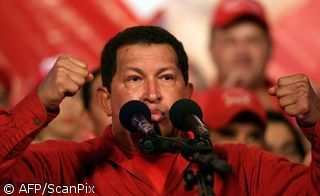 For three days now these group of Venezuelan students have not eaten any food - they're staging a hunger strike against President Hugo Chavez.
more »
For three days now these group of Venezuelan students have not eaten any food - they're staging a hunger strike against President Hugo Chavez.
more »
 Contest challenges young people from Europe and beyond to find creative solutions to real-life problems.EU-sponsored contest challenges young people to think creatively.
more »
Contest challenges young people from Europe and beyond to find creative solutions to real-life problems.EU-sponsored contest challenges young people to think creatively.
more »
 In time-honoured tradition it's time for Hamburg's swans to head to their winter quarters.
more »
In time-honoured tradition it's time for Hamburg's swans to head to their winter quarters.
more »
 On 24 November, Lithuania’s Minister of Foreign Affairs Vygaudas Ušackas will attend the ceremony during which the Ambassador of the People's Republic of China to Lithuania Tong Mingtao will hand over the aid to the residential care centre “Vilties Namai” in Vilnius.
more »
On 24 November, Lithuania’s Minister of Foreign Affairs Vygaudas Ušackas will attend the ceremony during which the Ambassador of the People's Republic of China to Lithuania Tong Mingtao will hand over the aid to the residential care centre “Vilties Namai” in Vilnius.
more »
 If your airline goes bankrupt and leaves you stuck what are your legal rights? Wednesday at midday a crucial vote will be held by MEPs in Strasbourg that could clear the way for the setting up of a compensation fund for stranded passengers.
more »
If your airline goes bankrupt and leaves you stuck what are your legal rights? Wednesday at midday a crucial vote will be held by MEPs in Strasbourg that could clear the way for the setting up of a compensation fund for stranded passengers.
more »
 EU support for volunteering should be stepped up to €10 million, as part of the 2011 European Year of Voluntary Activities Promoting Active Citizenship, said the Education and Culture Committee on Monday evening.
more »
EU support for volunteering should be stepped up to €10 million, as part of the 2011 European Year of Voluntary Activities Promoting Active Citizenship, said the Education and Culture Committee on Monday evening.
more »
 Jacques Barrot and Luc Van den Brande to co-chair conference assessing the implementation of child rights by local and regional authorities.
more »
Jacques Barrot and Luc Van den Brande to co-chair conference assessing the implementation of child rights by local and regional authorities.
more »
 Europeans will soon have a new way of getting the commission to act on issues that concern them. But how will the new citizens’ initiative work in practice?
more »
Europeans will soon have a new way of getting the commission to act on issues that concern them. But how will the new citizens’ initiative work in practice?
more »
 In Ukraine local communities are directly affected by climate change impacts.
more »
In Ukraine local communities are directly affected by climate change impacts.
more »
 Ageism is growing problem – or so most Europeans think.
more »
Ageism is growing problem – or so most Europeans think.
more »