White House Urged To Use Internet As Human-Rights Soapbox
Published:
11 February 2001 y., Sunday
The Bush administration should consider reaching out to other nations to encourage use of the Internet as a tool for promoting US interests and improving human rights conditions abroad, a report issued publicly today asserts.
"To advance American security, political and economic interests, the United States should focus greater attention upon fostering the expansion of foreign Internet access and use, particularly in nations that are economically marginalized or struggling to solidify democracy," the Lawyers Committee for Human Rights said.
The report, presented to top-ranking officials in the Bush administration on Thursday, advocates a policy of techno-activism abroad to fight foreign oppressive regimes and to pave the way for American high-tech companies.
"Because the US private sector remains a leader in all aspects of information technology, American firms are well positioned to provide the infrastructure, hardware, software and training needed as Internet use expands," the report notes.
The 200-page study likens the Internet – as a tool for democratization – to the influence of Radio Free Europe and Voice of America during the Cold War, noting that the Web has enormous potential in exporting American values and democratization in many repressive nations that restrict media and the press.
The study also references a recent estimate by the international press advocacy group Reporters Sans Frontieres (Reporters Without Borders), which says more than 45 countries "severely restrict" the Internet by forcing users to filter content, subscribe to a state-run ISP or register with authorities.
The group said some 20 nations, including Iran, Iraq, Libya, China, Cuba and North Korea and several other countries that the US keeps at a safe distance virtually ban the Internet from their borders. Such nations are just as likely to use the Internet against their own citizens, the Lawyers Committee said.
The report urges the Bush administration to call for end to all government restrictions on Web use, and to use its embassies and military bases abroad as a jumping off point for expanding public Internet access for non-commercial users.
Šaltinis:
Newsbytes
Copying, publishing, announcing any information from the News.lt portal without written permission of News.lt editorial office is prohibited.
The most popular articles
 “Inciting subversion of state authority” is a serious crime in China. For 36 year old dissident Hu Jia it has meant a jail sentence of three and half years imposed last year.
more »
“Inciting subversion of state authority” is a serious crime in China. For 36 year old dissident Hu Jia it has meant a jail sentence of three and half years imposed last year.
more »
 Along with the beginning of the summer season, Bank SNORAS also resumes its activity at the most popular seaside resorts.
more »
Along with the beginning of the summer season, Bank SNORAS also resumes its activity at the most popular seaside resorts.
more »
 This week the first newly elected MEPs started arriving at the EP. At the desk where they register we met Italian Lara Comi and Slovene Tanja Fajon who were taking their first steps in their 5-year term as MEPs.
more »
This week the first newly elected MEPs started arriving at the EP. At the desk where they register we met Italian Lara Comi and Slovene Tanja Fajon who were taking their first steps in their 5-year term as MEPs.
more »
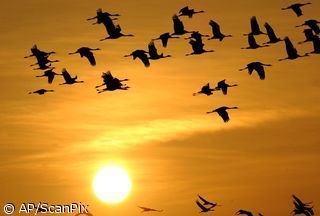 Tourists from all around India come to Uttar Pradesh to watch Sarus cranes.
more »
Tourists from all around India come to Uttar Pradesh to watch Sarus cranes.
more »
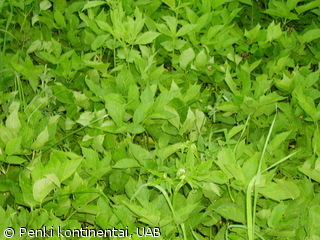 Summer means one thing in this English country village - in Marshwood it's time for the nettle eating championships.
more »
Summer means one thing in this English country village - in Marshwood it's time for the nettle eating championships.
more »
 A lack of food and water is forcing camel owners in northwestern Rajasthan to migrate to other states in India.
more »
A lack of food and water is forcing camel owners in northwestern Rajasthan to migrate to other states in India.
more »
 Polish art student Zofia Szostkiewicz is this month's guest photographer with her photos of people voting in Kolding in south-west Denmark during the European elections.
more »
Polish art student Zofia Szostkiewicz is this month's guest photographer with her photos of people voting in Kolding in south-west Denmark during the European elections.
more »
 The European Parliament's Communication Department has launched a tender for projects that will lead to a better understanding of the Parliament, stimulate public interest and participation in the political process.
more »
The European Parliament's Communication Department has launched a tender for projects that will lead to a better understanding of the Parliament, stimulate public interest and participation in the political process.
more »
 The man who called himself Clark Rockefeller has been found guilty of kidnapping his 7-year-old daughter.
more »
The man who called himself Clark Rockefeller has been found guilty of kidnapping his 7-year-old daughter.
more »
 Government sources in Yemen say a group of nine foreign nationals have been kidnapped in the northern Saada area.
more »
Government sources in Yemen say a group of nine foreign nationals have been kidnapped in the northern Saada area.
more »