White House Urged To Use Internet As Human-Rights Soapbox
Published:
11 February 2001 y., Sunday
The Bush administration should consider reaching out to other nations to encourage use of the Internet as a tool for promoting US interests and improving human rights conditions abroad, a report issued publicly today asserts.
"To advance American security, political and economic interests, the United States should focus greater attention upon fostering the expansion of foreign Internet access and use, particularly in nations that are economically marginalized or struggling to solidify democracy," the Lawyers Committee for Human Rights said.
The report, presented to top-ranking officials in the Bush administration on Thursday, advocates a policy of techno-activism abroad to fight foreign oppressive regimes and to pave the way for American high-tech companies.
"Because the US private sector remains a leader in all aspects of information technology, American firms are well positioned to provide the infrastructure, hardware, software and training needed as Internet use expands," the report notes.
The 200-page study likens the Internet – as a tool for democratization – to the influence of Radio Free Europe and Voice of America during the Cold War, noting that the Web has enormous potential in exporting American values and democratization in many repressive nations that restrict media and the press.
The study also references a recent estimate by the international press advocacy group Reporters Sans Frontieres (Reporters Without Borders), which says more than 45 countries "severely restrict" the Internet by forcing users to filter content, subscribe to a state-run ISP or register with authorities.
The group said some 20 nations, including Iran, Iraq, Libya, China, Cuba and North Korea and several other countries that the US keeps at a safe distance virtually ban the Internet from their borders. Such nations are just as likely to use the Internet against their own citizens, the Lawyers Committee said.
The report urges the Bush administration to call for end to all government restrictions on Web use, and to use its embassies and military bases abroad as a jumping off point for expanding public Internet access for non-commercial users.
Šaltinis:
Newsbytes
Copying, publishing, announcing any information from the News.lt portal without written permission of News.lt editorial office is prohibited.
The most popular articles
 For the last 15 years European citizens living in another European country have been able to vote in that country's local and European elections.
more »
For the last 15 years European citizens living in another European country have been able to vote in that country's local and European elections.
more »
 Zimbabwe is suffering from cholera.
more »
Zimbabwe is suffering from cholera.
more »
 Metropolitan Kirill will head the Russian Orthodox Church temporarily following the death of Patriarch Alexiy II on Friday.
more »
Metropolitan Kirill will head the Russian Orthodox Church temporarily following the death of Patriarch Alexiy II on Friday.
more »
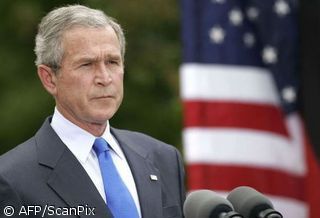 U.S President George W. Bush celebrates his final Christmas in office - the lighting of the National Christmas tree.
more »
U.S President George W. Bush celebrates his final Christmas in office - the lighting of the National Christmas tree.
more »
 Under new draft laws, people travelling by bus and ship would enjoy the same rights as those taking a plane or train, including the right to meals, hotel accommodation and alternative services if the trip is cancelled or interrupted.
more »
Under new draft laws, people travelling by bus and ship would enjoy the same rights as those taking a plane or train, including the right to meals, hotel accommodation and alternative services if the trip is cancelled or interrupted.
more »
 The importance of individual happiness, which can be achieved with the help of universal human values - whether religious or non-religious - was one major theme in an address by the 14th Dalai Lama to the European Parliament on Wednesday.
more »
The importance of individual happiness, which can be achieved with the help of universal human values - whether religious or non-religious - was one major theme in an address by the 14th Dalai Lama to the European Parliament on Wednesday.
more »
 Although the European Parliament is now much more powerful than when it was first directly elected in 1979, voter turnout for elections has declined steadily, reaching a new low in 2004.
more »
Although the European Parliament is now much more powerful than when it was first directly elected in 1979, voter turnout for elections has declined steadily, reaching a new low in 2004.
more »
 The free tours are run by Sandemans New Europe - set up in 2004 by Chris Sandeman, who chose tourism over his family's traditional sherry business.
more »
The free tours are run by Sandemans New Europe - set up in 2004 by Chris Sandeman, who chose tourism over his family's traditional sherry business.
more »
 Eighteen months after it began work, Parliament's Temporary Committee on Climate Change called for an 80% cut in greenhouse gases by 2050, binding interim targets to improve energy efficiency 20% by 2020 and incentives to encourage everyone to do their bit.
more »
Eighteen months after it began work, Parliament's Temporary Committee on Climate Change called for an 80% cut in greenhouse gases by 2050, binding interim targets to improve energy efficiency 20% by 2020 and incentives to encourage everyone to do their bit.
more »
 Israeli experts are using good old mathematical models to give a face in a photo the ideal characteristics in just a few mouse clicks.
more »
Israeli experts are using good old mathematical models to give a face in a photo the ideal characteristics in just a few mouse clicks.
more »