White House Urged To Use Internet As Human-Rights Soapbox
Published:
11 February 2001 y., Sunday
The Bush administration should consider reaching out to other nations to encourage use of the Internet as a tool for promoting US interests and improving human rights conditions abroad, a report issued publicly today asserts.
"To advance American security, political and economic interests, the United States should focus greater attention upon fostering the expansion of foreign Internet access and use, particularly in nations that are economically marginalized or struggling to solidify democracy," the Lawyers Committee for Human Rights said.
The report, presented to top-ranking officials in the Bush administration on Thursday, advocates a policy of techno-activism abroad to fight foreign oppressive regimes and to pave the way for American high-tech companies.
"Because the US private sector remains a leader in all aspects of information technology, American firms are well positioned to provide the infrastructure, hardware, software and training needed as Internet use expands," the report notes.
The 200-page study likens the Internet – as a tool for democratization – to the influence of Radio Free Europe and Voice of America during the Cold War, noting that the Web has enormous potential in exporting American values and democratization in many repressive nations that restrict media and the press.
The study also references a recent estimate by the international press advocacy group Reporters Sans Frontieres (Reporters Without Borders), which says more than 45 countries "severely restrict" the Internet by forcing users to filter content, subscribe to a state-run ISP or register with authorities.
The group said some 20 nations, including Iran, Iraq, Libya, China, Cuba and North Korea and several other countries that the US keeps at a safe distance virtually ban the Internet from their borders. Such nations are just as likely to use the Internet against their own citizens, the Lawyers Committee said.
The report urges the Bush administration to call for end to all government restrictions on Web use, and to use its embassies and military bases abroad as a jumping off point for expanding public Internet access for non-commercial users.
Šaltinis:
Newsbytes
Copying, publishing, announcing any information from the News.lt portal without written permission of News.lt editorial office is prohibited.
The most popular articles
 In England it's thought nearly one in six children are overweight - something the government is trying hard to change.
more »
In England it's thought nearly one in six children are overweight - something the government is trying hard to change.
more »
 Self-styled "freeconomist" Mark Boyle is on a mission to survive for one year by trading his skills, living off the land, and finding freebies.
more »
Self-styled "freeconomist" Mark Boyle is on a mission to survive for one year by trading his skills, living off the land, and finding freebies.
more »
 You may see lots of people wearing red ribbons today.
more »
You may see lots of people wearing red ribbons today.
more »
 Former astronaut turned MEP Umberto Guidoni of the leftist GUE/NGL group believes that the European Union should have a major role in space exploration.
more »
Former astronaut turned MEP Umberto Guidoni of the leftist GUE/NGL group believes that the European Union should have a major role in space exploration.
more »
 A Dutch couple are caught up in the middle of a baby scandal. They bought the baby over the internet from its Belgian mother, now the mother wants her baby back.
more »
A Dutch couple are caught up in the middle of a baby scandal. They bought the baby over the internet from its Belgian mother, now the mother wants her baby back.
more »
 For the past 12-weeks the Japanese tourist has been living in Terminal One at Mexico City International Airport.
more »
For the past 12-weeks the Japanese tourist has been living in Terminal One at Mexico City International Airport.
more »
 Growing numbers of older Europeans are choosing to work longer, reversing the previous trend toward early retirement – a development that could ease Europe’s aging population problem.
more »
Growing numbers of older Europeans are choosing to work longer, reversing the previous trend toward early retirement – a development that could ease Europe’s aging population problem.
more »
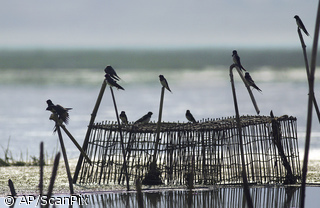 The Saemangeum land reclamation project would use a 33-km (20.5 mile) sea dyke to reclaim an area of 400 square kms (155 sq miles), turning coastal tidelands that are key feeding areas for globally threatened birds into land for factories, golf courses and water treatment plants.
more »
The Saemangeum land reclamation project would use a 33-km (20.5 mile) sea dyke to reclaim an area of 400 square kms (155 sq miles), turning coastal tidelands that are key feeding areas for globally threatened birds into land for factories, golf courses and water treatment plants.
more »
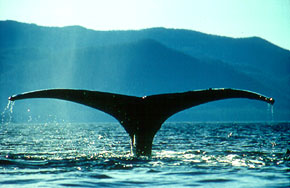 Sixty – four pilot whales stranded on the north coast of Tasmania.
more »
Sixty – four pilot whales stranded on the north coast of Tasmania.
more »
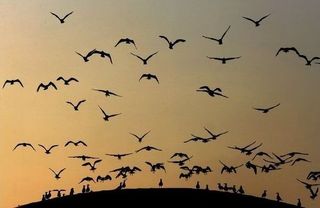 For decades starlings have descended on the Italian city of Rome making it their winter home.
more »
For decades starlings have descended on the Italian city of Rome making it their winter home.
more »