Breaking down barriers for disabled people

Published: 16 November 2010 y., Tuesday

Ten–year strategy for people with disabilities so they can take part in all aspects of daily life across the EU.
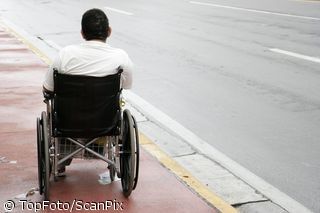
About 80 million people living in the EU have a mild to severe disability. The physical obstacles they face, like gaining access to a school or work place, leave them vulnerable to social exclusion. Lower employment and education levels mean the poverty rate for those with disabilities is 70% higher than the average.

The European Disability Strategy aims to make it easier for people with disabilities to go about their daily lives like everyone else – and enjoy their rights as an EU citizen.

It will ensure access to EU funding, raise public awareness about disability, and encourage member governments to work together in removing obstacles to inclusion.

It will also fulfil the EU's commitment to the UN Convention on the Rights of Persons with Disabilities, which the bloc and its member countries signed in 2007.

The strategy's targets for the first five years include:

  • devising policies for inclusive, high–quality education
  • ensuring the European Platform Against Poverty includes a special focus on people with disabilities. The forum brings together experts who share best practices and experience
  • working towards the recognition of disability cards throughout the EU to ensure equal treatment when working, living or travelling in the bloc
  • developing accessibility standards for voting premises and campaign material
  • taking the rights of people with disabilities into account in external development programmes and for EU candidate countries.

The commission will also consider proposing a “European Accessibility Act”, which would set EU standards for products, services, and public buildings. For example, it would make it easier for manufacturers of assistive devices like wheelchairs or large print keyboards to trade across borders, bringing costs down.

Promoting accessibility is an important part of creating a culture of equal opportunities for all in the EU. But it also stands to benefit the economy as a whole. Boosting the industries that invest in accessible products and services will foster innovation and create jobs.

Šaltinis: ec.europa.eu
Copying, publishing, announcing any information from the News.lt portal without written permission of News.lt editorial office is prohibited.

Facebook Comments

New comment


Captcha

Associated articles

The most popular articles

Nothing Can Stop the African Woman… Ask Agathe

A baby girl loses her mother at birth. A few years later, she is “sold” into domestic labor by her own father. more »

Morocco Water & Sanitation

Scarce and unevenly distributed rainfall has made water a key economic and social development issue in Morocco. more »

Climate Change in Mauritania: Taking Action before it is too late

Rainfall in August and September 2009 confirmed the fears of serious risk of natural disasters in years to come resulting from rising sea levels, greater erosion of coastal zones, destruction of the mangroves, and devastating floods. more »

International Women's Day – 8 March 2010

Fifteen years after the groundbreaking Fourth World Conference on Women, which was held in Beijing in 1995, the international community has clear legal norms on the prohibition of discrimination and the active promotion of gender equality and women's empowerment. more »

European Commission strengthens its commitment to equality between women and men

Ahead of International Women's Day, the European Commission strengthened and deepened its commitment to equality between women and men with a Women's Charter. more »

World Bank Institute Launches Online Game EVOKE, a Crash Course in Changing the World

The World Bank Institute has launched an online multiplayer game, EVOKE, designed to empower young people all over the world, but especially in Africa, to start solving urgent social problems like hunger, poverty, disease, conflict, climate change, sustainable energy, lack of health care and education. more »

Asylum study backs shared responsibility between EU countries

One of the crucial questions facing EU asylum policy is the extent to which countries share the demands of asylum seekers. more »

Filipino Youth ask: What can I do to address climate change?

Youth in three major universities explored what they can do to address climate change, something that experts in a knowledge-sharing forum in Silliman University in Dumaguete City say is already at Filipinos’ doorsteps. more »

Getting women more involved in European politics

The Parliament needs to connect more with women voters as research shows them to be trapped in a vicious circle, being under-represented in the EP and EU politics in general and, therefore, less interested and less involved than men. more »

Colour festival in India

The streets of India became a kaleidoscope of colour, as locals celebrated Holi. more »