Breaking down barriers for disabled people

Published: 16 November 2010 y., Tuesday

Ten–year strategy for people with disabilities so they can take part in all aspects of daily life across the EU.
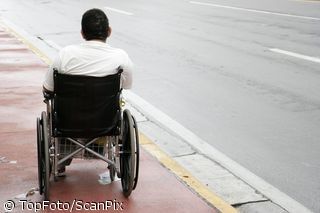
About 80 million people living in the EU have a mild to severe disability. The physical obstacles they face, like gaining access to a school or work place, leave them vulnerable to social exclusion. Lower employment and education levels mean the poverty rate for those with disabilities is 70% higher than the average.

The European Disability Strategy aims to make it easier for people with disabilities to go about their daily lives like everyone else – and enjoy their rights as an EU citizen.

It will ensure access to EU funding, raise public awareness about disability, and encourage member governments to work together in removing obstacles to inclusion.

It will also fulfil the EU's commitment to the UN Convention on the Rights of Persons with Disabilities, which the bloc and its member countries signed in 2007.

The strategy's targets for the first five years include:

  • devising policies for inclusive, high–quality education
  • ensuring the European Platform Against Poverty includes a special focus on people with disabilities. The forum brings together experts who share best practices and experience
  • working towards the recognition of disability cards throughout the EU to ensure equal treatment when working, living or travelling in the bloc
  • developing accessibility standards for voting premises and campaign material
  • taking the rights of people with disabilities into account in external development programmes and for EU candidate countries.

The commission will also consider proposing a “European Accessibility Act”, which would set EU standards for products, services, and public buildings. For example, it would make it easier for manufacturers of assistive devices like wheelchairs or large print keyboards to trade across borders, bringing costs down.

Promoting accessibility is an important part of creating a culture of equal opportunities for all in the EU. But it also stands to benefit the economy as a whole. Boosting the industries that invest in accessible products and services will foster innovation and create jobs.

Šaltinis: ec.europa.eu
Copying, publishing, announcing any information from the News.lt portal without written permission of News.lt editorial office is prohibited.

Facebook Comments

New comment


Captcha

Associated articles

The most popular articles

EU position on blue fin tuna ban debated Tuesday

The fate of blue fin tuna hangs in the balance this week as a complete ban on the trade is debated by MEPs. more »

Programs for Climate Action Get Underway With $400 million for Forests and $300 million for Renewables

A $100 million pledge from the Government of Japan has helped to secure the funding base and launch the operational phase of two new climate programs supporting forest management and renewable energy investments in developing countries. more »

Taking Europe’s pulse

Europeans quite happy with their personal situation, but less satisfied with economic and social climate in their country. more »

Spain wants to progress the incorporation of human rights and fundamental freedoms into Community law "as much as possible"

Spain wishes to “make as much progress as possible” to ensure the EU becomes party to the Council of Europe's Convention for the Protection of Human Rights and Fundamental Freedoms soon, according to the Spanish Minister for Justice, Francisco Caamaño, at today's opening of a seminar on the challenges and possibilities arising from the Treaty of Lisbon coming into force. more »

Belarusian children’s store eyes expansion

According to Belarusian tradition, a stork brings good fortune to the village it settles in while in western culture the stork is commonly associated with childbirth. more »

World Bank Approves US $20 Million in Additional Financing for Moldova’s Social Investment Fund II Project

The World Bank Board of Directors today approved an additional financing credit to the Republic of Moldova in the amount of US $20 million for the Social Investment Fund II Project. more »

Eighty million Europeans live in poverty

The Spanish Health and Social Policy Minister, Trinidad Jiménez, and the European Commissioner for Employment, Social Affairs and Equal Opportunities, Vladimir Spidla, addressed the press in Madrid on the launch of the European Year for Combating Poverty and Social Exclusion 2010. more »

EU launches 2010 European Year: Stop poverty now!

The European Commission and the Spanish Presidency of the EU will tomorrow launch the 2010 European Year for Combating Poverty and Social Exclusion. more »

Spain proposes tougher smoking ban

Smoking at a restaurant like this one in Spain could soon be a thing of the past. Spanish lawmakers want to stub out the habit in public places like bars and restaurants. But it's an unpopular proposal in a country where around 30 percent of the population smoke. more »

Statement by President Mario Sepi: Earthquake in Haiti: European civil society and all the institutions must provide help and support to Haiti's population

As President of the European Economic and Social Committee, I would like, on behalf of all the Committee's members, to express my sympathy to the victims of the earthquake in Haiti. more »