An acronym that had dominated headlines at previous CeBIT shows seemed to be little more than a footnote at this year's event
Published:
18 March 2003 y., Tuesday
An acronym that had dominated headlines at previous CeBIT shows seemed to be little more than a footnote at this year's event. The buzz that once accompanied 3G (third-generation) broadband mobile Internet appears to have fizzled even before the service has taken off.
Grabbing the attention this year were wireless technologies, such as Wi-Fi and Bluetooth, that are, above all, available.
Indeed, handset availability, which dogged the start of GSM (Global Service for Mobility Communications) in Europe over a decade ago, threatens to trip mobile operators eager to expand into the market for high-speed mobile Internet services.
Continuing a troubling trend in the European mobile industry, Jьrgen von Kuczkowski, head of Vodafone Group PLC's German unit, said last week in Hanover that the operator will delay the launch of commercial 3G service, this time to the second half of 2003 and only then if enough handsets are available. But Kuczkowski was quick to defuse speculation of possible difficulties, should the operator be forced to announce yet another delay. "There will be no Big Bang" when the German subsidiary launches 3G, he said. "It's not at all important if you start a few weeks earlier or later."
For the record, the delay has been nearly a year. Vodafone D2 GmbH has been paying interest on a huge loan for its Ђ8.5 billion (US$9.2 billion) 3G license acquired more than two years ago, while generating zero revenue from the new mobile broadband service during this time.
Now Kuczkowski is talking about testing 3G with a select number of business users over the next few months. He has also dropped some price points: 3G handsets will cost around Ђ300 and fees for the new high-speed packet-based data services will be low enough to compete with the competition. Those remarks were aimed at rival T-Mobile Deutschland AG, which announced plans ahead of CeBIT to cut its mobile data fees for GPRS (General Packet Radio Service) up to 70 percent, with handsets to range from Ђ100 to Ђ500.
T-Mobile and Vodafone account for roughly 70 percent of the German mobile market, the largest in Europe.
Šaltinis:
itworld.com
Copying, publishing, announcing any information from the News.lt portal without written permission of News.lt editorial office is prohibited.
The most popular articles
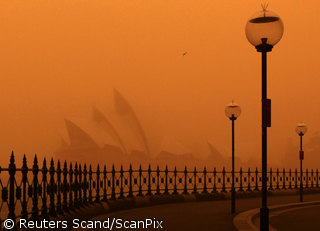 The Sydney skyline cleared Thursday, after an enormous dust storm clouded the city under a red hue a day earlier. Sydney residents began cleaning their city after a huge outback dust storm blew tones of soil into the city.
more »
The Sydney skyline cleared Thursday, after an enormous dust storm clouded the city under a red hue a day earlier. Sydney residents began cleaning their city after a huge outback dust storm blew tones of soil into the city.
more »
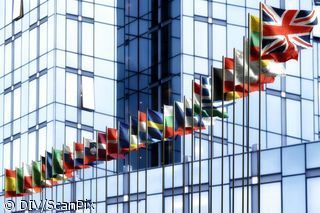 European day of languages is a celebration of the many languages spoken in the EU.
more »
European day of languages is a celebration of the many languages spoken in the EU.
more »
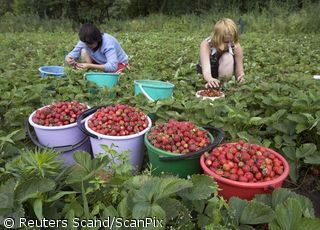 Job fairs pitch benefits of working abroad in the EU.
more »
Job fairs pitch benefits of working abroad in the EU.
more »
 The world’s poor will bear the brunt of the impact of global climate change.
more »
The world’s poor will bear the brunt of the impact of global climate change.
more »
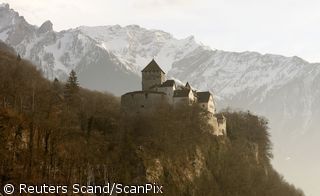 The European Heritage Days – supported by the European Commission – will once again attract around 20 million people in 49 countries to visit selected sites and monuments.
more »
The European Heritage Days – supported by the European Commission – will once again attract around 20 million people in 49 countries to visit selected sites and monuments.
more »
 An Asian black bear attacked a group of tourists waiting at this bus station in a mountainous region of central Japan.
more »
An Asian black bear attacked a group of tourists waiting at this bus station in a mountainous region of central Japan.
more »
 One hundred and sixty-eight couples line up to say “I Do.” The mass wedding ceremony took place at Singapore's Botanic Gardens to mark the attraction's 150th anniversary.
more »
One hundred and sixty-eight couples line up to say “I Do.” The mass wedding ceremony took place at Singapore's Botanic Gardens to mark the attraction's 150th anniversary.
more »
 The Commission celebrates this year's European Day of Languages, 26 September, for almost a week.
more »
The Commission celebrates this year's European Day of Languages, 26 September, for almost a week.
more »
 New navigation and layout make it easier to find what you’re looking for on the EU site’s main pages – in any official EU language.
more »
New navigation and layout make it easier to find what you’re looking for on the EU site’s main pages – in any official EU language.
more »
 The Helsinki Commission, Helcom, receives the Swedish Baltic Sea Water Award 2009.
more »
The Helsinki Commission, Helcom, receives the Swedish Baltic Sea Water Award 2009.
more »