An acronym that had dominated headlines at previous CeBIT shows seemed to be little more than a footnote at this year's event
Published:
18 March 2003 y., Tuesday
An acronym that had dominated headlines at previous CeBIT shows seemed to be little more than a footnote at this year's event. The buzz that once accompanied 3G (third-generation) broadband mobile Internet appears to have fizzled even before the service has taken off.
Grabbing the attention this year were wireless technologies, such as Wi-Fi and Bluetooth, that are, above all, available.
Indeed, handset availability, which dogged the start of GSM (Global Service for Mobility Communications) in Europe over a decade ago, threatens to trip mobile operators eager to expand into the market for high-speed mobile Internet services.
Continuing a troubling trend in the European mobile industry, Jьrgen von Kuczkowski, head of Vodafone Group PLC's German unit, said last week in Hanover that the operator will delay the launch of commercial 3G service, this time to the second half of 2003 and only then if enough handsets are available. But Kuczkowski was quick to defuse speculation of possible difficulties, should the operator be forced to announce yet another delay. "There will be no Big Bang" when the German subsidiary launches 3G, he said. "It's not at all important if you start a few weeks earlier or later."
For the record, the delay has been nearly a year. Vodafone D2 GmbH has been paying interest on a huge loan for its Ђ8.5 billion (US$9.2 billion) 3G license acquired more than two years ago, while generating zero revenue from the new mobile broadband service during this time.
Now Kuczkowski is talking about testing 3G with a select number of business users over the next few months. He has also dropped some price points: 3G handsets will cost around Ђ300 and fees for the new high-speed packet-based data services will be low enough to compete with the competition. Those remarks were aimed at rival T-Mobile Deutschland AG, which announced plans ahead of CeBIT to cut its mobile data fees for GPRS (General Packet Radio Service) up to 70 percent, with handsets to range from Ђ100 to Ђ500.
T-Mobile and Vodafone account for roughly 70 percent of the German mobile market, the largest in Europe.
Šaltinis:
itworld.com
Copying, publishing, announcing any information from the News.lt portal without written permission of News.lt editorial office is prohibited.
The most popular articles
 'Play to Stop – Europe for climate' – a campaign giving young Europeans a chance to learn and talk about climate change and the environment.
more »
'Play to Stop – Europe for climate' – a campaign giving young Europeans a chance to learn and talk about climate change and the environment.
more »
 The Japanese city of Hiroshima held its annual peace memorial ceremony Thursday to remember the first atomic bomb ever used against human beings on the day 64 years ago.
more »
The Japanese city of Hiroshima held its annual peace memorial ceremony Thursday to remember the first atomic bomb ever used against human beings on the day 64 years ago.
more »
 Surfers attacked by sharks - a typical summer headline, in some parts of the world. But really it's the sharks who need protecting - over a third of all shark species living in the open seas are threatened with extinction.
more »
Surfers attacked by sharks - a typical summer headline, in some parts of the world. But really it's the sharks who need protecting - over a third of all shark species living in the open seas are threatened with extinction.
more »
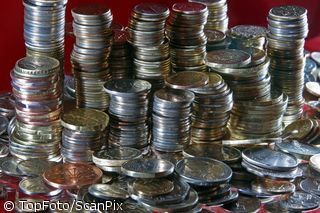 Lottery fever is sweeping Italy ahead of Tuesday's night's record draw.
more »
Lottery fever is sweeping Italy ahead of Tuesday's night's record draw.
more »
 The Sudanese women are protesting Lubna Hussein's sentence of 40 lashes for the crime of wearing trousers in public.
more »
The Sudanese women are protesting Lubna Hussein's sentence of 40 lashes for the crime of wearing trousers in public.
more »
 On August 4–6 Lithuanian, Latvian and Estonian members of the Baltic Battalion staff will exercise in the Lithuanian Grand Duke Algirdas Mechanised Infantry Battalion (Rukla, Jonava Distr.).
more »
On August 4–6 Lithuanian, Latvian and Estonian members of the Baltic Battalion staff will exercise in the Lithuanian Grand Duke Algirdas Mechanised Infantry Battalion (Rukla, Jonava Distr.).
more »
 Mobile exposition of needleworks of Afghan women, artefacts found by Lithuanian archaeologists in Ghowr and photo and video material produced by the Lithuanian-led PRT will be displayed in the major cities of Lithuania.
more »
Mobile exposition of needleworks of Afghan women, artefacts found by Lithuanian archaeologists in Ghowr and photo and video material produced by the Lithuanian-led PRT will be displayed in the major cities of Lithuania.
more »
 The killing of two teenagers by a gunman who opened fire on a gay meeting in Tel Aviv has shocked many Israelis.
more »
The killing of two teenagers by a gunman who opened fire on a gay meeting in Tel Aviv has shocked many Israelis.
more »
 Missing luggage still a big headache for passengers in Europe.
more »
Missing luggage still a big headache for passengers in Europe.
more »
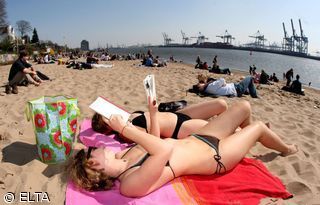 As Europeans hit the beaches in large numbers this summer the risk of skin disease is present if people expose them to too much sun and don't use adequate protection.
more »
As Europeans hit the beaches in large numbers this summer the risk of skin disease is present if people expose them to too much sun and don't use adequate protection.
more »