An acronym that had dominated headlines at previous CeBIT shows seemed to be little more than a footnote at this year's event
Published:
18 March 2003 y., Tuesday
An acronym that had dominated headlines at previous CeBIT shows seemed to be little more than a footnote at this year's event. The buzz that once accompanied 3G (third-generation) broadband mobile Internet appears to have fizzled even before the service has taken off.
Grabbing the attention this year were wireless technologies, such as Wi-Fi and Bluetooth, that are, above all, available.
Indeed, handset availability, which dogged the start of GSM (Global Service for Mobility Communications) in Europe over a decade ago, threatens to trip mobile operators eager to expand into the market for high-speed mobile Internet services.
Continuing a troubling trend in the European mobile industry, Jьrgen von Kuczkowski, head of Vodafone Group PLC's German unit, said last week in Hanover that the operator will delay the launch of commercial 3G service, this time to the second half of 2003 and only then if enough handsets are available. But Kuczkowski was quick to defuse speculation of possible difficulties, should the operator be forced to announce yet another delay. "There will be no Big Bang" when the German subsidiary launches 3G, he said. "It's not at all important if you start a few weeks earlier or later."
For the record, the delay has been nearly a year. Vodafone D2 GmbH has been paying interest on a huge loan for its Ђ8.5 billion (US$9.2 billion) 3G license acquired more than two years ago, while generating zero revenue from the new mobile broadband service during this time.
Now Kuczkowski is talking about testing 3G with a select number of business users over the next few months. He has also dropped some price points: 3G handsets will cost around Ђ300 and fees for the new high-speed packet-based data services will be low enough to compete with the competition. Those remarks were aimed at rival T-Mobile Deutschland AG, which announced plans ahead of CeBIT to cut its mobile data fees for GPRS (General Packet Radio Service) up to 70 percent, with handsets to range from Ђ100 to Ђ500.
T-Mobile and Vodafone account for roughly 70 percent of the German mobile market, the largest in Europe.
Šaltinis:
itworld.com
Copying, publishing, announcing any information from the News.lt portal without written permission of News.lt editorial office is prohibited.
The most popular articles
 One in three Europeans is “very concerned” about losing their job, and even more are worried their spouse or children will find themselves out of work in the months ahead.
more »
One in three Europeans is “very concerned” about losing their job, and even more are worried their spouse or children will find themselves out of work in the months ahead.
more »
 There was plenty of action at the last meeting of the Orissa state assembly in India.
more »
There was plenty of action at the last meeting of the Orissa state assembly in India.
more »
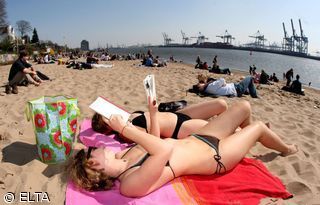 On Monday, the banks of the River Seine were transformed with sand and deck chairs for the opening of this year's Paris Plage.
more »
On Monday, the banks of the River Seine were transformed with sand and deck chairs for the opening of this year's Paris Plage.
more »
 In the 2008 bathing water season Lithuania is the only EU member 100 % complying with the mandatory as well as stricter coastal bathing waters’ safety requirements and standards.
more »
In the 2008 bathing water season Lithuania is the only EU member 100 % complying with the mandatory as well as stricter coastal bathing waters’ safety requirements and standards.
more »
 People around the country gathered in China's financial capital on Tuesday ahead of the eclipse that is due to start at 8:23 am local time on Wednesday.
more »
People around the country gathered in China's financial capital on Tuesday ahead of the eclipse that is due to start at 8:23 am local time on Wednesday.
more »
 Lithuania’s Acting Minister of Foreign Affairs emphasized that it was especially important for Lithuania to solve the issue of clearing the Baltic Sea from the remaining dumped chemical weapons.
more »
Lithuania’s Acting Minister of Foreign Affairs emphasized that it was especially important for Lithuania to solve the issue of clearing the Baltic Sea from the remaining dumped chemical weapons.
more »
 British backpacker Jamie Neal had been missing for 12 days in the bush. Now he arrived at a hospital in Katoomba near Australia's Blue Mountains.
more »
British backpacker Jamie Neal had been missing for 12 days in the bush. Now he arrived at a hospital in Katoomba near Australia's Blue Mountains.
more »
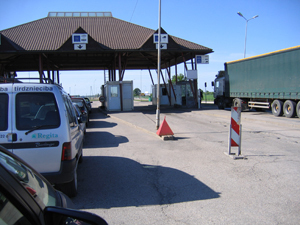 The European Commission's long standing commitment to visa free travel for the people of the Western Balkans was confirmed today with the adoption of a proposal for granting visa free travel to the citizens of the former Yugoslav Republic of Macedonia, Montenegro and Serbia.
more »
The European Commission's long standing commitment to visa free travel for the people of the Western Balkans was confirmed today with the adoption of a proposal for granting visa free travel to the citizens of the former Yugoslav Republic of Macedonia, Montenegro and Serbia.
more »
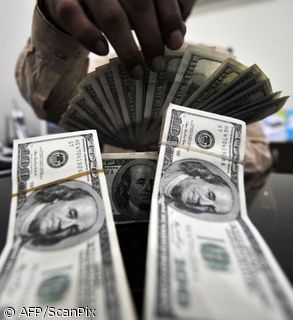 Logan Campbell from New Zealand has set up a brothel because he has an Olympic dream.
more »
Logan Campbell from New Zealand has set up a brothel because he has an Olympic dream.
more »
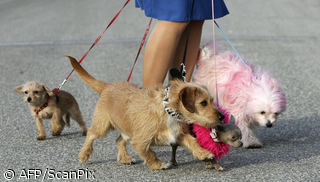 About 20 protesters gathered in downtown Seoul in South Korea to demand the government abolish the tradition of eating dog meat.
more »
About 20 protesters gathered in downtown Seoul in South Korea to demand the government abolish the tradition of eating dog meat.
more »