An acronym that had dominated headlines at previous CeBIT shows seemed to be little more than a footnote at this year's event
Published:
18 March 2003 y., Tuesday
An acronym that had dominated headlines at previous CeBIT shows seemed to be little more than a footnote at this year's event. The buzz that once accompanied 3G (third-generation) broadband mobile Internet appears to have fizzled even before the service has taken off.
Grabbing the attention this year were wireless technologies, such as Wi-Fi and Bluetooth, that are, above all, available.
Indeed, handset availability, which dogged the start of GSM (Global Service for Mobility Communications) in Europe over a decade ago, threatens to trip mobile operators eager to expand into the market for high-speed mobile Internet services.
Continuing a troubling trend in the European mobile industry, Jьrgen von Kuczkowski, head of Vodafone Group PLC's German unit, said last week in Hanover that the operator will delay the launch of commercial 3G service, this time to the second half of 2003 and only then if enough handsets are available. But Kuczkowski was quick to defuse speculation of possible difficulties, should the operator be forced to announce yet another delay. "There will be no Big Bang" when the German subsidiary launches 3G, he said. "It's not at all important if you start a few weeks earlier or later."
For the record, the delay has been nearly a year. Vodafone D2 GmbH has been paying interest on a huge loan for its Ђ8.5 billion (US$9.2 billion) 3G license acquired more than two years ago, while generating zero revenue from the new mobile broadband service during this time.
Now Kuczkowski is talking about testing 3G with a select number of business users over the next few months. He has also dropped some price points: 3G handsets will cost around Ђ300 and fees for the new high-speed packet-based data services will be low enough to compete with the competition. Those remarks were aimed at rival T-Mobile Deutschland AG, which announced plans ahead of CeBIT to cut its mobile data fees for GPRS (General Packet Radio Service) up to 70 percent, with handsets to range from Ђ100 to Ђ500.
T-Mobile and Vodafone account for roughly 70 percent of the German mobile market, the largest in Europe.
Šaltinis:
itworld.com
Copying, publishing, announcing any information from the News.lt portal without written permission of News.lt editorial office is prohibited.
The most popular articles
 14-year-old Nathan Clark drowned after being sucked into the Thai water park in the popular resort of Pattaya pool's pumping system.
more »
14-year-old Nathan Clark drowned after being sucked into the Thai water park in the popular resort of Pattaya pool's pumping system.
more »
 The sixth day of Spain's Pamplona bull run got off with a bang.
more »
The sixth day of Spain's Pamplona bull run got off with a bang.
more »
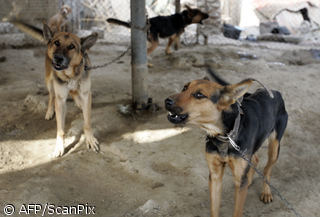 China drafts its first animal protection law to prevent animal abuse.
more »
China drafts its first animal protection law to prevent animal abuse.
more »
 You arrive at the airport ready for your flight - but upon arrival you find the flight has been overbooked leaving you waiting for another one.
more »
You arrive at the airport ready for your flight - but upon arrival you find the flight has been overbooked leaving you waiting for another one.
more »
 Former Defense Secretary Robert McNamara, the leading architect of U.S. involvement in the Vietnam War, has died in his sleep at his home in Washington, D.C.
more »
Former Defense Secretary Robert McNamara, the leading architect of U.S. involvement in the Vietnam War, has died in his sleep at his home in Washington, D.C.
more »
 Tips and advice for a hassle-free holiday in Europe.
more »
Tips and advice for a hassle-free holiday in Europe.
more »
 Some EU countries are making it hard for other EU nationals to obtain residence permits.
more »
Some EU countries are making it hard for other EU nationals to obtain residence permits.
more »
 People, who lay claim to the state sponsored housing loans, can already submit applications on receiving a credit under preferential conditions in Bank SNORAS.
more »
People, who lay claim to the state sponsored housing loans, can already submit applications on receiving a credit under preferential conditions in Bank SNORAS.
more »
 From July 1, all gambling activities in Russia have to move to 4 designated zones, far from the bright lights of the big cities, or cease altogether.
more »
From July 1, all gambling activities in Russia have to move to 4 designated zones, far from the bright lights of the big cities, or cease altogether.
more »
 French President Nicolas Sarkozy supports a group of legislators, who've said they're concerned that increasing numbers of women are wearing burqas in France.
more »
French President Nicolas Sarkozy supports a group of legislators, who've said they're concerned that increasing numbers of women are wearing burqas in France.
more »