Many more workers have arrived in Britain from Eastern Europe since enlargement of the EU in May than the Government predicted, figures showed yesterday
Published:
11 November 2004 y., Thursday
Many more workers have arrived in Britain from Eastern Europe since enlargement of the EU in May than the Government predicted, figures showed yesterday.
Nearly 91,000 people from the eight former Soviet-bloc states that joined the EU registered to work in the first five months after the expansion. The Tories said many others may have taken on a job without registering.
In the run-up to enlargement, ministers dismissed suggestions of a major influx of migrant workers and regularly cited an official estimate of between 5,000 and 13,000 additional arrivals per year.
The latest figures are seven times that forecast in under half the period. However, David Blunkett, the Home Secretary, said they showed that the worker registration scheme, set up to dampen controversy over enlargement, was operating effectively.
Normally, EU citizens can travel freely to settle and work in other member states. But the 15 existing members were allowed to operate controls on migration from the new states for up to seven years.
While most governments imposed restrictions, Britain decided not to. The Government said Britain needed more workers but it faced accusations of failing to protect the country's borders. It decided to establish a registration scheme to discourage new arrivals from working in the black market.
The Home Office said 45 per cent of those who had registered were already in the country. Mr Blunkett said the new arrivals, mostly aged between 24 and 34, had helped to fill job vacancies in hospitality and agriculture, and had legalised some who had not been paying tax.
Šaltinis:
news.telegraph.co.uk
Copying, publishing, announcing any information from the News.lt portal without written permission of News.lt editorial office is prohibited.
The most popular articles
 'Play to Stop – Europe for climate' – a campaign giving young Europeans a chance to learn and talk about climate change and the environment.
more »
'Play to Stop – Europe for climate' – a campaign giving young Europeans a chance to learn and talk about climate change and the environment.
more »
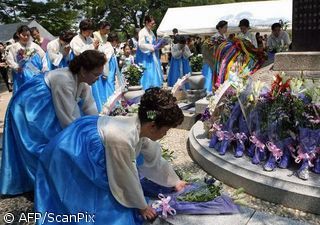 The Japanese city of Hiroshima held its annual peace memorial ceremony Thursday to remember the first atomic bomb ever used against human beings on the day 64 years ago.
more »
The Japanese city of Hiroshima held its annual peace memorial ceremony Thursday to remember the first atomic bomb ever used against human beings on the day 64 years ago.
more »
 Surfers attacked by sharks - a typical summer headline, in some parts of the world. But really it's the sharks who need protecting - over a third of all shark species living in the open seas are threatened with extinction.
more »
Surfers attacked by sharks - a typical summer headline, in some parts of the world. But really it's the sharks who need protecting - over a third of all shark species living in the open seas are threatened with extinction.
more »
 Lottery fever is sweeping Italy ahead of Tuesday's night's record draw.
more »
Lottery fever is sweeping Italy ahead of Tuesday's night's record draw.
more »
 The Sudanese women are protesting Lubna Hussein's sentence of 40 lashes for the crime of wearing trousers in public.
more »
The Sudanese women are protesting Lubna Hussein's sentence of 40 lashes for the crime of wearing trousers in public.
more »
 On August 4–6 Lithuanian, Latvian and Estonian members of the Baltic Battalion staff will exercise in the Lithuanian Grand Duke Algirdas Mechanised Infantry Battalion (Rukla, Jonava Distr.).
more »
On August 4–6 Lithuanian, Latvian and Estonian members of the Baltic Battalion staff will exercise in the Lithuanian Grand Duke Algirdas Mechanised Infantry Battalion (Rukla, Jonava Distr.).
more »
 Mobile exposition of needleworks of Afghan women, artefacts found by Lithuanian archaeologists in Ghowr and photo and video material produced by the Lithuanian-led PRT will be displayed in the major cities of Lithuania.
more »
Mobile exposition of needleworks of Afghan women, artefacts found by Lithuanian archaeologists in Ghowr and photo and video material produced by the Lithuanian-led PRT will be displayed in the major cities of Lithuania.
more »
 The killing of two teenagers by a gunman who opened fire on a gay meeting in Tel Aviv has shocked many Israelis.
more »
The killing of two teenagers by a gunman who opened fire on a gay meeting in Tel Aviv has shocked many Israelis.
more »
 Missing luggage still a big headache for passengers in Europe.
more »
Missing luggage still a big headache for passengers in Europe.
more »
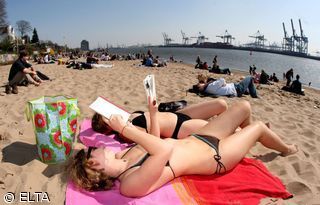 As Europeans hit the beaches in large numbers this summer the risk of skin disease is present if people expose them to too much sun and don't use adequate protection.
more »
As Europeans hit the beaches in large numbers this summer the risk of skin disease is present if people expose them to too much sun and don't use adequate protection.
more »