Latvia's decision to join the European Union may be swaying more Latvians in the West to repatriate, according to the Office of Citizenship and Migration Affairs
Published:
28 July 2004 y., Wednesday
Latvia's decision to join the European Union may be swaying more Latvians in the West to repatriate, according to the Office of Citizenship and Migration Affairs. More than half of those who returned to Latvia during the first half of this year were from Western nations.
In an October referendum, Latvian voters approved their country’s entry into the EU. Membership was finalized May 1.
And that, the citizenship and migration affairs office said July 16, may be why an increasing percentage of Latvians from the West are choosing to return.
“Westerners’ increased interest in Latvia most likely is the result of the Latvian vote in favor of joining the European Union,” the office said in a press release, “which opens the state to broader and quicker economic development opportunities, and makes its economy more stable and predictable.”
In the first six months of this year, a total of 86 people repatriated to Latvia, 44 (52 percent) of whom were from Western nations. Of those, 11 were from the United States and 10 from Germany. A total of 14 returned from Russia.
In the first half of 2003, when a total of 125 people repatriated, Westerners represented 35 percent. In the second half of 2003, Westerns were 44 percent of repatriants, the citizenship and migration office announced.
A repatriant is defined under Latvian law as a person who is a Latvian citizen, or one of whose parents or grandparents is an ethnic Latvian or Liv, and who voluntarily returns to permanently live in Latvia.
The Latvian government offers financial assistance to repatriants. During the first half of this year, 80 repatriants received a total of LVL 24,272 in aid, about 80 percent of which went to travel expenses.
Šaltinis:
/latviansonline.com
Copying, publishing, announcing any information from the News.lt portal without written permission of News.lt editorial office is prohibited.
The most popular articles
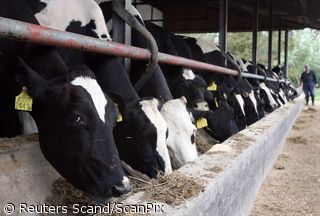 In the final session of the February plenary MEPs gathered to discuss the issue of correct labelling for animal feeds. BSE, CJD and 'mad cow' disease stemmed directly from using contaminated animal feeds leading to widespread culls and fear of the unknown.
more »
In the final session of the February plenary MEPs gathered to discuss the issue of correct labelling for animal feeds. BSE, CJD and 'mad cow' disease stemmed directly from using contaminated animal feeds leading to widespread culls and fear of the unknown.
more »
 Officials of Australia are warning residents of country's second largest state to keep an eye out for crocs and other animals roaming the area.
more »
Officials of Australia are warning residents of country's second largest state to keep an eye out for crocs and other animals roaming the area.
more »
 MEPs believe “the right to speak and to be educated in one's mother tongue is one of the most basic fundamental rights” and on Tuesday Hungarian Socialist Csaba Tabajdi and five other MEPs grilled the Commission on its plans to protect traditional national, ethnic and immigrant minorities in Europe.
more »
MEPs believe “the right to speak and to be educated in one's mother tongue is one of the most basic fundamental rights” and on Tuesday Hungarian Socialist Csaba Tabajdi and five other MEPs grilled the Commission on its plans to protect traditional national, ethnic and immigrant minorities in Europe.
more »
 Thirteen thousand people from as far as Japan gathered in western Pennsylvania to see if spring will come early.
more »
Thirteen thousand people from as far as Japan gathered in western Pennsylvania to see if spring will come early.
more »
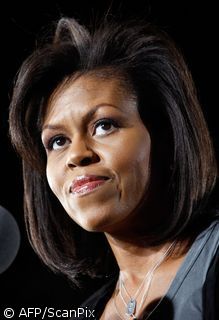 The self-described "mom-in-chief," First Lady Michelle Obama, took to the podium at the U.S. Department of Education.
more »
The self-described "mom-in-chief," First Lady Michelle Obama, took to the podium at the U.S. Department of Education.
more »
 Most Europeans are unhappy with the bus and train services in their cities, and a large percentage complain about their power companies and banks, an EU survey shows.
more »
Most Europeans are unhappy with the bus and train services in their cities, and a large percentage complain about their power companies and banks, an EU survey shows.
more »
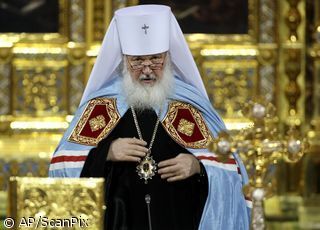 Thousands turned out in Moscow for the enthronement of the Russian Orthodox Church's - the world's second-biggest Church - new leader.
more »
Thousands turned out in Moscow for the enthronement of the Russian Orthodox Church's - the world's second-biggest Church - new leader.
more »
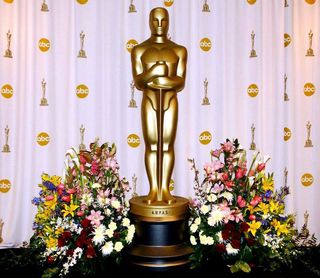 India‘s slum dwellers are taken to the streets in protest at the name of the Oscar-nominated film "Slumdog Millionaire."
more »
India‘s slum dwellers are taken to the streets in protest at the name of the Oscar-nominated film "Slumdog Millionaire."
more »
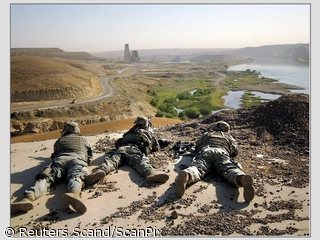 Chris Ogle bought a second hand MP3 player in America for just 10 dollars and back home in New Zealand he found it contained 60 confidential US military files.
more »
Chris Ogle bought a second hand MP3 player in America for just 10 dollars and back home in New Zealand he found it contained 60 confidential US military files.
more »
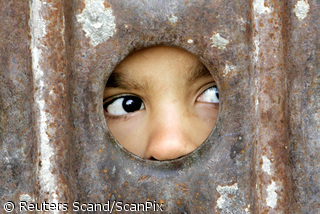 European Commissioner for Development and Humanitarian Aid, Louis Michel, announced the planned funding as he visited the Middle East region on a two-day humanitarian mission.
more »
European Commissioner for Development and Humanitarian Aid, Louis Michel, announced the planned funding as he visited the Middle East region on a two-day humanitarian mission.
more »