Europe's flora and fauna are now better protected than at any time in the history of the European Union. Natura 2000, Europe's network of protected natural areas, has been expanded by nearly 27 000 square kilometres.
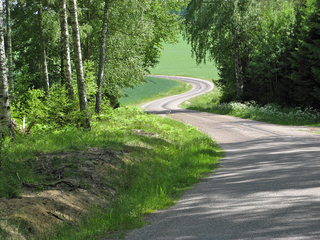 Europe's flora and fauna are now better protected than at any time in the history of the European Union. Natura 2000, Europe's network of protected natural areas, has been expanded by nearly 27 000 square kilometres. This includes a major addition of marine areas covering more than 17 500 square kilometres which will increase protection for many endangered marine species. Natura 2000 now covers almost 18% of the EU's landmass and more than 130 000 km² of its seas. The main countries involved in this latest expansion are the Czech Republic, Denmark, France, Spain and Poland. Natura 2000 is the centrepiece of Europe's battle to halt biodiversity loss and safeguard ecosystem services.
"When we protect nature, we protect ourselves," said Janez Potočnik, European Commissioner for the Environment. "Natura 2000 is like a life assurance policy, safeguarding nature's resilience, and ensuring that we have a sustainable relationship to the natural world we depend on. I am particularly pleased to see this increased protection for 17 500 km² of our seas."
What is Natura 2000?
Natura 2000 is a vast network of nature conservation areas set up to ensure the survival of Europe's most valuable and endangered species and habitats. The network consists of around 26 000 sites and the latest additions add 739 new sites covering nearly 27 000 square kilometres. More than half of the area added is made up of marine sites (more than 17 500 km²), mainly in France, Denmark and Spain.
Among the new marine sites included for the Atlantic region is a 680 km² stretch of the Loire estuary which harbours important cold water reefs and sandbanks. The area is a nursery for juvenile fish and a vital stopping over area for long distance migrants such as the Atlantic salmon Salmo salar and the Allis shad Alosa alosa. Denmark has also added some large marine sites including the Sydlige Nordsø which has been designated for the conservation of the harbour porpoise Phocoena phocoena. Spain's new contribution to the marine network is El Cachucho, an extensive offshore bank and seamount located in the Cantabrian Sea off the coast of Northern Spain. The area harbours an exceptional diversity of marine life including several newly discovered giant sponges.
The expansion will also increase protection for a range of valuable terrestrial habitats, from mountainous beech forests and flower rich meadows in the Czech Republic to vast lakes and wetlands in Poland. These habitats provide a vital refuge for many of Europe's rarest and most endangered species such as the otter Lutra lutra, the European pond turtle Emys orbicularis, and the scarce large blue butterfly Maculinea teleius.
The philosophy behind the network is that man must work together with nature. Activities such as farming, tourism, forestry and leisure pursuits can still be carried out inside the network as long as they are sustainable and in harmony with the natural environment.
Member States choose their Natura 2000 sites in partnership with the Commission, and once selected, the areas are formally recognised by the Commission as "Sites of Community Importance" as has happened today. This process confirms the formal status of the sites, and cements the obligations to protect them. Member States then have six years to put the necessary management measures in place.
The range of protected areas is vast, from flower-rich meadows to cave systems and lagoons. The nine bio-geographical regions of the network reflect the wide variety of the EU's biodiversity.
Why does it matter?
Biodiversity – the limited resource that is the variety of life on earth – is in crisis. Species are being lost at an unprecedented rate as a result of human activities, with irreversible consequences for our future. The European Union is combating this and recently set itself a new objective of halting biodiversity loss in Europe by 2020, protecting ecosystem services such as pollination (and restoring these services where they are degraded), and stepping up the EU contribution to averting global biodiversity loss. Natura 2000 is a key tool needed to reach that objective.
What else is included in the new additions?
The latest update concerns fifteen Member States and increases the number of "Sites of Community Importance" by 739. The recent additions cover six bio-geographical regions – the Alpine, Atlantic, Boreal, Continental, Mediterranean and Pannonian regions. They include 459 new sites in Poland representing a total area of 8 900 km² including several major freshwater lakes and river systems with their associated floodplains and natural forests. The Czech Republic has added 229 sites. These include key areas of natural beech forests and wildlife rich meadows home to a wealth of fauna and flora.
Note: As well as additional sites, the updated lists also include minor modifications to existing sites, such as adaptations of site areas. This can result in no overall change in the number of sites but in changes to total area covered by the network.