Fewer workers to support greater number of retirees
Published:
30 March 2003 y., Sunday
When Secretary of Defense Donald H. Rumsfeld recently disparaged France and Germany as "Old Europe," maybe he was speaking demographically.
According to a new study of the European Union's 15 member nations, governments there are facing an age problem that is almost certain to get worse. European families are having fewer children, and are exacerbating the problem by delaying child-bearing.
As a result, the research team said, Europeans face higher health and welfare costs, fewer wage-earners, and an impact on national productivity. In other words, a downward spiral has begun, and soon fewer young workers will be supporting more and more old retirees.
Although their calculations predict a slight population rise over the next 15 years - the result of a "baby boom" in the 1960s - the researchers see Europe having 88 million fewer people when the year 2100 rolls around, down from about 230 million.
One of the researchers, Brian O'Neill at Brown University in Providence, R.I., said the data show "there are fewer children today than there are parents" in the European Union. "So we know the number of parents one generation in the future is going to be even smaller.
"Then there is the additional factor of delay," which accounts for about 40 percent of the expected decline, he said.
Europe has about four working-age persons for every elderly person, the researchers said. But they predict that there "will be considerably less than three" workers per retiree for most of this century, even if young families begin having children sooner.
Šaltinis:
The Sun
Copying, publishing, announcing any information from the News.lt portal without written permission of News.lt editorial office is prohibited.
The most popular articles
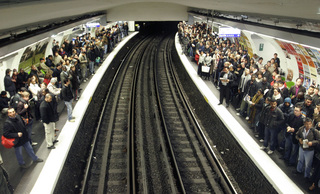 75 years after Moscow first opened its underground train system, Muscovites can ride a restored vintage train.
more »
75 years after Moscow first opened its underground train system, Muscovites can ride a restored vintage train.
more »
 A glacier melt threatens to cause massive flooding and destroy a centuries old monastic fortress in the remote country of Bhutan.
more »
A glacier melt threatens to cause massive flooding and destroy a centuries old monastic fortress in the remote country of Bhutan.
more »
 What do countries as geographically diverse as Saudi Arabia, Uganda and Jamaica have in common? All of them criminalised homosexuality.
more »
What do countries as geographically diverse as Saudi Arabia, Uganda and Jamaica have in common? All of them criminalised homosexuality.
more »
 Human rights is a key issue for the European Parliament and MEPs Monday took a first look at what the European Union did last year, when they discussed the EU annual report on human rights in the world.
more »
Human rights is a key issue for the European Parliament and MEPs Monday took a first look at what the European Union did last year, when they discussed the EU annual report on human rights in the world.
more »
 Researchers found high levels of mecury in a Japenese dolphin-hunting town, but say the mecury has no ill effects.
more »
Researchers found high levels of mecury in a Japenese dolphin-hunting town, but say the mecury has no ill effects.
more »
 Crowds of Mexicans marched peacefully through the capital city on Saturday demanding the legalisation of marijuana.
more »
Crowds of Mexicans marched peacefully through the capital city on Saturday demanding the legalisation of marijuana.
more »
 Prisoners are reported to have dramatic improvements in behaviour after pets are introduced in a new scheme.
more »
Prisoners are reported to have dramatic improvements in behaviour after pets are introduced in a new scheme.
more »
 Israeli Ultra-Orthodox MPs are lining up against activists proposing a total ban on furs, saying traditional fur hats are an important part of their religious tradition.
more »
Israeli Ultra-Orthodox MPs are lining up against activists proposing a total ban on furs, saying traditional fur hats are an important part of their religious tradition.
more »
 EU Member States should organise social protection, including at least 14 weeks' maternity allowance, for self-employed women and self-employed men's wives or life partners, in accordance with national laws, said the Women's Rights Committee on Tuesday.
more »
EU Member States should organise social protection, including at least 14 weeks' maternity allowance, for self-employed women and self-employed men's wives or life partners, in accordance with national laws, said the Women's Rights Committee on Tuesday.
more »
 How are the European Parliament, the European Commission and other parts of the European Union supposed to interest people and explain their work?
more »
How are the European Parliament, the European Commission and other parts of the European Union supposed to interest people and explain their work?
more »