Fewer workers to support greater number of retirees
Published:
30 March 2003 y., Sunday
When Secretary of Defense Donald H. Rumsfeld recently disparaged France and Germany as "Old Europe," maybe he was speaking demographically.
According to a new study of the European Union's 15 member nations, governments there are facing an age problem that is almost certain to get worse. European families are having fewer children, and are exacerbating the problem by delaying child-bearing.
As a result, the research team said, Europeans face higher health and welfare costs, fewer wage-earners, and an impact on national productivity. In other words, a downward spiral has begun, and soon fewer young workers will be supporting more and more old retirees.
Although their calculations predict a slight population rise over the next 15 years - the result of a "baby boom" in the 1960s - the researchers see Europe having 88 million fewer people when the year 2100 rolls around, down from about 230 million.
One of the researchers, Brian O'Neill at Brown University in Providence, R.I., said the data show "there are fewer children today than there are parents" in the European Union. "So we know the number of parents one generation in the future is going to be even smaller.
"Then there is the additional factor of delay," which accounts for about 40 percent of the expected decline, he said.
Europe has about four working-age persons for every elderly person, the researchers said. But they predict that there "will be considerably less than three" workers per retiree for most of this century, even if young families begin having children sooner.
Šaltinis:
The Sun
Copying, publishing, announcing any information from the News.lt portal without written permission of News.lt editorial office is prohibited.
The most popular articles
 You can now access books, journals, films, maps etc from across Europe via the EU's online library, Europeana.
more »
You can now access books, journals, films, maps etc from across Europe via the EU's online library, Europeana.
more »
 Late night chat turned serious when comedian David Letterman admitted he had sex with female employees and was being blackmailed for $2-million (USD) over the affairs.
more »
Late night chat turned serious when comedian David Letterman admitted he had sex with female employees and was being blackmailed for $2-million (USD) over the affairs.
more »
 Last Thursday (1 October) saw an agreement that will lead to the introduction of more efficient tyres for cars and lorries that will cut fuel bills and CO2 emissions.
more »
Last Thursday (1 October) saw an agreement that will lead to the introduction of more efficient tyres for cars and lorries that will cut fuel bills and CO2 emissions.
more »
 The European Job Days are taking place around the EU over the next fortnight, with a centrepiece event in Brussels on 3 October.
more »
The European Job Days are taking place around the EU over the next fortnight, with a centrepiece event in Brussels on 3 October.
more »
 Women, especially migrant and/or poor women, have been harder hit by the financial crisis than men, MEPs heard on Wednesday.
more »
Women, especially migrant and/or poor women, have been harder hit by the financial crisis than men, MEPs heard on Wednesday.
more »
 New EU plan to make local transport efficient and sustainable.
more »
New EU plan to make local transport efficient and sustainable.
more »
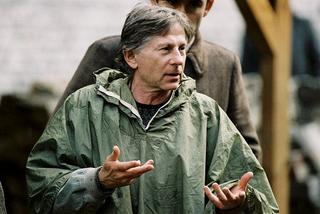 Hollywood heavyweights and European cultural figures are rallying behind jailed film director Roman Polanski.
more »
Hollywood heavyweights and European cultural figures are rallying behind jailed film director Roman Polanski.
more »
 By the time of his death in the Moscow winter 20 years ago, Andrei Sakharov had built an international reputation as a nuclear physicist, human rights activist and Nobel Peace Prize winner His fears over the implications of his work led him to call for peaceful coexistence and later for human rights in the USSR.
more »
By the time of his death in the Moscow winter 20 years ago, Andrei Sakharov had built an international reputation as a nuclear physicist, human rights activist and Nobel Peace Prize winner His fears over the implications of his work led him to call for peaceful coexistence and later for human rights in the USSR.
more »
 The ten nominations for this year's Sakharov Prize, the EP's prize for defenders of human rights and democracy, have now been put forward and will be officially presented at the end of the month.
more »
The ten nominations for this year's Sakharov Prize, the EP's prize for defenders of human rights and democracy, have now been put forward and will be officially presented at the end of the month.
more »
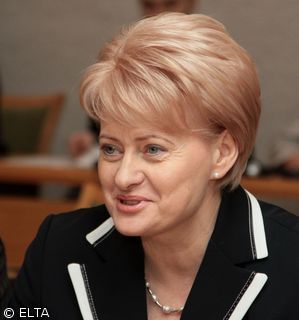 President of the Republic of Lithuania Dalia Grybauskaitė attended a meeting hosted by the President of Liberia Ellen Johnson-Sirleaf and the President of Finland Tarja Halonen on Peace and Security through Women's Leadership.
more »
President of the Republic of Lithuania Dalia Grybauskaitė attended a meeting hosted by the President of Liberia Ellen Johnson-Sirleaf and the President of Finland Tarja Halonen on Peace and Security through Women's Leadership.
more »